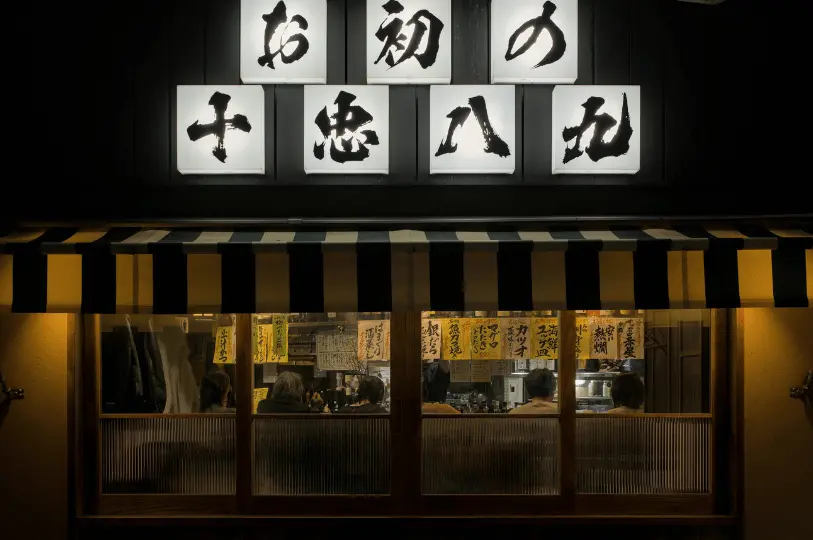
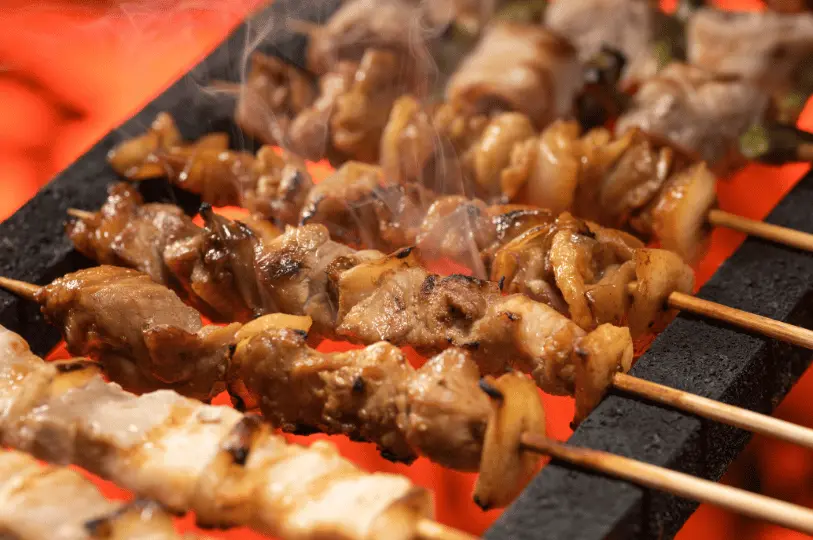
A chef stands behind a trough of white-hot binchotan charcoal. He holds a fan in one hand and carefully turns a row of wooden chicken skewers with the other. He does not rush. He waits for the exact moment the chicken fat begins to render, dripping down onto the coals.
In Singapore, we often think of these as simple Japanese pubs where people drink sake, cocktails, and eat snacks. But when you look closer, you realize that the best izakaya Singapore spots turn grilling into a highly disciplined, visible ritual.
Singapore has taken the Japanese charcoal tradition from Japan and adapted it to fit our own local dining habits, neighborhood spaces, and late-night supper culture.
The Quiet Theatre of the Izakaya: Singapore Grills
For a photographer, an authentic izakaya is one of the most rewarding environments to shoot. The visual story does not rely on bright, artificial lights or perfectly styled plates. It relies on motion, shadows, and heat. The story happens in the hands. It is in the small, repeated movements required to rotate twenty skewers without letting a single one burn.
This is not a chaotic, high-heat barbecue pit. It is a controlled environment. The chef manages different heat zones, resting the meat and timing the plates so that each skewer reaches the customers at its absolute peak. To understand this process, you have to understand what the fire is actually doing.
Yakitori, Kushiyaki, Robatayaki: What the Fire Is Really Doing
If you are new to this style of dining, the menus can feel slightly overwhelming. You will often see three distinct types to describe the grill, and knowing the difference completely changes how you can compare the meal to a truly great grill.
The Traditional Fire
Yakitori specifically refers to grilled chicken skewers. A proper yakitori chef treats the chicken with immense respect, using almost every part of the bird. A standard meal includes familiar cuts like the thigh and wings, but it also explores the unique textures of the liver, heart, gizzard, neck, and cartilage.
The Fresh Seafood Flame
Kushiyaki is a much broader type of grill. It simply means grilled skewers. If you see beef, pork belly, seafood, or vegetables wrapped in thin slices of meat, you are looking at kushiyaki. Many izakayas in Singapore focus on fresh seafood flown in from Japan, offering a variety of sashimi, grilled fish, and other seafood dishes that highlight the quality and freshness of the products.
The Performance of Charcoal
Robatayaki is an entirely different format. It is less about skewers and more about the technique of grilling fresh ingredients over a live charcoal fire, often directly in front of the diners. It is highly visual and usually focuses on premium seafood, whole grains, and high-quality meats, cooked to perfection with a smoky char that enhances the natural flavours.
How Singapore Gives the Izakaya Its Own Shape
Singapore’s grilling scene is not a direct copy of Tokyo or Osaka. We have shaped the izakaya to fit our city. It’s almost a crime to compare. We have a deep, built-in love for charcoal smoke, thanks to our own hawker traditions of satay and barbecue seafood. Because of this, we understand the emotional pull of flame.
We also have a strong late-night supper culture. Izakayas fit perfectly into this rhythm. After a long day in the office, people want a place with cold drinks, hot food, an aromatic grill, and air-conditioning. It’s an after-work experience that truly hits the spot.
You see this local adaptation clearly in how these izakayas remained open for a long time. Instead of opening near train tracks, Singaporean izakayas often hide in old buildings, dining clusters, or riverside walkways. A perfect example of this is Cuppage Plaza in the Somerset area. The building is famous for its dense cluster of Japanese restaurants.
Singapore has not only honed Japanese influencer from izakayas, there are myriad of fusions as well as signature spots for curry rice that have become stables for workers looking for a comfort meal in between meetings.
Where the Local Story Shows Up
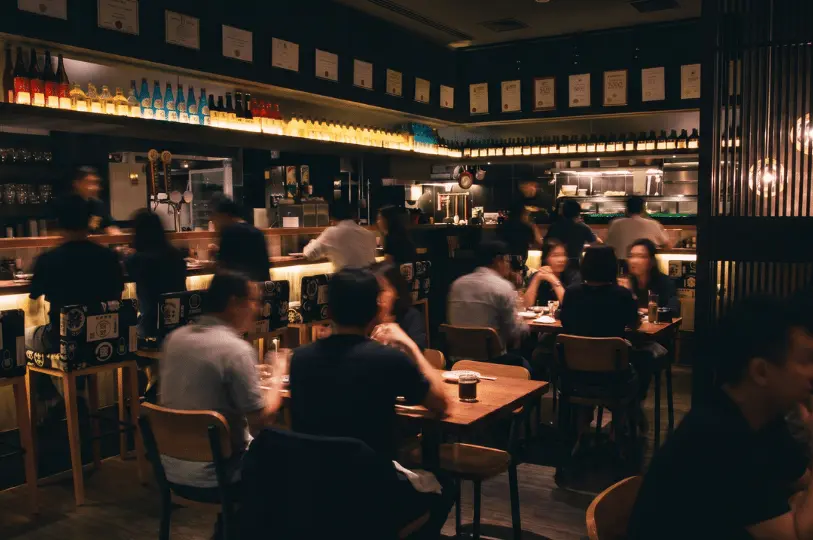
One of the most fascinating examples of this cultural blend is was the now-retired Bincho at Hua Bee in Tiong Bahru. During the day, the space is a 70-year-old kopitiam serving mee pok and rice dishes. At night, you could enter through the back door to find a modern yakitori bar. The collision of old marble tables, wooden chairs, and a glowing copper-toned Japanese grill is brilliant. It is a deeply Singaporean way to experience Japanese craft.
If you want to find a classic after-work social space, Shunjuu Izakaya that opened at Robertson Quay offers a very different mood. It leans into group dining. The tables are filled with office workers unwinding by the river, serving dozens of kushiyaki options and choosing from a massive long line of over 60 sake labels and cocktails.
Sometimes, the local influence directly impacts the food. At The Skewer Bar, you will find Japanese skewers cooking right next to local fusion dishes like King Prawn Hae Bee Hiam Pasta and Ondeh Ondeh Onigiri. It proves that the izakaya format is flexible enough to welcome Singaporean flavors.
For more thoughtful izakaya recommendations for a visual foodie like you, you can find more from this article at Street Food Photographer.
What to Order on a First Visit
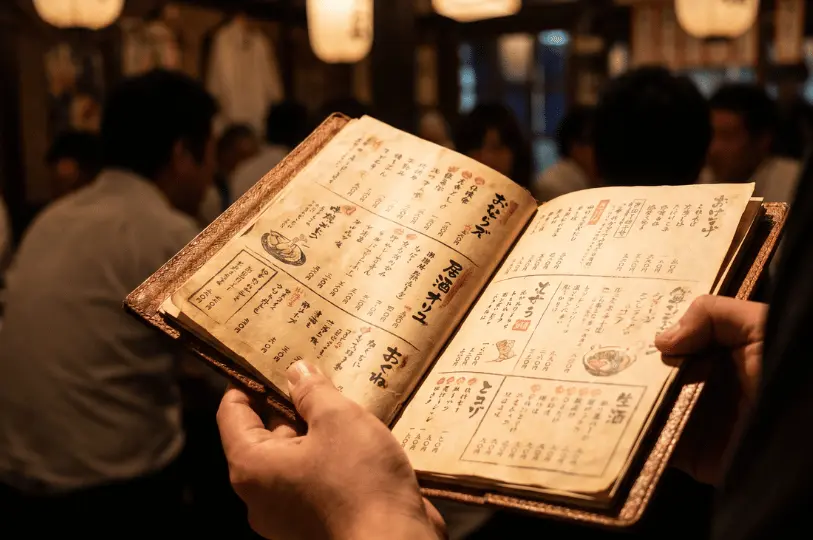
If you have never sat at a yakitori counter before, the experience can feel intimidating. The most important rule is to order slowly.
Fire does not scale like a buffet line. The chef needs time to cook each item properly. If you order everything immediately, most of your food will sit on the counter and get cold. Order in small rounds of four or five skewers. Eat them while they are hot, talk, have a sake, and then order the next round. Bonus to this is that you’ll have more time to make a sound choice for the next round.
Chicken Wings: Classics First
Start with familiar cuts to ground your palate. Order chicken thigh, chicken wings, tsukune (chicken meatballs), and some grilled vegetables. Once you feel comfortable, ask the chef for recommendations. This is the best way to try something new, like chicken neck or heart, which offer incredible textures.
Pay attention to the seasoning. You generally have two choices: shio (salt) or tare (a sweet and savory glaze). As a rule, use shio for delicate cuts, vegetables, and seafood. The salt allows the natural notes of the ingredient to stand out.
Paying The Price of Good Chicken Skewers
You also need to set realistic expectations for the price. A casual night out for skewers and a few beers will typically run you about $30 to $45 per person. If you step up to a mid-range spot or sit at a counter for a chef’s selection, expect to spend between $65 and $120.
If you book a premium robatayaki course, the price is designed to reflect the high-end ingredients, often reaching a bill of $189 to $280 for a full tasting course.
Reading the Grill: Signs of Craft
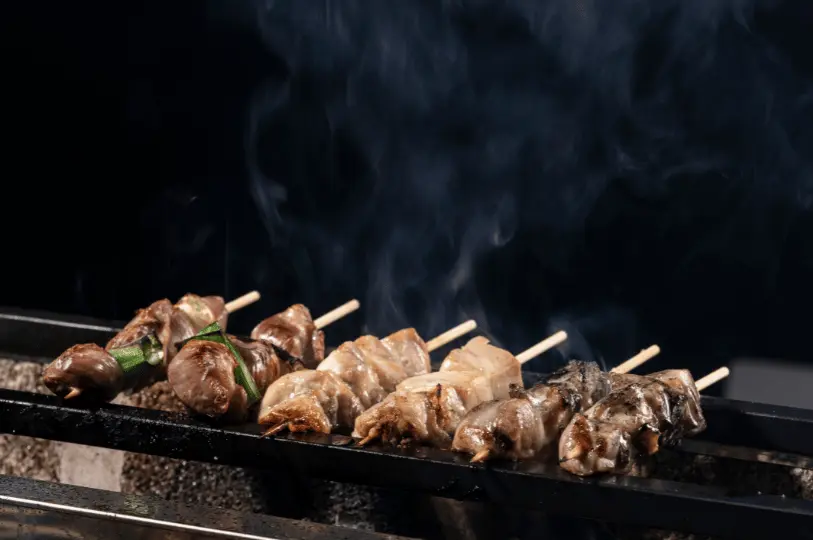
When I take my camera into a new izakaya, I immediately look for specific signs of quality. A good grill leaves a signature on the food.
The first thing I check is the smoky char. Good yakitori is never burnt. You want a light, crispy char that adds texture and a hint of smoke. If your skewer arrives blackened, dry, and tasting bitter, the chef has lost control of the heat.
I also give notice to the pacing. The crew will watch you eat, not to see if you agree with the taste but merely to check your next plate at the right pace. They will time the cooking so that your next plate arrives just as you finish the last one. They do not rush.
The Scent of Natural Flavours
Finally, I notice the air in the room. There are only two outcomes to compare from the air in izakayas, depending on the establishment’s capability to sustain its smoke.
A great charcoal grill should make the room smell deeply appetizing, filled with the scent of rendering fat and sweet soy sauce. If you walk into a venue and your eyes immediately start watering from stale, acrid smoke, the ventilation is failing. The smoke should be part of the theater, not a punishment for the guests.
The Discipline of the Flame
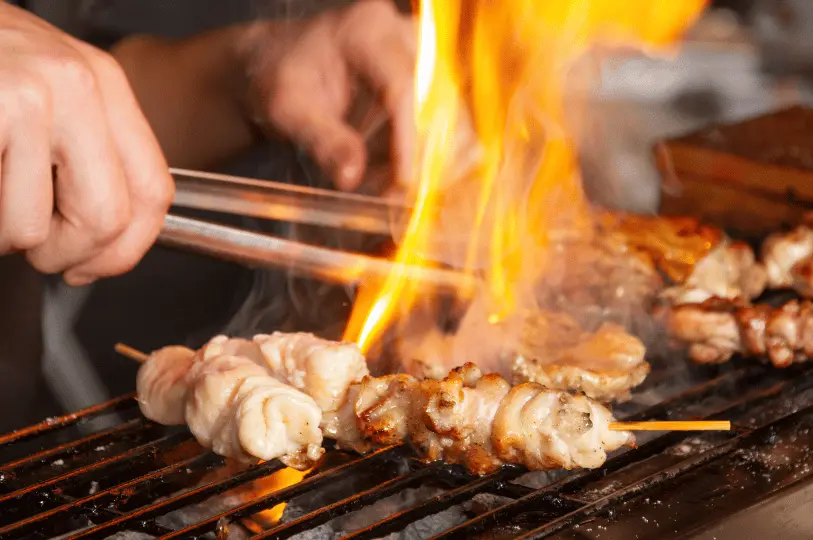
An izakaya is not just a place to grab a quick dinner. It is a space where heat, time, and repetition come together to create something meaningful. It’s an ideal to every worker looking for solace to put down today’s trials.
In a city that moves as fast as Singapore, there is a deep comfort in watching someone practice a slow, ancient craft. It is fire disciplined by hand, smoke held inside small rooms, and a reminder that the best meals are always built on patience. It invites you to stay amongst the respite of other locals and even friends enjoying good sake and food.

A Letter to Stories That Unfold With Every Bite
July 14, 2026
Morning light slants across the stainless steel table, starting as a narrow beam before slowly spreading out. I’m sitting in the corner of Maxwell Food Centre, my camera still tucked away. I like to watch…
-
Old Nyonya at Maxwell Food Centre: A Quieter Bowl Among the Noise
July 13, 2026
I didn’t go to Maxwell Food Centre for Old Nyonya. Almost nobody does. You go for the chicken rice. You go for the queue that bends around the corner, the one everyone photographs. But that…
-
To the Sound of the First Chopsticks Clinking
July 10, 2026
The first pair lifts before the bowl has even cooled, and the sound finds me before I see it. It is early, just before eight at Maxwell Food Centre, and the porridge stall has opened…
-
Maxwell Fuzhou Oyster Cake at Maxwell Food Centre: A Golden and Crispy Frame
July 9, 2026
I didn’t set out to eat an oyster cake that day. I’d originally planned to grab chicken rice, specifically the famous Hainanese chicken rice, but after wandering around Maxwell Food Centre and exploring the many…
-
A Quiet Thank You to the Stirring Hands in the Back Alley
July 7, 2026
The pot has been going for hours, and the woman stirring it does not look tired. It is late afternoon behind a row of shophouses near Old Airport Road, in the narrow lane where the…
-
Tian Tian Hainanese Chicken Rice: A Review of Maxwell’s Most Photographed Plate
July 6, 2026
The long queue moves in inches. Plates leave the counter fast. Chicken lands. Rice follows. Chilli sauce, black soy sauce, and ginger sit beside the plate. The next order is already being called. Tian Tian…
-
To the Forgotten Recipes, Guarded in the Heart of the Stall
July 3, 2026
The old man measures by hand, and I never see him weigh a thing. It is mid-morning at Hong Lim Market, and the bak chor mee stall has slowed for a breath between the breakfast…
-
A Photographer’s Guide to Maxwell Food Centre: Frame Shots, Timing, and Table Scenes
July 2, 2026
My first visit to Maxwell Food Centre left me with dozens of uninspiring photos, grey chicken rice, missed steam, and annoyed diners. It took time to learn that Maxwell Food Centre Singapore doesn’t pose for…
-
A Note on the Flicker of the Flame That Feels Like Home
June 30, 2026
The wok catches first, and then the whole stall seems to breathe. It is just past six at Tiong Bahru Market, second floor, and the char kway teow uncle has tilted his wok toward the…
-
The Stalls That Hold Maxwell Food Centre Together
June 29, 2026
I have been coming to Maxwell Food Centre for years now, at all the wrong and right hours. Early mornings when the porridge stalls are stirring and the room still smells of bleach and steam….