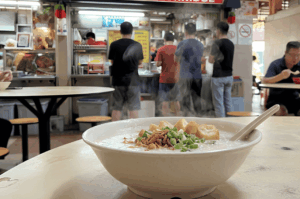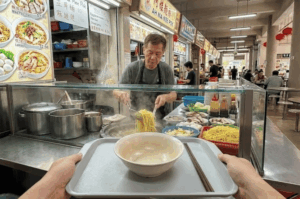

The true soundtrack of Singapore is not the hum of the city, but the gentle clink of a porcelain cup. It’s the familiar call for "Kopi C, siew dai!" echoing through a bustling coffee shop. This is the heart of Singapore kopitiam traditions, a culture I’ve dedicated myself to capturing through my lens. A Singapore kopitiam is more than a place to get a drink; it's a community cornerstone and a living piece of history.
The Kopitiams Today: A Social Pillar
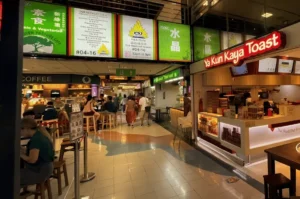
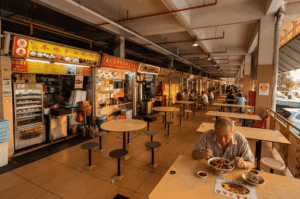
Traditional coffee shops are woven into the fabric of the nation. The word "kopitiam" itself is a beautiful mix of the Malay word for coffee, kopi, and the Hokkien word for shop, tiam. These spots began as social hubs for early immigrants. Today, many kopitiams are found at the foot of Singapore Housing Development Board (HDB) blocks, cementing their role as central gathering places. Famous names like Ya Kun Kaya Toast, Killiney Kopitiam, and the historic Tong Ah Eating House on Keong Saik Road.
The Art of a Strong Brew
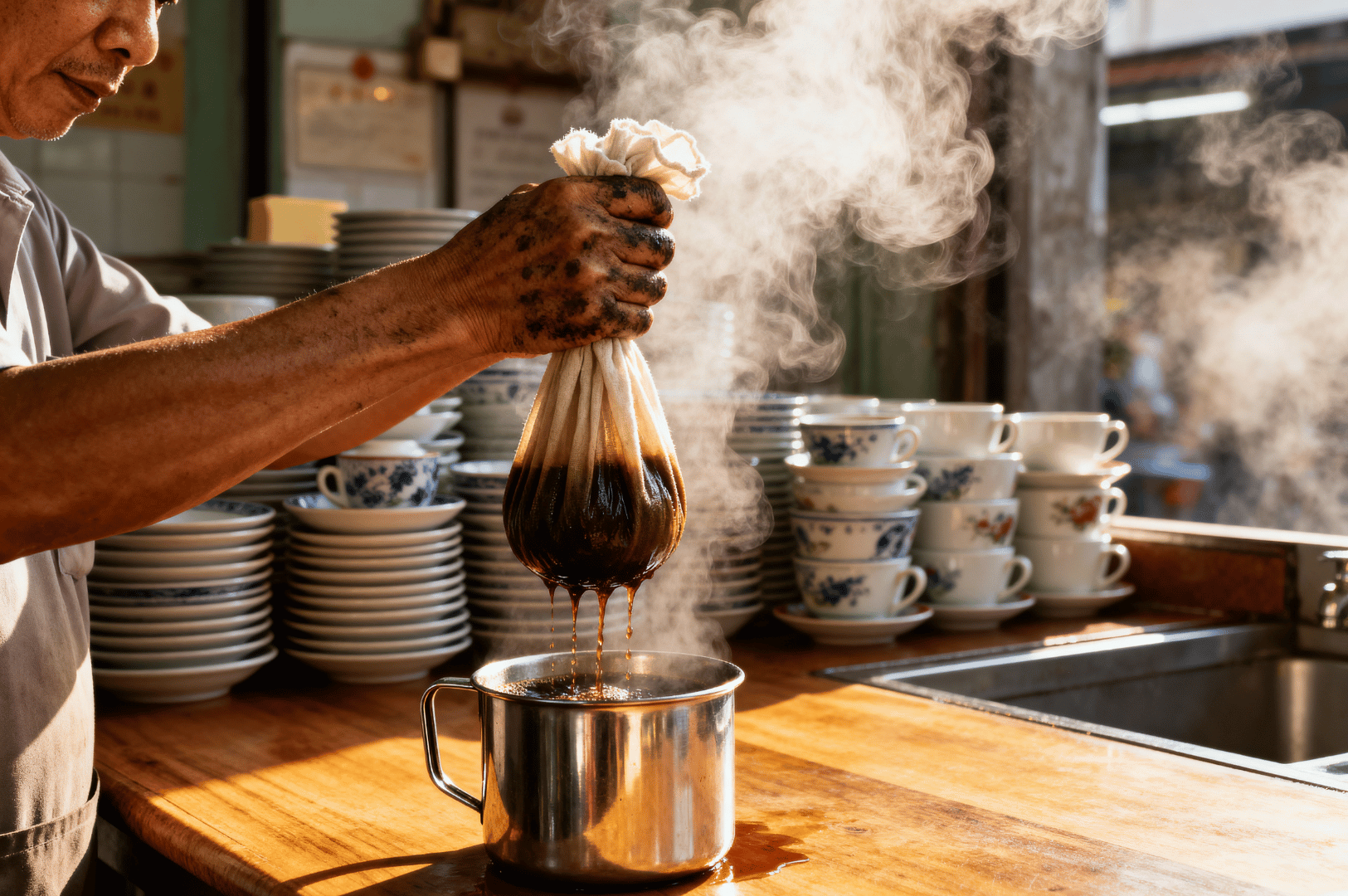
The magic of kopitiam culture lies in its unique coffee. Forget the espresso machine; here, the process is pure performance. Strong coffee is brewed using Robusta beans, often roasted with butter, which are then filtered through a cloth "sock." The result is a strong brew, but you can also request a weaker coffee (kopi po).
Understanding the lingo is essential. A standard kopi comes with condensed milk. For a version with evaporated milk and sugar, you’d order a Kopi C. If you prefer black coffee with sugar, it’s Kopi O. To get just the right amount of sweetness, you can ask for "siew dai," which means less sugar. On a hot day, a tall glass of strong iced coffee is the perfect beverage.
Beyond Coffee: Kaya Toast and Soft Boiled Eggs
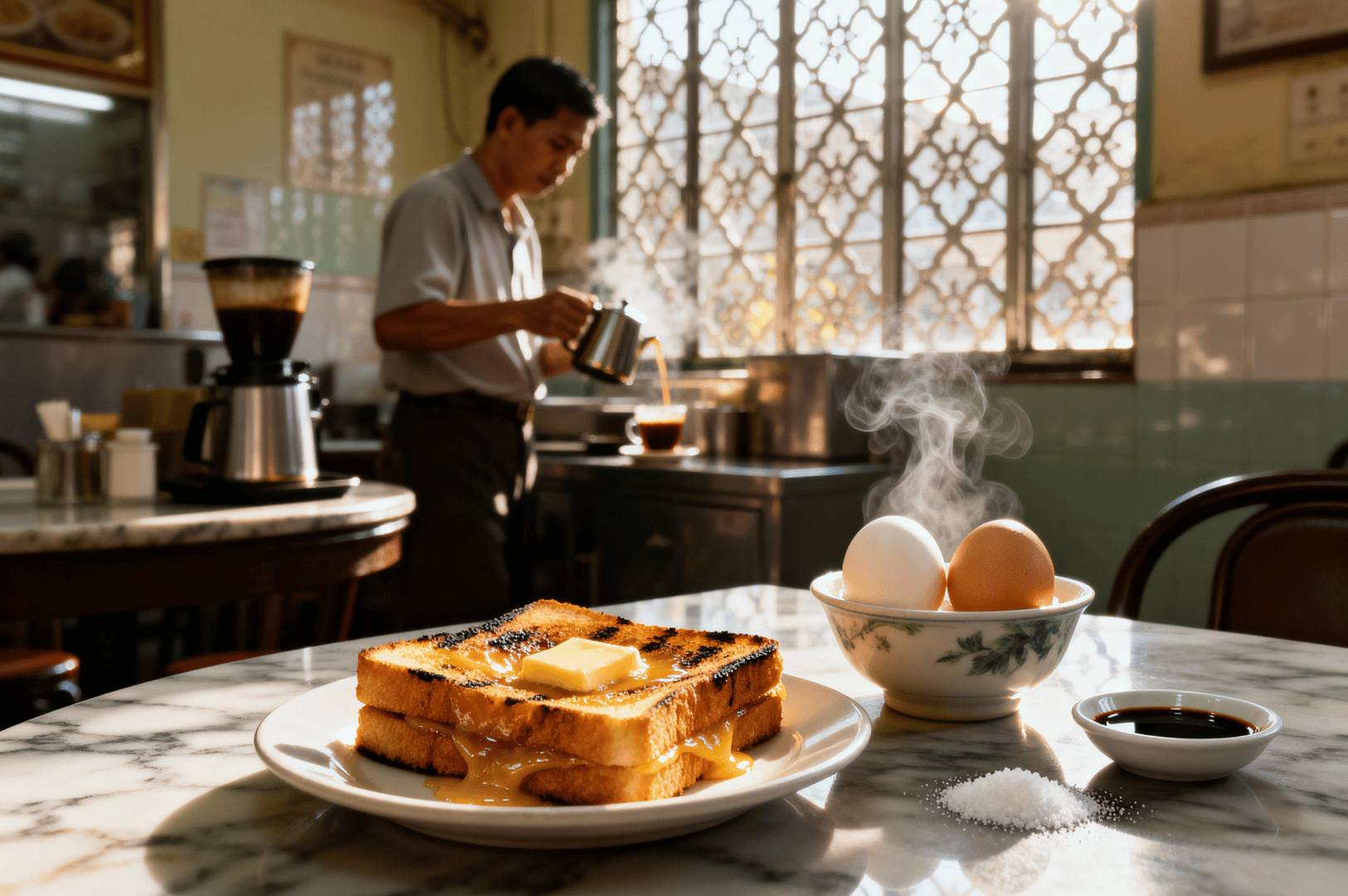
The classic Singapore breakfast is an experience in itself. The star is kaya toast, featuring slices of bread—often baked in house—toasted over charcoal and slathered with butter and kaya jam, a fragrant spread made from coconut and egg. It’s served with soft boiled eggs, or half boiled eggs, cooked to perfection and seasoned with dark soy sauce and pepper.
This simple meal is a cornerstone of kopitiam food culture. While many kopitiams today also house stalls selling dishes like chicken rice or nasi lemak, the classic breakfast trio remains a beloved tradition. Famous establishments like Ya Kun Kaya Toast are renowned for their crisp toast and delicious kaya.
Documenting Kopitiam Culture
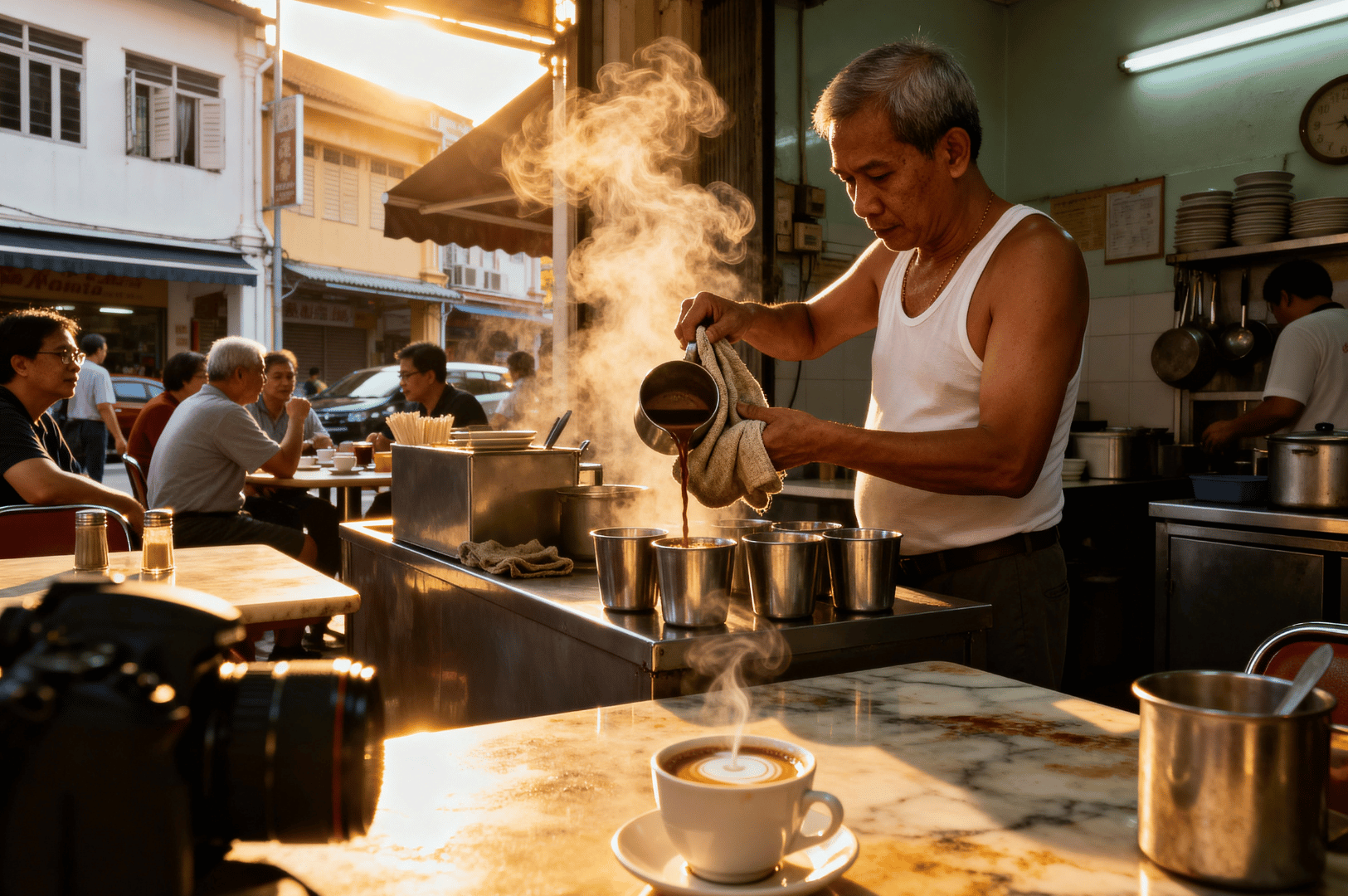
For a photographer, capturing the essence of a kopitiam is a rewarding challenge. The atmosphere is often one of high turnover and constant motion, especially during breakfast hours when you see a full house.
My approach is to focus on the details that tell the story. I look for the steam rising from a good cup of kopi, the rich color of the gula melaka in a local sweet tea (teh), or the focused expression of the person brewing the coffee. Natural light is your best asset. Sit near an open front to capture the morning light as it illuminates the worn marble tables and the vibrant scenes within the coffeeshop. The goal is to capture the feeling of the place, from the taste of the toast to the sound of the busy room.
Preservation and Modernity
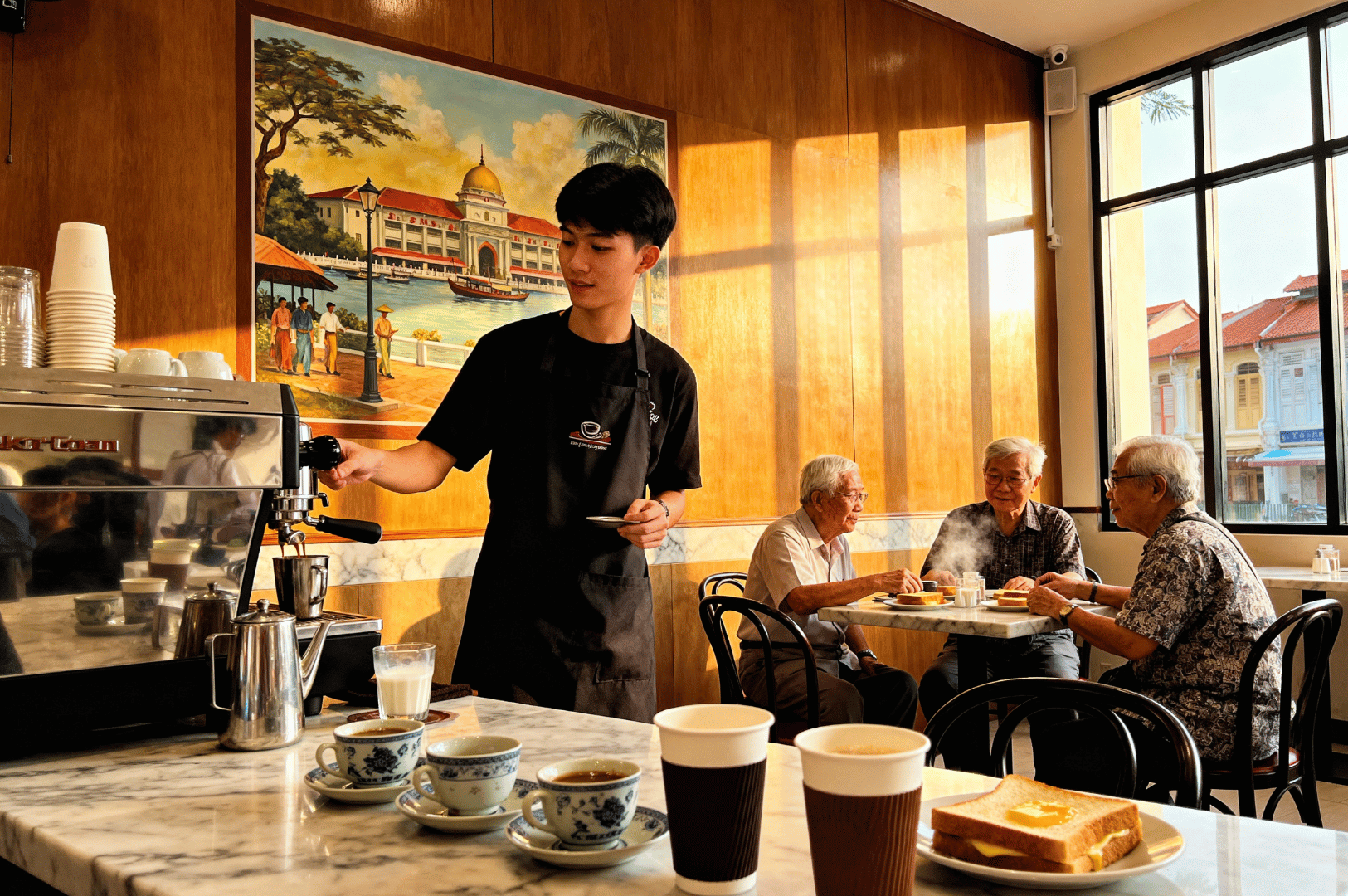
As Singapore evolves, so does its kopitiam culture. While many spots hold fast to tradition, others blend old and new. You might find a traditional kopi served alongside Western coffee options, or new ingredients like milo powder appearing in creative drinks. Despite modernization, the core of the kopitiam remains: a welcoming, affordable spot for the community to gather, eat, and connect.
From historic spots to widespread favorites, these coffee shops are more than just a business. They are a cultural touchstone, a place of comfort, and a testament to Singapore's rich heritage. By documenting these spaces, we help preserve their stories for future generations, ensuring the unique flavor of kopitiam culture continues to thrive.
If you're looking to enhance your food photography, particularly when capturing the rich colors and textures of laksa, don't miss our comprehensive guide on Golden Hour Laksa Photography Tips. It’s packed with expert insights to help you make the most of the natural lighting and achieve stunning, mouth-watering shots.

To the Bowl That Sings with Steam Every Morning
May 12, 2026
The glass of my lens fogs over the second I take off the cap. It is 6:15 AM at Maxwell Food Centre. The heavy, cool air of the morning clashes immediately with the immense heat…
-
From Queue to Tray: A Continuous Frame Through Fortune Centre Singapore’s Lunch Hour
May 11, 2026
The air inside the first floor of Fortune Centre is thick with the inviting aroma of toasted sesame and rich braised tofu. It’s just past midday, and the narrow corridors along Middle Road buzz quietly…
-
A Letter I Never Gave to the Noodle Uncle
May 8, 2026
The bamboo strainer hits the edge of the aluminum pot with a hollow, rhythmic thud. It is two in the afternoon at Hong Lim Food Centre. The frantic lunchtime crowd has finally vanished. The heavy,…
-
Fortune Centre Food: Cheap Eats That Deserve a Closer Look
May 7, 2026
The first thing I notice about Fortune Centre is not the food. It is the light Fluorescent, flat, almost unforgiving. It settles over everything without preference. Trays of mock meat, bowls of laksa, stainless steel…
-
To The Recipe That Outlived Its Maker
May 5, 2026
The morning air at Jalan Berseh is still cool, but the heat radiating from the charcoal fire is immediate. I stand a few steps back from the counter of Sungei Road Laksa. I watch the…
-
Roux Legacy: The Japanese Curry Mastery of Maruhachi Donburi & Curry
May 4, 2026
A Kopitiam Lunch with Japanese Roots Featuring Maruhachi Donburi Curry I visited the Edgefield Plains outlet on a Tuesday around 12:30 PM. I was exhausted after a morning photo shoot and desperately needed a heavy,…
-
A Note to the Table That Has Seen Too Much
May 1, 2026
The afternoon light at Old Airport Road Food Centre is heavy and thick. It cuts through the open sides of the building, casting long, sharp shadows across the floor. I sit at table 42 near…
-
Golden Hour Photography in a Bowl: Photographing Japanese Curry’s Visual Language
April 30, 2026
It was exactly 6:30 PM during the sunset golden hour. The sun was dipping low on the horizon, casting a long, warm beam of golden light directly across my wooden table. The waitress set down…
-
A Letter Written While Waiting for the First Customer
April 28, 2026
It is 10:15 AM at the edge of the neighborhood wet market. The chaotic morning rush of housewives and early shoppers has completely thinned out, leaving behind wet floors and a quiet hum of ceiling…
-
Quiet Imports: How Japanese Food in Singapore Settles Into Foreign Cities
April 27, 2026
It is just past one in the afternoon at a busy mall in Tampines. A man in a pressed white shirt stands up from a small wooden table. He picks up his plastic tray. On…