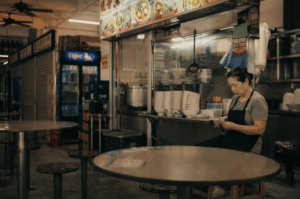

The true soundtrack of Singapore is not the hum of the city, but the gentle clink of a porcelain cup. It’s the familiar call for "Kopi C, siew dai!" echoing through a bustling coffee shop. This is the heart of Singapore kopitiam traditions, a culture I’ve dedicated myself to capturing through my lens. A Singapore kopitiam is more than a place to get a drink; it's a community cornerstone and a living piece of history.
The Kopitiams Today: A Social Pillar
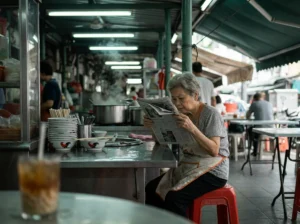
Traditional coffee shops are woven into the fabric of the nation. The word "kopitiam" itself is a beautiful mix of the Malay word for coffee, kopi, and the Hokkien word for shop, tiam. These spots began as social hubs for early immigrants. Today, many kopitiams are found at the foot of Singapore Housing Development Board (HDB) blocks, cementing their role as central gathering places. Famous names like Ya Kun Kaya Toast, Killiney Kopitiam, and the historic Tong Ah Eating House on Keong Saik Road.
The Art of a Strong Brew
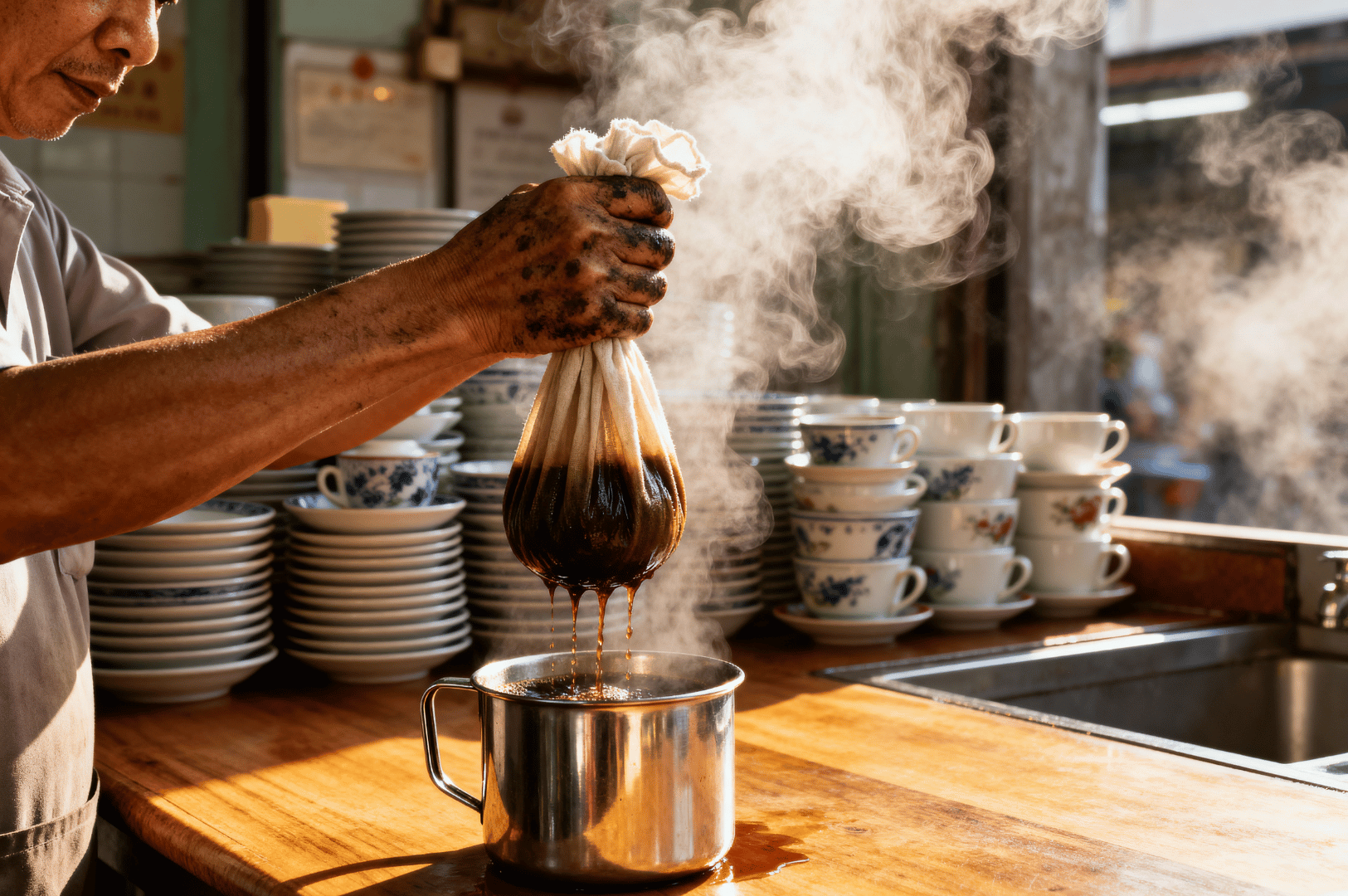
The magic of kopitiam culture lies in its unique coffee. Forget the espresso machine; here, the process is pure performance. Strong coffee is brewed using Robusta beans, often roasted with butter, which are then filtered through a cloth "sock." The result is a strong brew, but you can also request a weaker coffee (kopi po).
Understanding the lingo is essential. A standard kopi comes with condensed milk. For a version with evaporated milk and sugar, you’d order a Kopi C. If you prefer black coffee with sugar, it’s Kopi O. To get just the right amount of sweetness, you can ask for "siew dai," which means less sugar. On a hot day, a tall glass of strong iced coffee is the perfect beverage.
Beyond Coffee: Kaya Toast and Soft Boiled Eggs
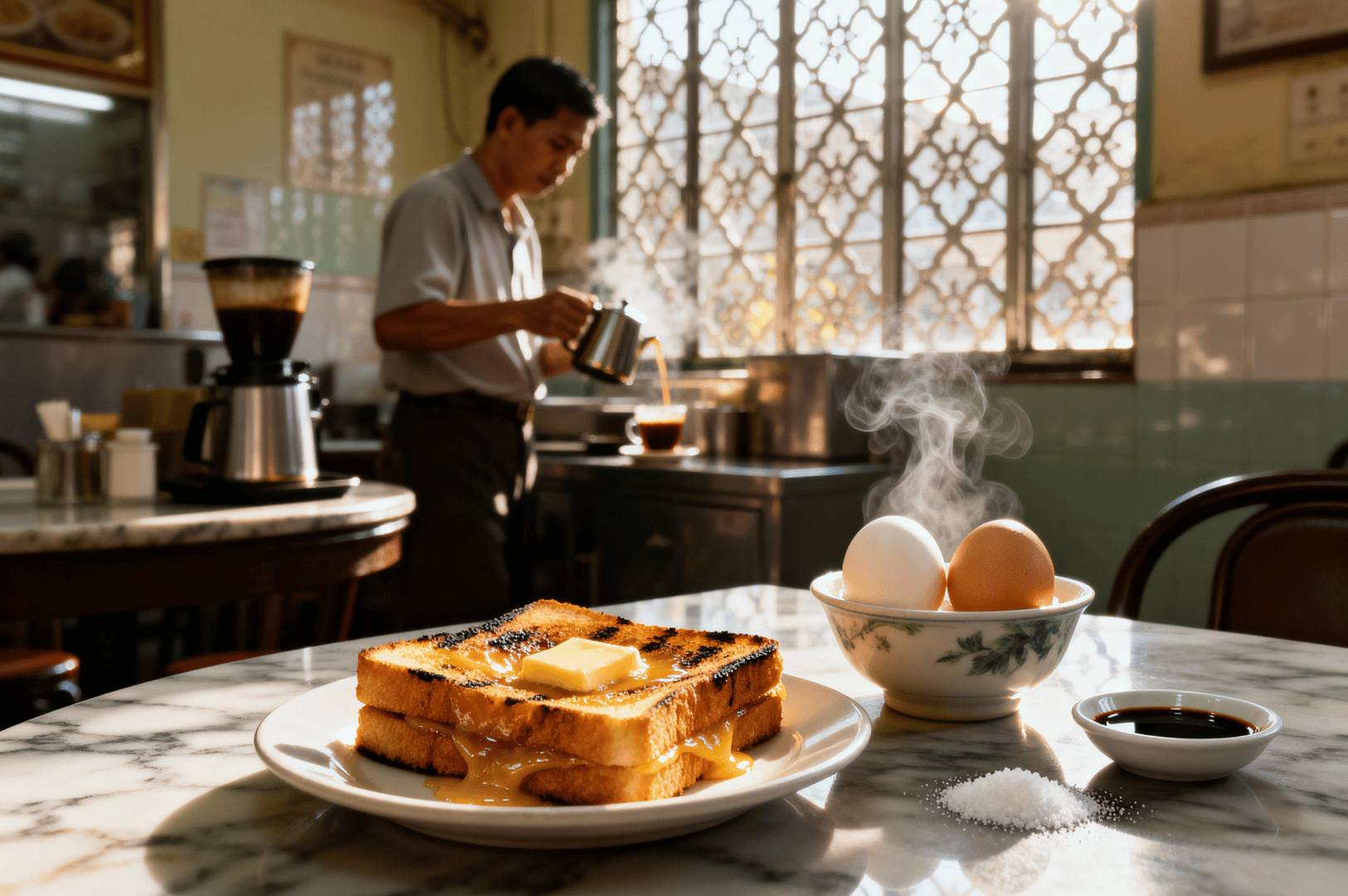
The classic Singapore breakfast is an experience in itself. The star is kaya toast, featuring slices of bread—often baked in house—toasted over charcoal and slathered with butter and kaya jam, a fragrant spread made from coconut and egg. It’s served with soft boiled eggs, or half boiled eggs, cooked to perfection and seasoned with dark soy sauce and pepper.
This simple meal is a cornerstone of kopitiam food culture. While many kopitiams today also house stalls selling dishes like chicken rice or nasi lemak, the classic breakfast trio remains a beloved tradition. Famous establishments like Ya Kun Kaya Toast are renowned for their crisp toast and delicious kaya.
Documenting Kopitiam Culture
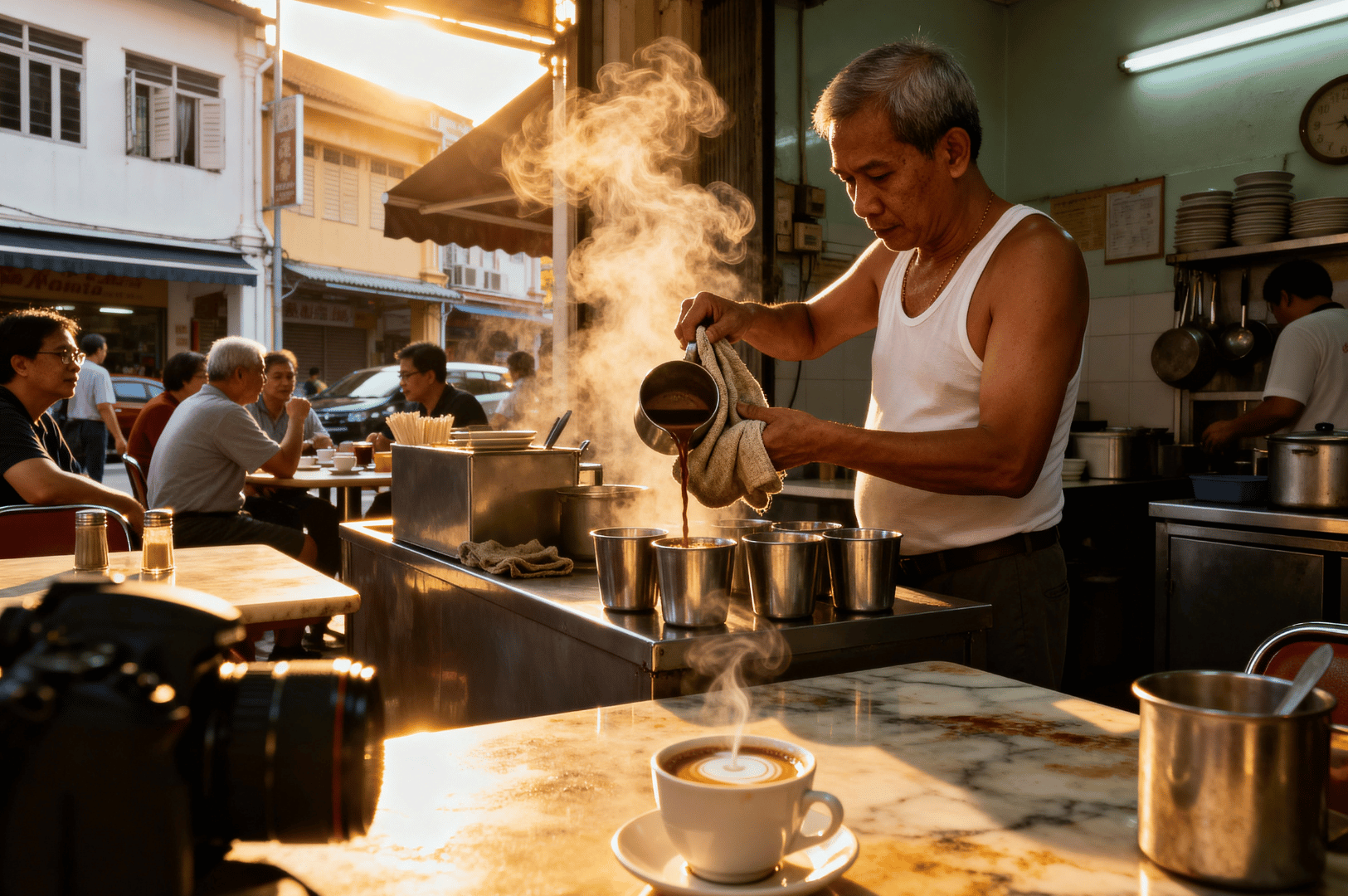
For a photographer, capturing the essence of a kopitiam is a rewarding challenge. The atmosphere is often one of high turnover and constant motion, especially during breakfast hours when you see a full house.
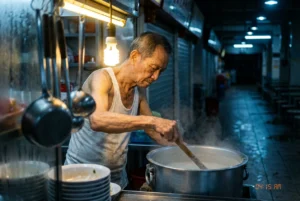
My approach is to focus on the details that tell the story. I look for the steam rising from a good cup of kopi, the rich color of the gula melaka in a local sweet tea (teh), or the focused expression of the person brewing the coffee. Natural light is your best asset. Sit near an open front to capture the morning light as it illuminates the worn marble tables and the vibrant scenes within the coffeeshop. The goal is to capture the feeling of the place, from the taste of the toast to the sound of the busy room.
Preservation and Modernity
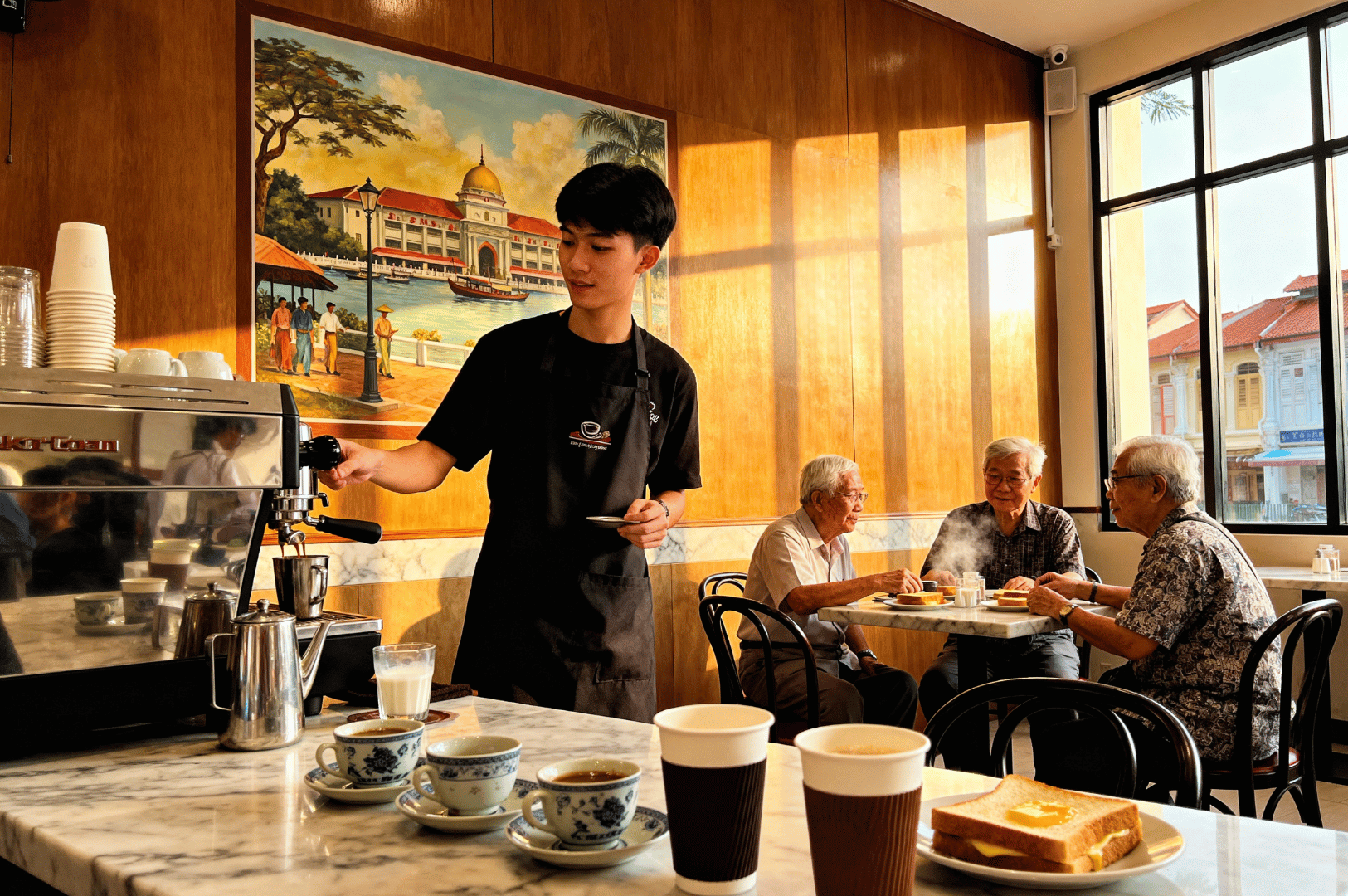
As Singapore evolves, so does its kopitiam culture. While many spots hold fast to tradition, others blend old and new. You might find a traditional kopi served alongside Western coffee options, or new ingredients like milo powder appearing in creative drinks. Despite modernization, the core of the kopitiam remains: a welcoming, affordable spot for the community to gather, eat, and connect.
From historic spots to widespread favorites, these coffee shops are more than just a business. They are a cultural touchstone, a place of comfort, and a testament to Singapore's rich heritage. By documenting these spaces, we help preserve their stories for future generations, ensuring the unique flavor of kopitiam culture continues to thrive.
If you're looking to enhance your food photography, particularly when capturing the rich colors and textures of laksa, don't miss our comprehensive guide on Golden Hour Laksa Photography Tips. It’s packed with expert insights to help you make the most of the natural lighting and achieve stunning, mouth-watering shots.

Still Hour Light in a Quiet Hawker Centre Stall
April 25, 2026
By Aaron Ong For Street Food Photographer It is 3:15 PM. The ceiling fans move air that feels heavier than it looks, pushing it in slow circles across rows of empty tables. The lunch rush…
-
Hands That Stir Slowly: The Quiet Discipline Behind a Japanese Tonkatsu Stall in Toa Payoh
April 24, 2026
It is 12:30 PM in Toa Payoh. The hawker centre hums with the midday rush. People balance plastic trays while scanning the aisles for empty tables. Amid the clatter of woks and shouting voices, there…
-
To The Quiet Man Behind The Wok
April 21, 2026
It is 7:30 PM at Old Airport Road. The dinner rush is at its absolute peak, a chaotic symphony of scraping chairs, chattering families, and the heavy thud of cleavers against wooden blocks. Yet, as…
-
Japanese Food Singapore: Mapping Ramen Bars and Curry Counters on the East Side
April 20, 2026
When I first moved my photography workflow to the East Side, I assumed my dining options would be strictly limited to local heritage food. I spent weeks eating Katong laksa and Joo Chiat prawn noodles….
-
The Weight of a Broth: Following Tonkotsu Through Japanese Food, from Long Simmer to Late-Night Bowls
April 17, 2026
I still remember the first time I sat down for a proper bowl of tonkotsu ramen. It was just past 9 PM in Tanjong Pagar. I was exhausted after a long day of shooting on…

A Note Left Between Bowls and Steam
April 14, 2026
It is 3:15 PM. The ceiling fans push thick, warm air across the empty tables. The lunch rush faded hours ago, and the evening crowd has yet to arrive. I am sitting two rows away…
-
Japanese Curry Singapore: How Did Curry Roux Blend Into The City’s Districts?
April 13, 2026
It is slightly past one in the afternoon at a crowded food court in Tanjong Pagar. The air is thick with the smell of roasted coffee beans, frying oil, and the sharp, fermented tang of…
-
The Evolution of Japanese Food in Singapore: From Luxury Dining to Everyday Comfort
April 10, 2026
I was standing outside Ramen Keisuke on a humid Tuesday evening, camera resting against my hip. The queue stretched past three adjacent storefronts, a quiet line of office workers, students, and couples waiting patiently for…

To The Stall That Opens Before Sunrise
April 7, 2026
It is 4:15 AM. The estate is completely still, save for the low hum of the expressway in the distance. I walk through the darkened aisles of the hawker centre, my footsteps echoing against the…
-
Best Japanese Curry Singapore: Cozy Spots for Curry Rice and Street-Style Photos
April 6, 2026
Walking through the vibrant alleys of Bugis with a camera slung over my shoulder, the mingling scents of roasted spices and deep-fried meats tell a story of culinary convergence. Over the years, Japanese curry has…