I still remember the first time I sat down for a proper bowl of tonkotsu ramen. It was just past 9 PM in Tanjong Pagar. I was exhausted after a long day of shooting on the streets. I wanted something fast and filling. When the bowl arrived, I looked at the opaque, milky surface of the tonkotsu ramen broth and assumed it was just a heavy, creamy soup. I was entirely wrong about what I was looking at.
When I first tried this style of ramen, I did not understand the mechanics behind it. I ate the noodles too slowly. I drank too much of the hot soup before asking for a refill. I walked out feeling uncomfortably full, realizing I had misjudged the meal completely.
Tonkotsu ramen is not just a rich bowl of noodles. It is an exercise in time, pressure, and exact timing. In my experience as a photographer watching kitchens operate, I have found that tonkotsu carries a very literal weight. That weight is not just in the calories. It is in the hours spent standing over a boiling large pot before the doors even open.
Discover how flavors and traditions blend in the vibrant journey of the evolution of Japanese food in Singapore.
What Actually Makes Tonkotsu “Heavy” in Japanese Food
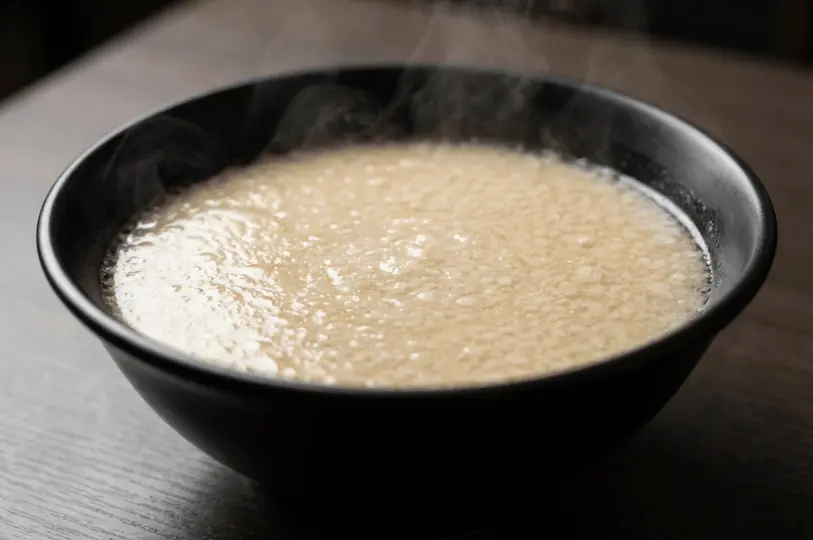
When you look at a bowl of shoyu or shio ramen soup, you can usually see straight to the bottom of the bowl. The broth is clear. Tonkotsu broth is the exact opposite. It is cloudy, pale, and completely opaque.
Many people assume this white, creamy appearance comes from adding milk or dairy. That is a myth. The heavy, clingy texture of tonkotsu ramen broth comes entirely from emulsification. When you boil pork bones at a rapid, rolling boil for many hours, the fat, collagen, and marrow break down. They violently mix with the water until they bind together into a single, suspended liquid.
A good tonkotsu broth should feel thick and structured. It should coat the back of your spoon. If it just feels greasy or leaves a clear layer of oil floating on top of thin water, the emulsification process has failed. The weight you feel when eating it is the density of the melted collagen, giving the soup a distinctly sticky finish on your lips.
From Bone to Bowl: Why Time Matters in Making Ramen Broth
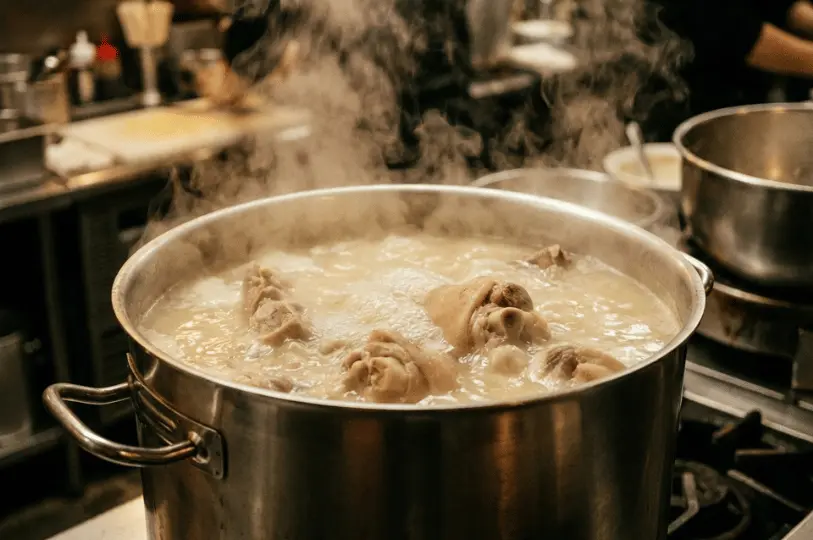
You cannot rush tonkotsu ramen broth. It demands a stubborn amount of labor. When I watch ramen shops prepare their soup stock, the process always follows a strict, unyielding rhythm.
- Cleaning the chicken carcass and pork bones: The process starts by soaking and scrubbing all the bones, including chicken bones and pork bones, in cold water to remove excess blood and impurities such as coagulated blood. Skipping this step results in a dark, foul-tasting soup.
- The long boil: Unlike Western stocks that require a gentle simmer, tonkotsu broth requires a violent, rolling boil over high heat. This aggressive bubbling physically smashes the fat and marrow into the water.
- Emulsification: Over 10 to 18 hours, the hard matter breaks down. The liquid reduces, thickens, and turns a pale, creamy white.
- Final texture: The chef must constantly stir the massive pots with a long paddle to prevent the bones from scorching at the bottom. The result is a heavy, nutrient-dense liquid that clings to everything it touches.
Insider Knowledge: The texture of the broth signals the quality of the ramen ya. If a kitchen takes shortcuts by using commercial powder or skipping the long boil, the broth will feel watery and flat in your mouth. A true, slow-boiled tonkotsu broth has a distinct viscosity that artificial thickeners cannot replicate.
Soy Sauce and Seasonings Added: How to Order Tonkotsu Properly (Especially Your First Time)
Most tonkotsu ramen served around the world follows the Hakata style. This specific style originated in Fukuoka and features very thin, straight Hakata style noodles. Because these noodles are so thin, they cook incredibly fast. They also turn soft and mushy just as quickly when sitting in hot soup.
When you sit down, you usually receive an order slip. Here is how you should approach it.
First, choose your noodle firmness. You will often see options like soft, normal, firm, and extra firm. If you take your time eating, always choose firm or extra firm. The noodles will continue to cook in your bowl. By the time you reach the bottom, they will have softened to a normal texture.
Next, prepare for “kaedama“. This is the traditional Hakata system of ordering a noodle refill. Because thin noodles get soggy fast, ramen shops serve smaller portions. When you finish your first batch of noodles, you pay a small fee to get a fresh, hot batch dropped right into your leftover soup.
Pro Tip: If you plan to order kaedama, you must manage your ramen broth. Do not drink all your soup with your first serving of noodles. Leave at least half the liquid in your bowl. Ask for the refill when you have two or three bites of your current noodles left, so the fresh batch arrives exactly when you are ready.
Common Mistakes to Avoid When Eating a Bowl of Ramen
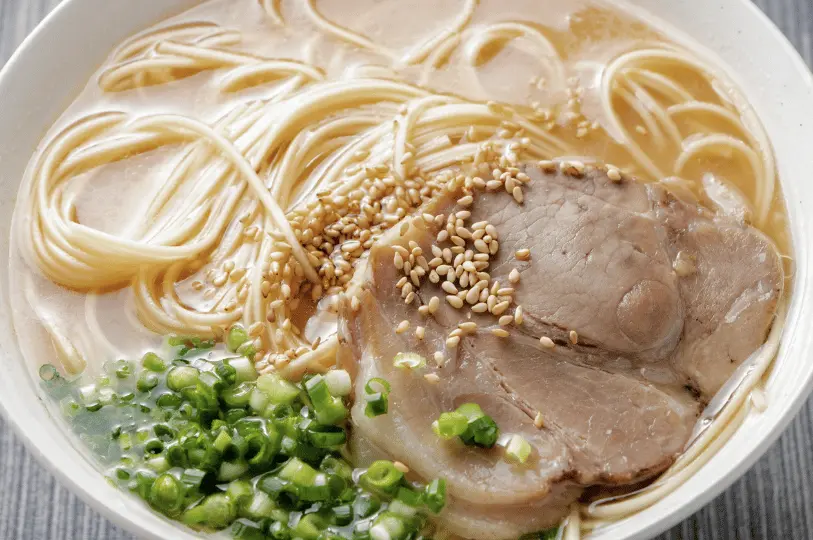
I have made plenty of mistakes while learning how to eat this dish properly. Tonkotsu ramen is unforgiving if you disrupt its balance.
One of my biggest errors early on was ordering my noodles extra firm, but then spending five minutes taking photos of the bowl. By the time I took my first bite, the noodles had absorbed the hot soup and turned completely soft. You have a very narrow window to enjoy the intended texture. Eat immediately.
Another mistake is finishing the broth too early. I once eagerly drank most of my soup, only to realize I was still hungry. When I asked for a kaedama refill, I ended up eating plain, boiled noodles with barely enough liquid to coat them.
Finally, do not add condiments too early. Shops usually provide crushed garlic, chili oil, spicy mustard greens, and spring onions on the table. If you dump these into your bowl the moment it arrives, you completely mask the flavor of the broth the chef spent 12 hours making. Taste the original soup first. Add the extras halfway through your meal to change the flavor profile.
If it is your first time, do not order the most expensive bowl with thick pork belly and a mountain of toppings. A standard bowl is already incredibly heavy. Start simple.
Tonkotsu in Singapore: What Changes in the Dining Experience
Eating tonkotsu ramen in Singapore is a slightly different experience than eating it in a cramped alleyway in Fukuoka. The culture around the dish adapts to the local environment.
First, you need to set your pricing expectations. A standard, entry-level bowl without many toppings will cost you around $12.90 to $15. If you want the “special” bowls loaded with extra pork chashu, ramen eggs, and seaweed, expect to spend $19 to $21 per bowl.
Innovation of Tonkotsu by Neighborhood: Tanjong Pagar and Chijmes
You can find excellent examples of true Hakata-style ramen right in the city center. Tonkotsu King in Tanjong Pagar serves a famously thick, unapologetic tonkotsu ramen broth in a tiny, crowded room.
Just down the street, or at Chijmes, Hakata Ikkousha provides a highly traditional, slightly lighter tonkotsu broth that foams at the surface. If you want a contrast, look at Takagi Ramen in the heartlands. They offer a more mass-market, localized version for roughly $7 to $9, making it highly accessible but less intense.
“Late Night” in Singapore
You also need to understand the concept of “late night” here. In Japan, ramen is often consumed at 1 AM after a long night of drinking. In Singapore, our late-night ramen culture is really just post-work dinner. Most specialty ramen restaurants hit their peak between 8 PM and 10 PM. By midnight, most of the serious tonkotsu spots have already scrubbed their pots and locked their doors.
Lastly, it is important to note that most tonkotsu ramen in Singapore is not halal, as the defining characteristic of the dish is the use of pork bones and pork fat.
Good Ramen: Signature Ramen Shops Like Ramen Nagi and Ramen Hitoyoshi
Singapore is home to many renowned ramen shops that offer a satisfying meal with authentic flavors. Ramen Nagi, located at Ion Orchard, is famous for its Original Butao King tonkotsu ramen featuring springy noodles and a rich, creamy broth. Their signature miso tare adds depth to the soup base.
Ramen Hitoyoshi, found in International Plaza, focuses mainly on tonkotsu ramen, offering a value-for-money experience with a milky flavorful broth. Both ramen shops serve chewy noodles and use carefully prepared dashi stock and bonito flakes to enhance umami.
These ramen ya exemplify the art of making ramen broth, combining chicken carcass, pork bones, chicken feet, and other ingredients simmered gently for hours to create a complex flavor.
Side Dishes and Accompaniments: Fried Rice and More
No bowl of ramen is complete without a side dish to complement the flavors. Fried rice is a popular choice, often made with leftover meat, spring onions, garlic, and a touch of soy sauce to add natural sweetness and umami.
Other common side dishes in ramen restaurants include gyoza, miso soup, and various pickled vegetables. These sides balance the richness of the tonkotsu broth and provide textural contrast to the noodles and toppings.
Conclusion: Appreciating Japanese Food and the Craft of Ramen Soup
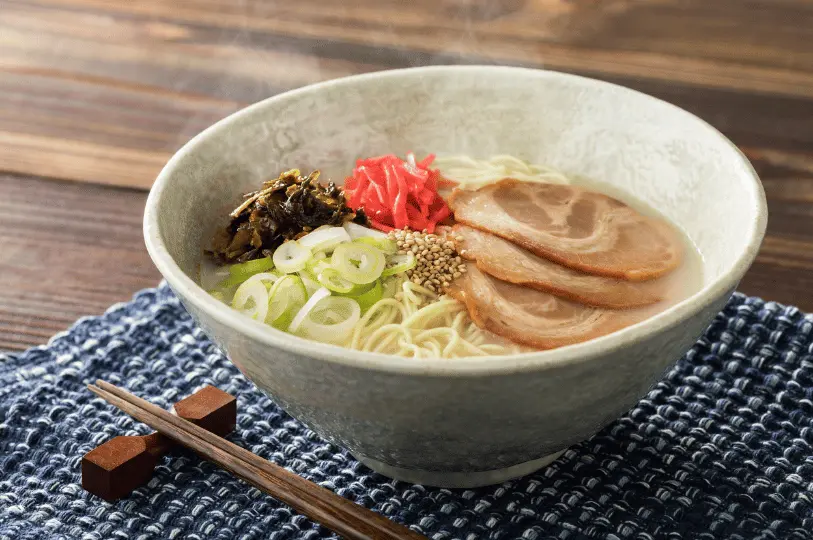
The next time you sit down in front of a steaming bowl of ramen noodles, take a moment to appreciate the artistry behind the soup base. The weight of a broth is about much more than how full you feel when you leave the restaurant. It is the culmination of hours of standing over a roaring fire, the precise timing of a boiling pot, and the careful pacing of your own eating experience.
You now know how to manage your noodles, when to ask for a refill, and why that soup coats your spoon so perfectly. Use this knowledge the next time you find yourself craving good ramen at your favorite ramen ya or when making ramen broth in your own kitchen.
Order with confidence, eat quickly, and appreciate the quiet labor sitting in the bowl right in front of you.

To the Fragrance That Lingers Long After the Meal
June 5, 2026
The evening air at Old Airport Road Food Centre is thick and warm. It wraps around me the moment I step away from the open street. I walk past the bright neon signboards, letting the…
-
Lau Pa Sat Satay Street: Photographing After-Work Satay in Singapore’s CBD.
June 4, 2026
I visited Lau Pa Sat Satay Street on a Tuesday around 7pm, just as Boon Tat Street was changing its identity from a busy traffic route in Singapore’s CBD to a lively alfresco dining venue….
-
A Letter to the Hidden Moments Between the Shots
June 2, 2026
The afternoon heat settles heavily over Tiong Bahru Market. The frantic noise of the lunch hour is completely gone. I sit at a corner table near the open balcony. The green tiles reflect the warm,…
-
Izakaya Singapore: More Than Just After-Work Spots
June 1, 2026
When we talk about izakayas in Singapore, we often reduce them to simple after work drinks spots. We picture loud rooms where tired professionals go to drink cold beer and eat cheap bar snacks. But…
-
The Quiet Moments Before the First Order
May 29, 2026
The sky outside is still a deep, bruised purple. Inside the food centre at Toa Payoh Lorong 8, the air is cool and heavy with the scent of damp concrete and raw ginger. I sit…
-
Flame, Smoke, and Sizzle: The Art of Grilling in Singapore’s Izakayas
May 28, 2026
A chef stands behind a trough of white-hot binchotan charcoal. He holds a fan in one hand and carefully turns a row of wooden chicken skewers with the other. He does not rush. He waits…
-
To the Vendors Who Know No Rest, Yet Keep Going
May 26, 2026
The air at Chinatown Complex Food Centre always carries a thin layer of grey soot by the time the evening arrives. I stand near the edge of the green tiled floor. The noise of the…
-
The Heart of the Grill: The Master Craftsmen Behind Izakayas Singapore Prides On
May 25, 2026
When I first started photographing food in Singapore, I had a very narrow view of what Japanese dining looked like. I walked right past the smoky, loud, narrow storefronts of local izakayas. I thought they…
-
A Quiet Reflection from the Corner of the Hawker Centre
May 22, 2026
The red plastic chair scrapes against the tiled floor. I set my camera bag on the empty seat next to me. The afternoon heat at Old Airport Road Food Centre is thick. A slow ceiling…
-
Capturing the Essence of Izakayas: How Izakaya Photography Brings These Hidden Gems to Life
May 21, 2026
I clearly remember my first time bringing a professional camera into Shukuu Izakaya & Sake Bar on Stanley Street. I walked in with a rigid plan to photograph their famous mentaiko rosti. I spent a…