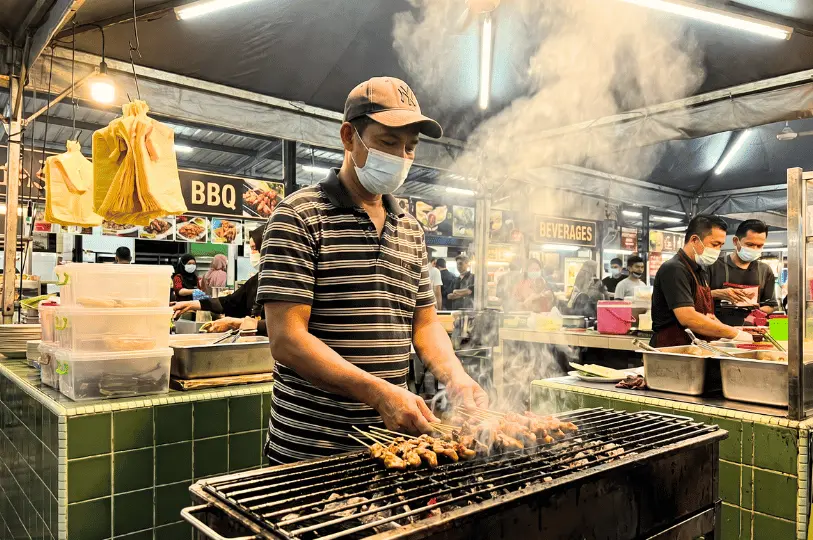
The first thing I learned about Singapore’s street food life wasn’t a flavor. It was the smoke.
Years ago, at a satay stall in Lau Pa Sat, I noticed the seller wasn’t watching the meat. He was watching the smoke. Thin, fast smoke meant the fat was burning off clean. Thick, slow smoke meant something was about to char too hard.
This guide is for you if you love grilled meat on a stick but want to understand it better. By the end, you’ll know how to tell the major skewer styles apart, where to find good versions across Singapore, and how to order.
Why Skewers Matter in Singapore Street Food and Hawker Culture
People love skewers everywhere, and the reason is simple. A skewer is portable, fast, and built around one of the oldest cooking ideas there is: meat over fire. There’s no fork, no fuss. You eat with your hands and your attention stays on the food.
What makes Singapore special is its vibrant hawker culture, where street vendors and food stalls serve a variety of skewers reflecting the city’s multicultural heritage. In one city, sometimes within a few MRT stops accessible by public transport, you can enjoy chicken satay, pork satay, yakitori izakaya-style skewers, Middle Eastern kebabs, and more. Few places let you compare these traditions side by side so easily.
The Main Types of Singapore Skewers: Satay, Yakitori, Chuan’r and Kebabs
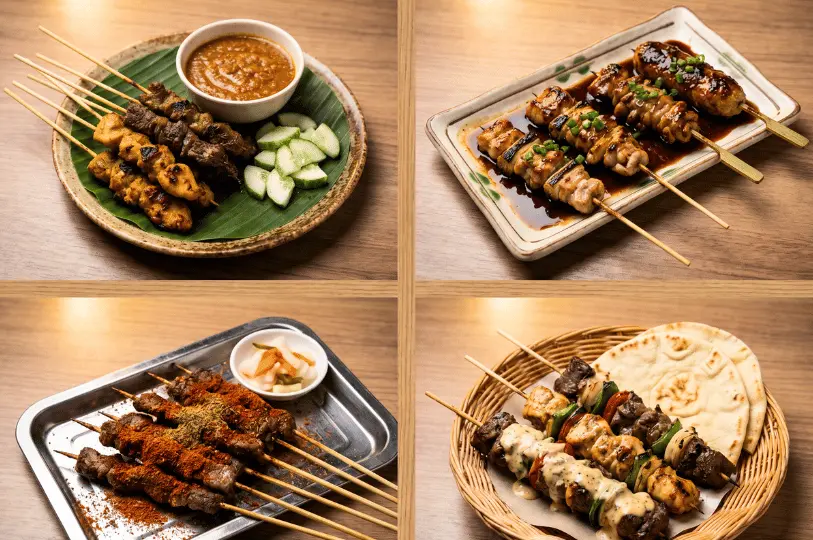
Here’s a quick reference before we get into the details. I’d suggest coming back to this table after you’ve tried a few.
Skewer Type | Origin | Common Ingredients | Marinade/Seasoning | Typical Serving Style |
|---|---|---|---|---|
Satay (including ah pui satay, fang yuan satay, haron satay) | Indonesia/Malay | Chicken satay, pork satay, mutton | Satay sauce with peanut sauce, turmeric, lemongrass, pineapple puree | With ketupat, cucumber, onion |
Yakitori | Japan | Chicken (various cuts), vegetables | Soy, mirin, sake, sugar (tare) | On bamboo sticks, often with rice or beer |
Chuan’r | China | Lamb, beef, chicken | Cumin, chili, sesame | Served hot on street stalls |
Kebab Skewers | Middle East/Turkey | Lamb, beef, chicken, vegetables | Yogurt, garlic, spices | With flatbread, salad |
Where to Find the Best Satay Stalls and Skewers Yakitori Izakaya in Singapore
Here’s where I’d send you, by style.
Satay: Lau Pa Sat and Chinatown Complex
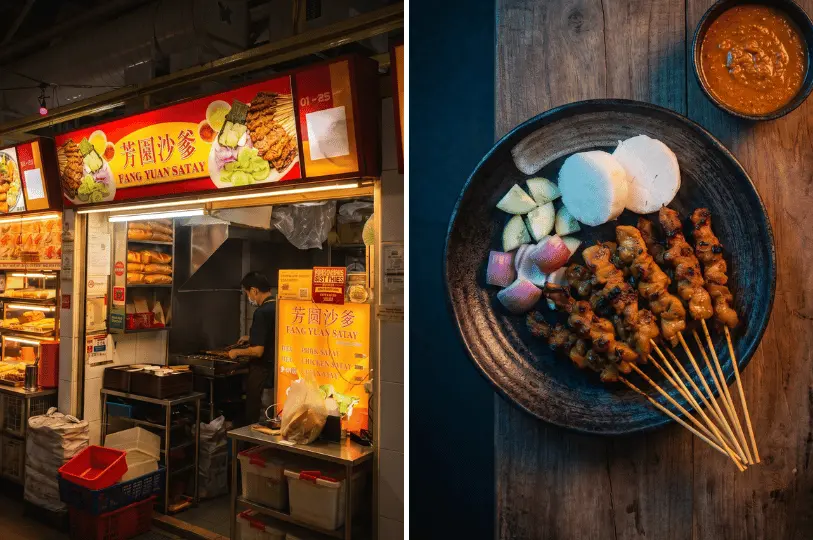
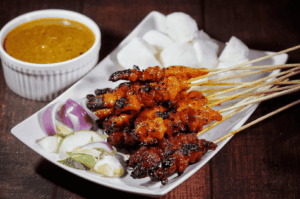
Start at Lau Pa Sat, especially in the evening when Boon Tat Street closes off and the satay stalls fire up. The satay club atmosphere there is lively, and you can find pork satay and chicken satay grilled to perfection with delicious peanut sauce.
Another classic spot is Toa Payoh Lor 5, home to fang yuan satay, known for their marinated pork and chicken satay with a generous portion size. The Chinatown Complex also offers some of the best satay stalls, including Shi Xiang Satay with pineapple puree in their satay sauce.
For a more local vibe, try Haron Satay at East Coast Bay, a favorite among street vendors and locals alike.
Yakitori: Little Tokyo or Tanjong Pagar
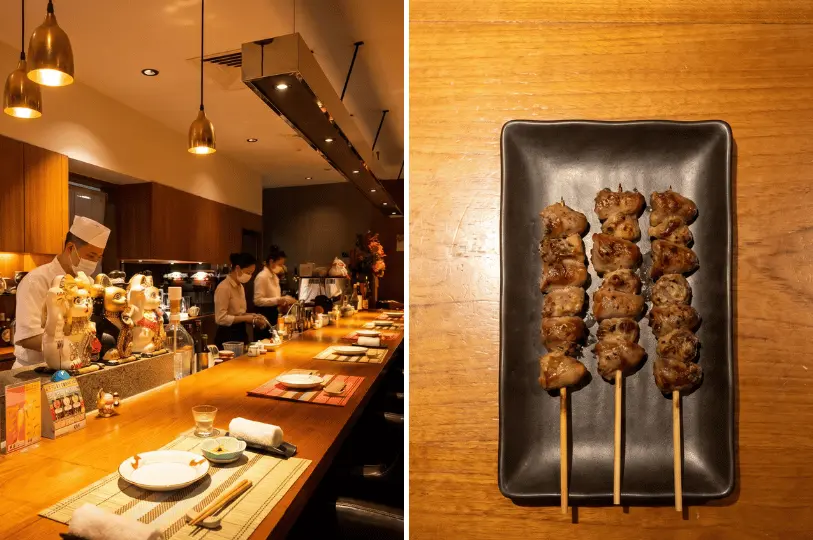
Head to the izakayas around Tanjong Pagar or into Little Tokyo at Cuppage Plaza. A counter like Kazu Sumiyaki is the kind of place where you watch the grill work up close. This is a sit-down experience, not a quick bite.
A proper yakitori izakaya dinner with drinks can run S$50–80 a head, so go when you want to linger. These places reflect Japan’s yakitori izakaya culture with authentic skewers yakitori izakaya style.
If yakitori has whetted your appetite, dive deeper into the best izakayas Singapore grills on where skewers, sizzle, and sake come together.”
Chuan’r: Chinatown’s Festival Market
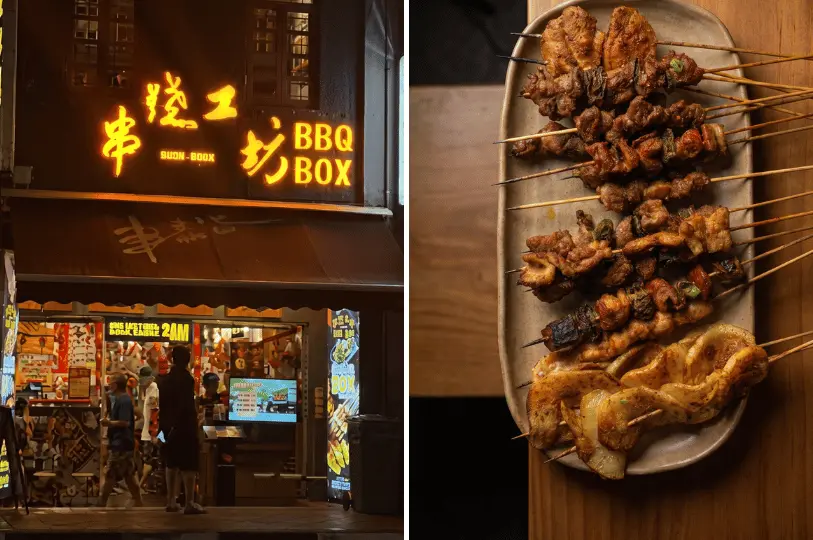
Look around Chinatown and the bustling Festival Market for authentic street-stall style Chuan’r. This casual, smoky skewer option features tender lamb, beef, or chicken grilled over charcoal and heavily seasoned with a blend of cumin, chili, and sesame.
Prices are affordable, usually around S$1–2 per stick. Bring a friend, a cold drink, and enjoy the vibrant community atmosphere that surrounds these bustling hawker shops.
Kebab: Kampong Glam’s Arab Street and Little India
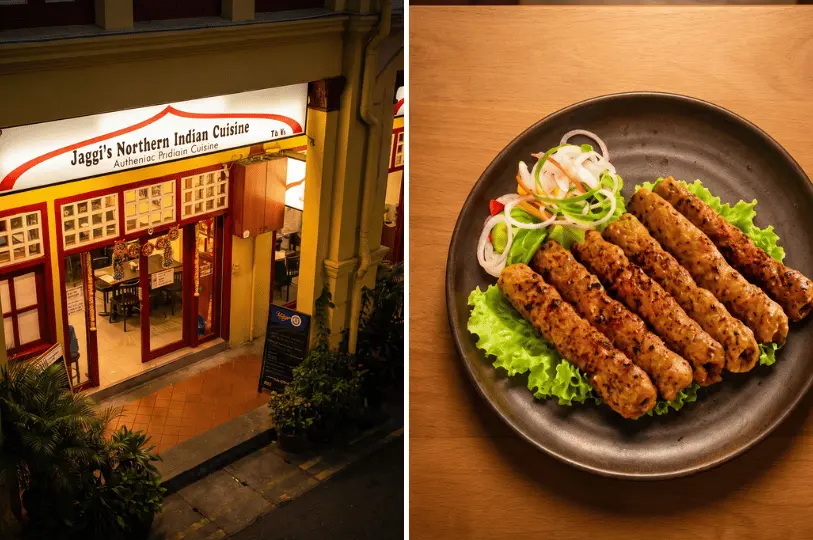
Kebabs: For Middle Eastern and South Asian flavors, head to Arab Street and the nearby lanes in Kampong Glam, as well as parts of Little India. Here, kebabs are grilled to tender perfection and served with fresh flatbread, salad, and a variety of dipping sauces.
Expect to pay around S$2–4 per skewer. These dishes reflect the multicultural heritage of Singapore and provide a hearty, satisfying meal. Be mindful that some shops in these areas can feel like a tourist trap, so it’s worth doing a little advance search or asking locals for recommendations to ensure consistent quality.
Insider knowledge: At Lau Pa Sat, walk the row before committing. The stall with the steadiest charcoal glow and the shortest, fastest smoke is usually the one handling its fire best.
How to Order and Enjoy Skewers in Singapore
A few things I’ve learned that make every skewer meal better.
Pair with the right drink. Beer works almost universally, especially with yakitori izakaya and chuan’r where the fat and spice need cutting through. With satay, I prefer something cold and plain so the peanut sauce stays the star.
From satay to yakitori, if your taste buds are craving a skewer adventure, discover the full spectrum of flavors waiting at Cuppage Plaza.
Mind the sides. Satay comes with ketupat, cucumber, and onion for a reason, they balance the richness. With kebabs, use the flatbread and salad rather than ignoring them.
Eat in the right order. Start with the salt or lightly seasoned skewers, then move to the bolder, spicier, or sweeter ones. If you start with chili-heavy chuan’r, you’ll struggle to taste a delicate yakitori izakaya afterward.
For photos, here’s my simple rule. Go top-down when plating matters, like a satay plate with its sauce and garnishes arranged together. Go close-up when texture and char are the story, like a single yakitori izakaya skewer with crisp skin or the blistered edge of a chuan’r stick. Shoot fast before the steam fades and the gloss dulls.
Pro tip: Skewers cool quickly and lose their shine. Take one frame, then eat. The food is always better than the photo.
Taste Singapore’s Skewers for the Best Grilled on a Stick Experience
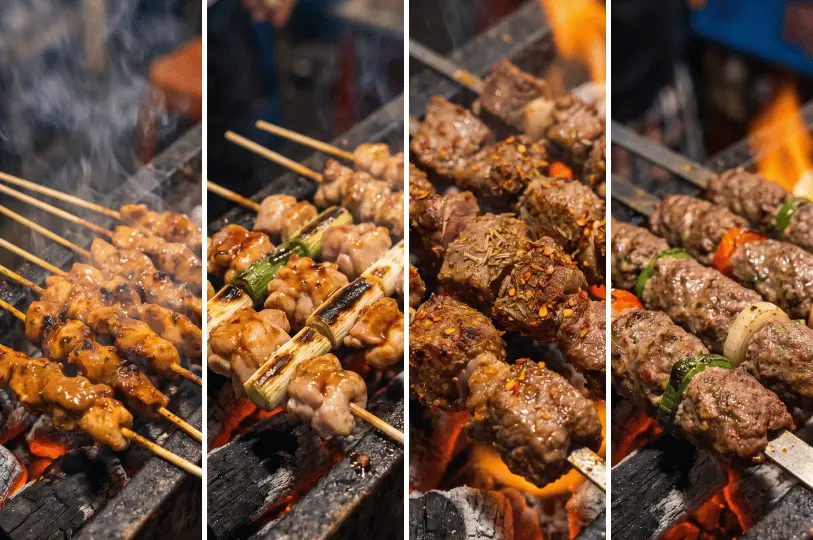
The best way to understand Singapore’s skewers is to compare them. Try chicken satay and yakitori izakaya close together, then add chuan’r or a kebab on another day, and notice how smoke, seasoning, and cut completely change the experience. The same simple idea, meat over fire, becomes five different stories.
So next time you’re out in Singapore’s hawker culture or at a satay club, slow down and watch the grill before you order. Notice the smoke. Pick the stall handling its fire well. Order a little, taste carefully, then go back for more. The skewers will tell you everything you need to know, as long as you’re paying attention.

Exploring Chinese Malay Fusion Cuisine: The Forbidden Union of Peranakan and Nyonya Food in Singapore
October 3, 2025
Step into Singapore’s hawker centers or heritage shophouses in Katong and Joo Chiat, and you’ll discover Peranakan cuisine-a vibrant fusion of Chinese ingredients and Malay cuisine. This culinary tradition, also known as Nyonya food, combines…
-
Spice Route: Little India Food Photography
October 1, 2025
Little India is at the heart of Singapore food, famous for its vibrant hawker centres, diverse dishes, and energy that draws both locals and visitors. Anyone interested in Little India food photography will find a…

Golden Hour Food Photography: Mastering Natural Light with Laksa
September 26, 2025
Picture a bowl of fiery laksa, its surface shimmering with a glossy glow as aromatic steam curls into the air. For food photographers, that sense of warmth and shine is a magical moment to capture-a…
-
The Slow Seduction: Hainanese Chicken Rice
September 22, 2025
Before you even take a bite, a plate of Hainanese chicken rice beckons with its glossy, tender chopped chicken cut, silky chicken skin, and a mound of glistening, chicken fat-infused rice. The delicate fragrance of…
-
Flame & Smoke: The Essence of The Best Satay in Singapore
September 20, 2025
Satay in Singapore comes mainly in two styles: Malay-style satay and Hainanese-style satay. Malay-style satay features a fragrant marinade with spices like turmeric, coriander, cumin, and lemongrass, delivering rich flavour and savoury depth to the…