Before you even take a bite, a plate of Hainanese chicken rice beckons with its glossy, tender chopped chicken cut, silky chicken skin, and a mound of glistening, chicken fat-infused rice. The delicate fragrance of chicken broth, spring onions, and cool cucumber slices mingles with the spicy tang of house-made chilli sauce. This celebrated chicken and rice dish, called Hainanese chicken rice, stands as a national dish and an icon of Singapore street food—a dish that seduces by way of patience, precision, and sensory artistry. Brought to life by Hainanese immigrants with roots in Wenchang chicken and refined through local ingenuity, this classic dish is now a staple at every level, from humble hawker to celebrated restaurant. Embark on a journey of slow seduction—from technical Hainanese chicken rice recipe and poaching technique to cultural significance and the quest for the famous Hainanese chicken rice Singapore offers.
The Art of Poaching Hainanese Chicken: From Whole Chicken to Silky Skin
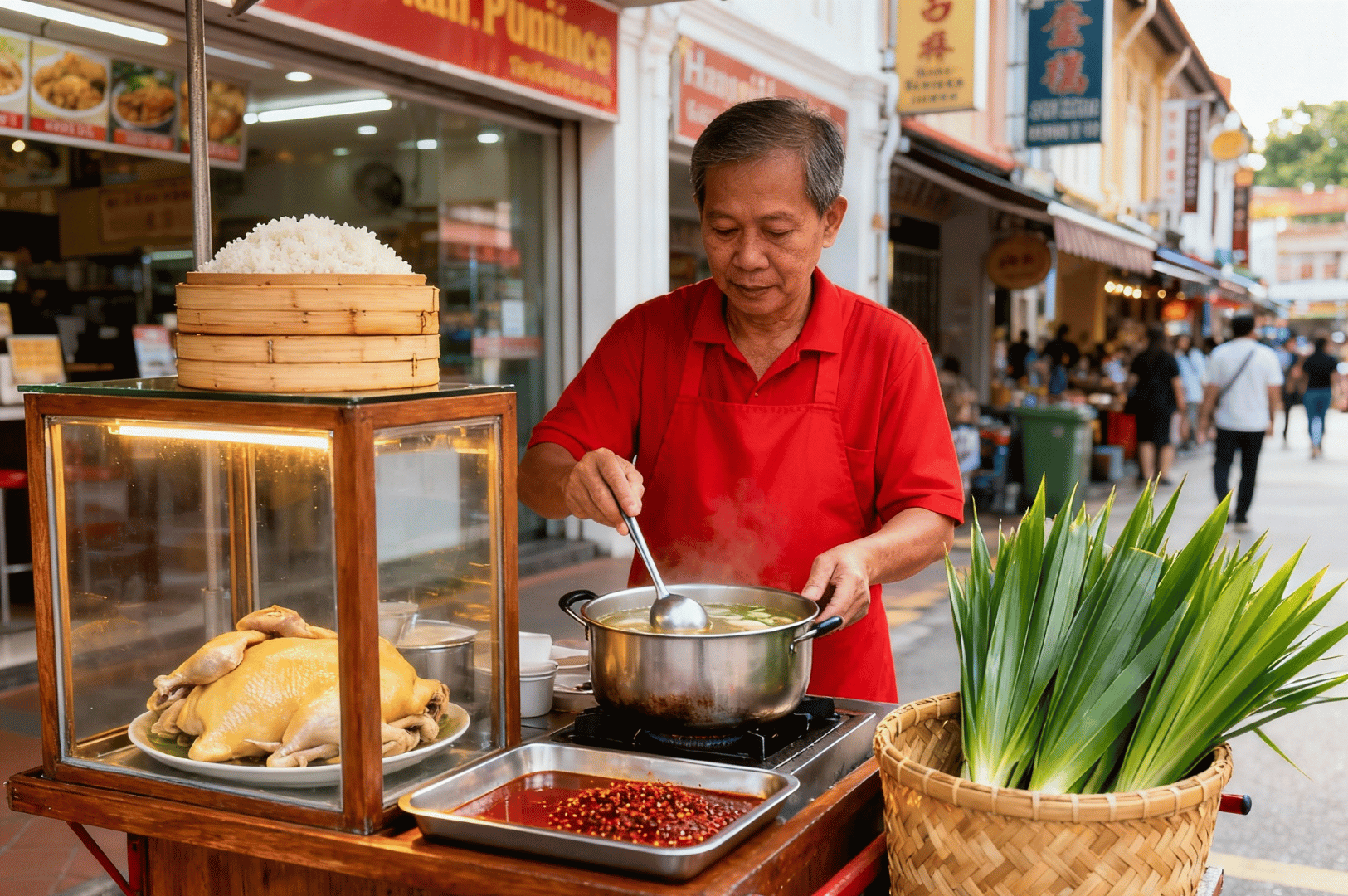
The soul of perfect Hainanese chicken rice lies in the poaching process, where a whole chicken (often chicken breast attached for extra succulence) is suspended on a poultry hook and submerged in simmering chicken stock. A precise, gentle heat—never above medium heat—ensures the poached chicken remains juicy and the chicken skin attains its famed silky texture.
As the chicken cooks, chefs monitor the cooking process with practiced eyes, adjusting time and temperature to guarantee tender meat and clear chicken broth. The key, shared by revered hawkers, is plunging the chicken into a large bowl of ice bath immediately after poaching. This step locks in moisture, tightens the skin, and creates that desired gelatinous texture. According to one famous Hainanese chicken vendor, “Every easy Hainanese chicken rice recipe will show you an ice bath, but it’s the patience, not shortcuts, that makes the chicken absolutely delicious.” Whether using a traditional small saucepan, an instant pot, or a modern rice cooker, the goal remains silky, flavourful steamed chicken—never overcooked, never dry.
Classic adaptations abound: some stalls use only chicken legs or chicken thighs for extra richness, while others rub sesame oil or vegetable oil over the skin for gloss. But the essentials endure—a carefully poached entire chicken, clear chicken broth, and artistry in every chopped chicken cut.
Chicken Fat and the Aromatic Rice Cooker Pot: Crafting Irresistible Fragrant Rice
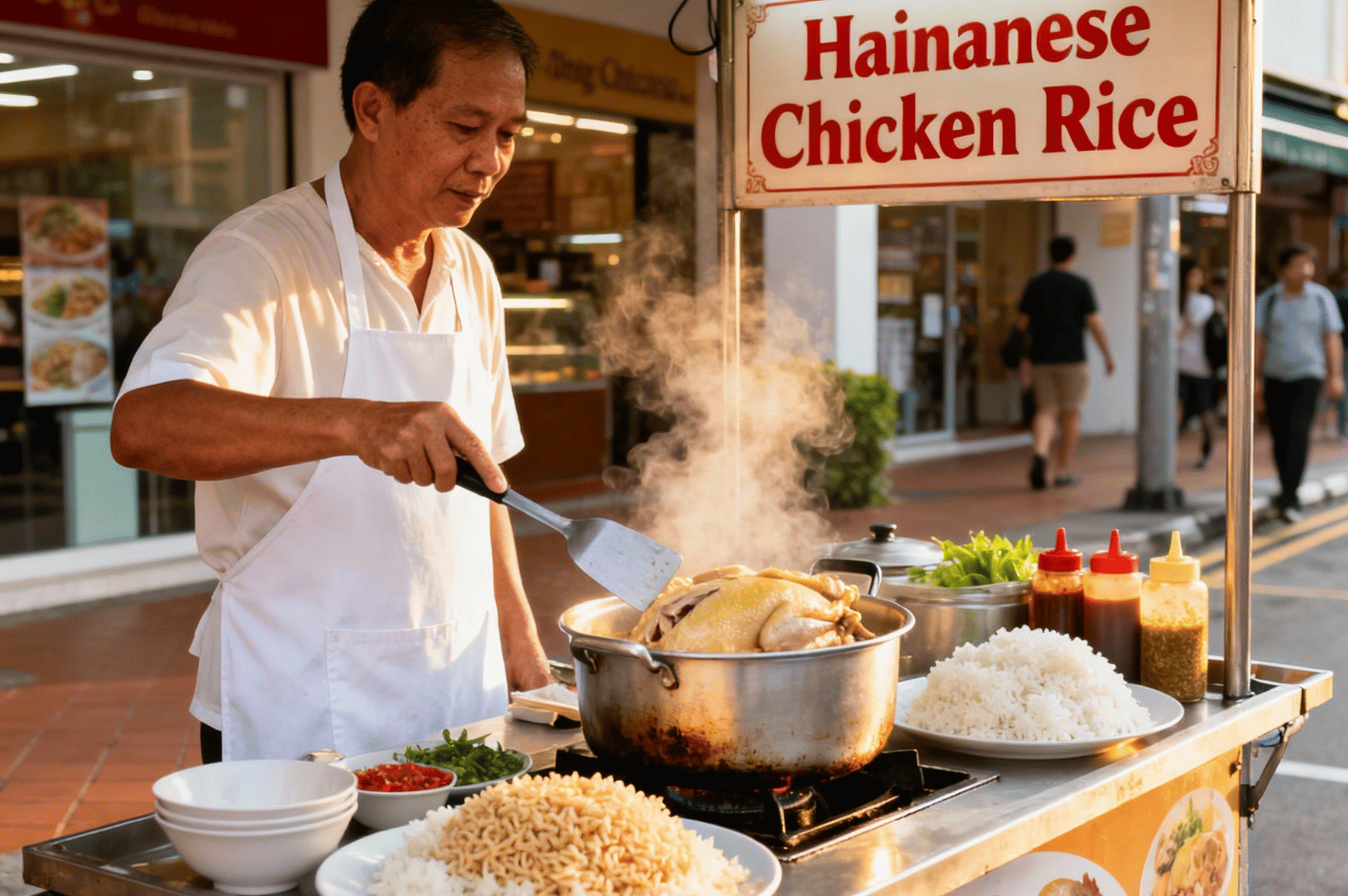
The rice dish is no mere sidekick; it is the aromatic foil that completes the Hainan chicken rice experience. Using a rice cooker, chefs first heat oil or, for tradition, chicken fat in a small frying pan. Into this hot fat go minced garlic, finely chopped minced ginger mixture, and occasionally shallots, which are stir fried gently to unlock their fragrance. The rice grains are then tossed, ensuring each becomes coated and glossy.
Next, chicken stock or clear chicken broth—seasoned with add salt, white pepper, and sometimes a splash of light soy sauce—joins the pot. Pandan leaves and a dash of sesame oil might infuse the mix, yielding a rice whose aroma fills the room. Some hawkers use jasmine rice for a floral lift, while others opt for a more oily rice for sumptuous mouthfeel. However prepared, the fragrant rice should be fluffy, each grain distinct and infused with the essence of chicken fat.
Variations are celebrated: the best chicken rice Singapore might lean oilier or drier, but always—according to generations of cooks—rice must be aromatic, moist, and act as the perfect base for every delicious bite of chicken.
The Holy Trinity: Chili Sauce, Ginger, and Dark Soy Sauce
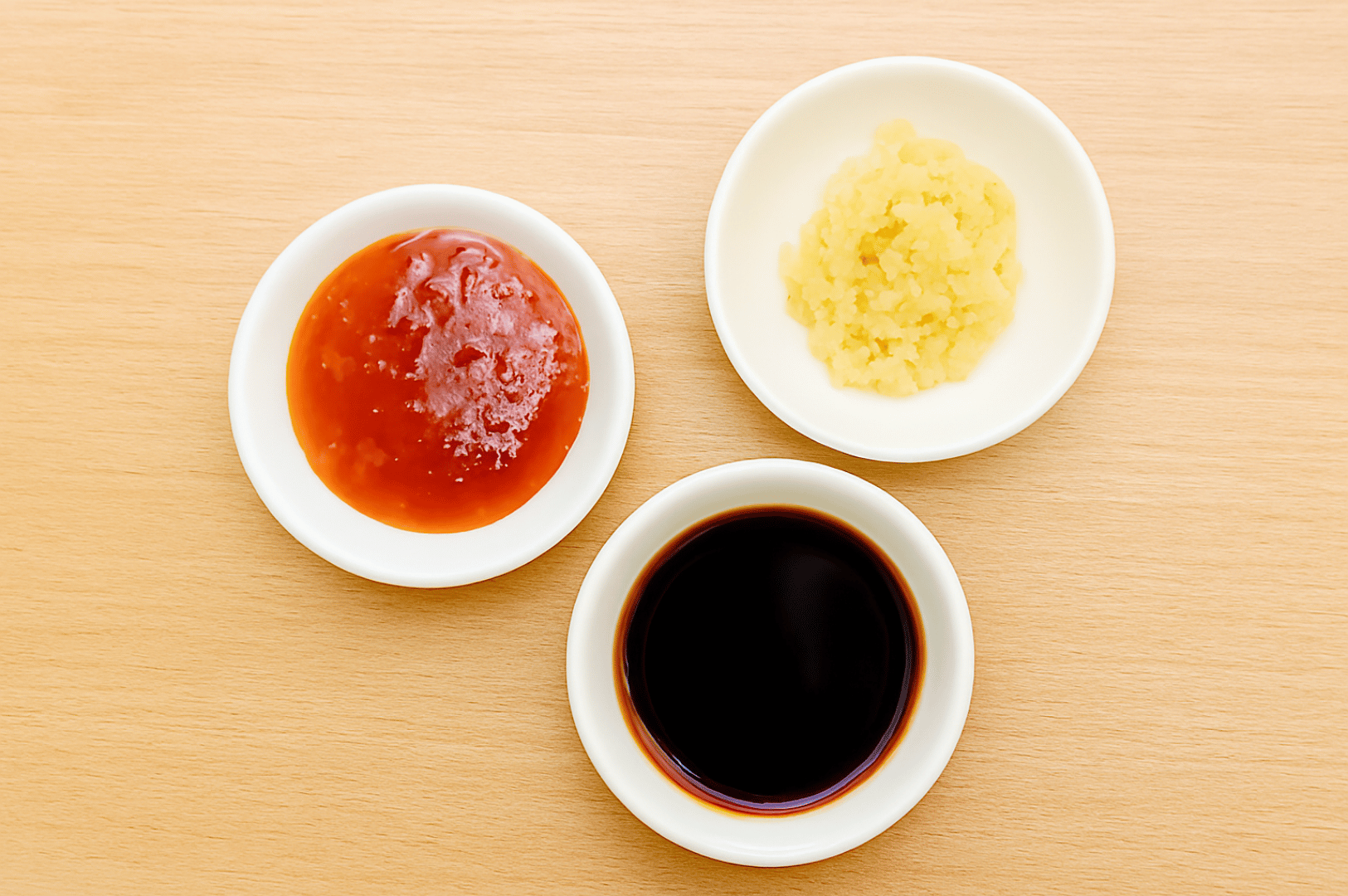
No complete Hainanese chicken rice is possible without its holy trinity of dipping sauce—chili sauce, ginger sauce, and dark soy sauce—which heighten and balance the dish.
The signature chilli sauce blends fiery red chilies, minced garlic, fresh lime juice, chicken stock, and sometimes ginger, blitzed together in a food processor. This spicy dipping sauce is bright and lively, offering heat that cuts through any richness. Next, ginger sauce is created from young ginger and spring onions, smoothed with hot oil and a dash of salt; sometimes this is served thick, sometimes almost runny, always zesty.
Finally, the rich, dark soy sauce—sometimes sweet, sometimes savory—provides umami depth, while a splash of light soy sauce can add light soy sauce complexity. Together, these sauces allow each mouthful to be calibrated: more chili sauce for fire, ginger for zing, and soy for savory sweetness. Many swear by combining all three with a piece of chicken sliced, a scoop of chicken fat rice, and a sliver of sliced cucumber or bok choy for the ultimate, absolutely delicious bite.
Hainanese Chicken Rice and Chicken Soup: Cultural Significance as a National Dish
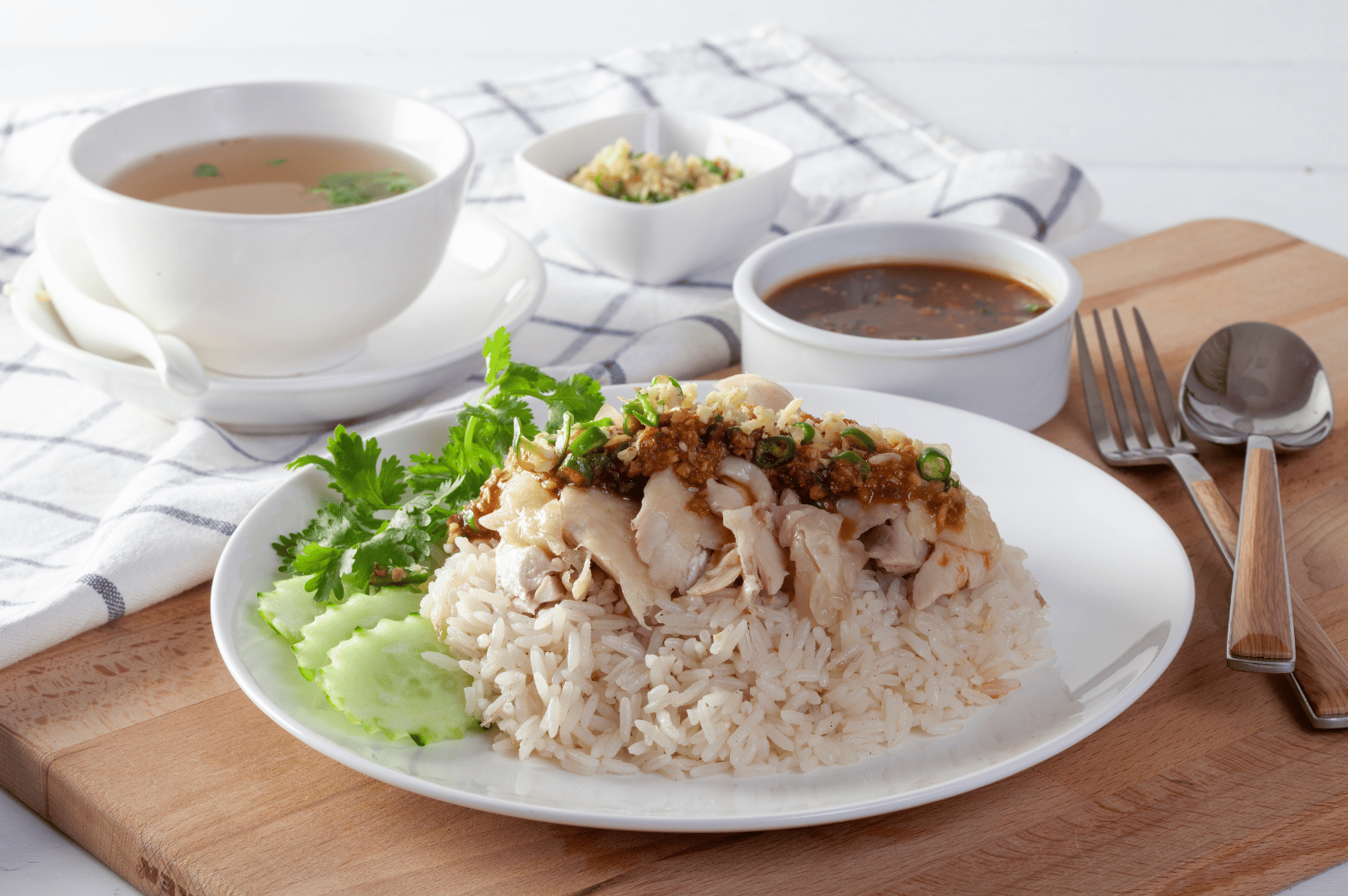
Called Hainanese chicken rice, this chicken and rice dish has grown beyond immigrant roots. It transcends food, acting as edible proof of Singapore’s multicultural fabric. Whether served in a densely packed hawker centre or a refined restaurant, chicken rice anchors family gatherings, business lunches, and Singapore’s culinary identity.
A bowl of chicken soup, conjured from chicken broth, ginger mixture, and delicate spring onions, usually accompanies the meal. The meal appears everywhere from school canteens to film, literature, and even official tourism campaigns—a dish that speaks of home and history. Like nasi ayam in neighboring cultures, Hainan chicken rice is developed from wenchang chicken and tailored for Singapore’s climate and taste. It stands as both a comfort food and a source of national pride, uniting generations and dialect groups in a shared tradition.
Where to Find the Best Hainanese Chicken Rice in Singapore
The best chicken rice Singapore has to offer takes center stage at Maxwell Food Centre, specifically at Tian Tian Hainanese Chicken Rice—famous for its classic dish and legendary snaking queue. Here, every plate features steamed chicken sliced to perfection, glistening chicken skin, cucumber slices, and immaculate rice.
Other icons include Boon Tong Kee, whose innovation lies in ultra-plump chicken and well-balanced dipping sauce; and Wee Nam Kee, where diners can opt for poached chicken, roast, or soy sauce chicken sliced to their liking. Each restaurant or hawker offers its own secret to the most fragrant rice—be it more chicken fat, extra ginger, or a dash of sesame oil—and each bowl of chicken soup tells the cook’s story.
First-timers should look for glistening chicken cut (never dry), vibrant sauces, and a balanced, chicken fat-scented rice dish. Beware of stalls with a minimal wait: the best bet is almost always where the line is longest.
Photographing Hainanese Chicken Rice: Showcase the Chicken Cut, Rice, and Cucumber Slices
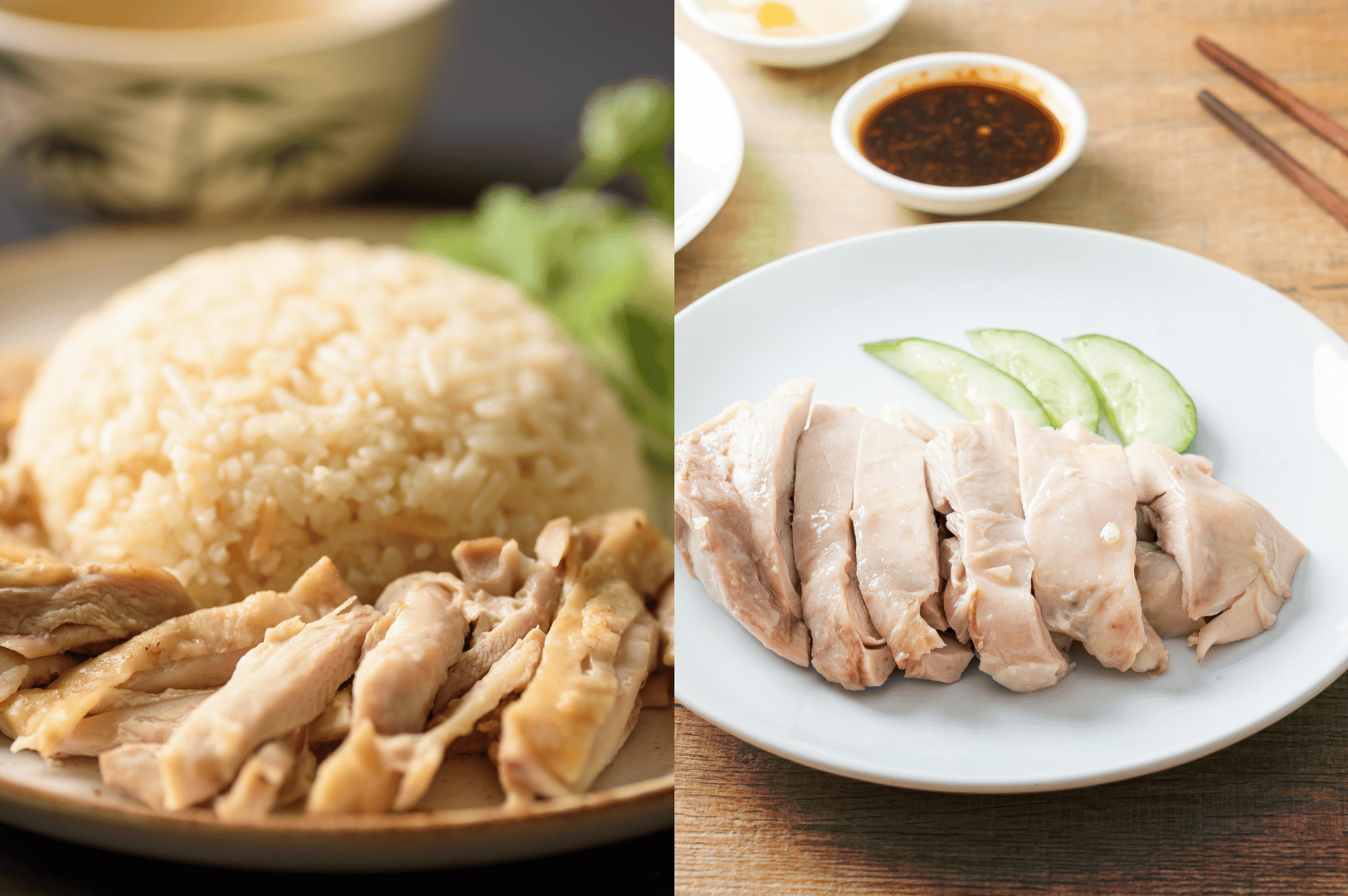
To capture the allure of Hainanese chicken rice, use soft, natural light to highlight the glistening chicken skin and golden, chicken fat rice. Compose the shot with a focus on textural contrast—close-ups of chicken sliced, shimmering rice grains, vibrant chili sauce, and refreshing cucumber slices. A slightly elevated angle best displays the harmonious composition, while a small bowl with dipping sauce in the frame adds mouth-watering appeal. Remember: the steam, sheen, and color make every shot a sensory invitation.
Conclusion
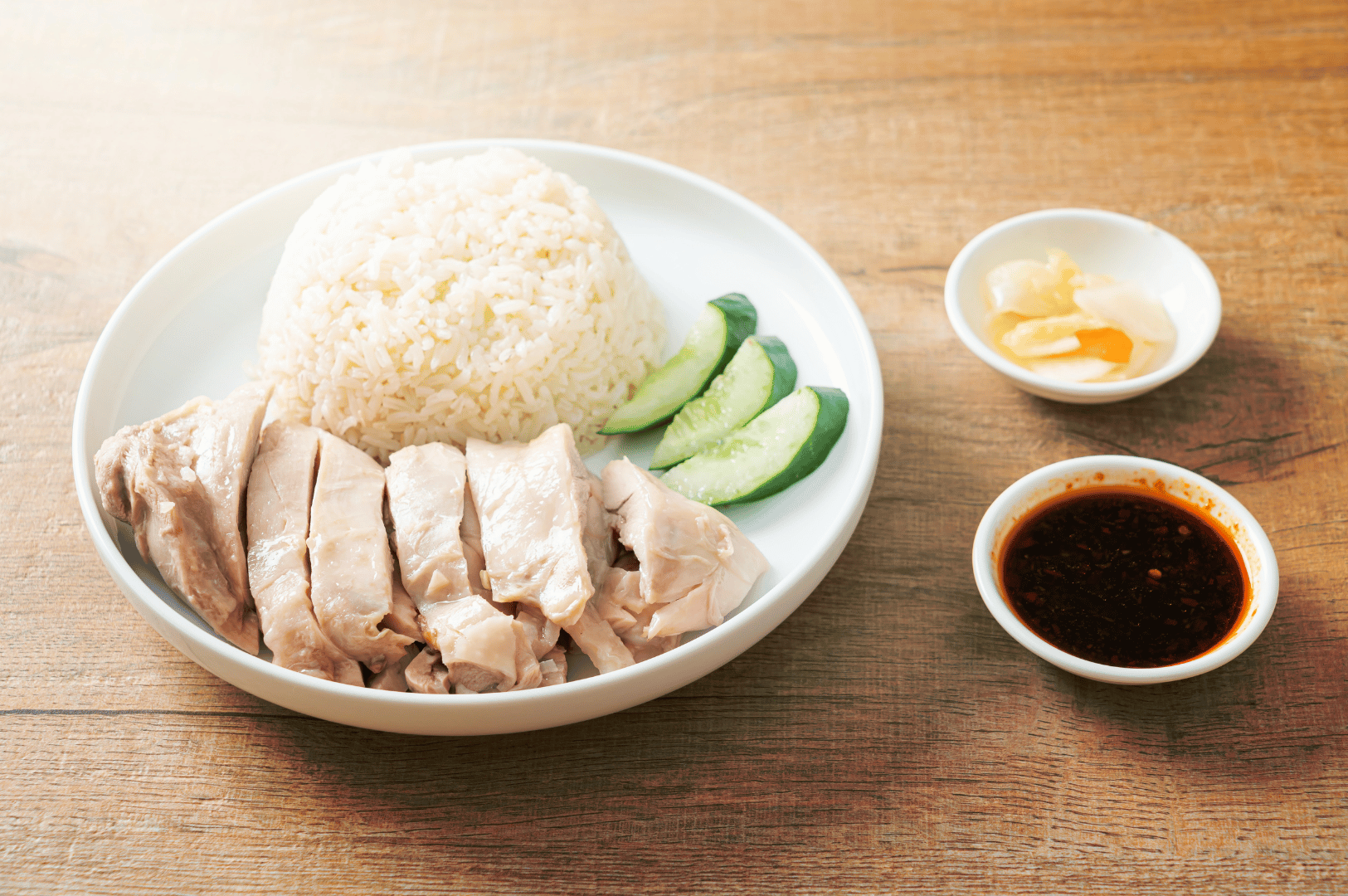
The slow seduction of Hainanese chicken rice is the story of patience rewarded—a union of technique, tradition, and taste. From the first poached chicken cut to the last grain of fragrant rice, every element celebrates what makes this national dish so beloved in Singapore: meticulous preparation, balanced flavours, and the promise of a quietly perfect, delicious meal.
If you want to continue exploring Singapore’s iconic street food, discover the smoky allure of satay in Flame & Smoke: The Essence of The Best Satay in Singapore, or head back to Street Food Photographer for more stories on the city’s culinary culture.

A Letter to the Faces Behind the Counter
June 16, 2026
You are turning over chicken wings when I first notice you. It is just past seven at Old Airport Road Food Centre, and the ceiling fans are pushing warm air down onto the tables. The…
-
How to Photograph Cuppage Plaza Food Without Disturbing the Room
June 15, 2026
The camera flash went off by mistake. It was a small, clumsy decision, but in the narrow, slightly smoky space of Kazu Sumiyaki, it felt much larger than it was. A few heads turned. The…
-
To the Stirring of the Wok in the Early Hours
June 12, 2026
The first sound is not the flame. It is the metal ladle touching the side of the wok, a small, hollow note that carries across the half-awake floor of Hong Lim Market & Food Centre….
-
Cuppage Plaza Food Guide: Japanese Restaurants and Hidden Gems in Singapore’s Little Tokyo
June 11, 2026
I started coming to Cuppage Plaza for the light. The building is old, a little worn at the edges, with narrow staircases and corridors that smell faintly of charcoal and sake by early evening. But…
-
A Note to the Knife That Cuts, But Never Hurries
June 9, 2026
The knife lands softly before it cuts. I hear it before I lift the camera. A low wooden sound, not sharp, not rushed. At Maxwell Food Centre, the lunch crowd is already pressing into the…
-
Wang BBQ Chicken Wing & Satay: Photographing Smoke, Wings, and Skewers at Chomp Chomp Food Centre
June 8, 2026
I reached Chomp Chomp Food Centre at 20 Kensington Park Road, Serangoon Gardens, Singapore on a Tuesday evening around 7pm, just as the place was beginning to thicken with supper energy. The tables were filling…
-
To the Fragrance That Lingers Long After the Meal
June 5, 2026
The evening air at Old Airport Road Food Centre is thick and warm. It wraps around me the moment I step away from the open street. I walk past the bright neon signboards, letting the…
-
Lau Pa Sat Satay Street: Photographing After-Work Satay in Singapore’s CBD.
June 4, 2026
I visited Lau Pa Sat Satay Street on a Tuesday around 7pm, just as Boon Tat Street was changing its identity from a busy traffic route in Singapore’s CBD to a lively alfresco dining venue….
-
A Letter to the Hidden Moments Between the Shots
June 2, 2026
The afternoon heat settles heavily over Tiong Bahru Market. The frantic noise of the lunch hour is completely gone. I sit at a corner table near the open balcony. The green tiles reflect the warm,…
-
Izakaya Singapore: More Than Just After-Work Spots
June 1, 2026
When we talk about izakayas in Singapore, we often reduce them to simple after work drinks spots. We picture loud rooms where tired professionals go to drink cold beer and eat cheap bar snacks. But…