The camera flash went off by mistake.
It was a small, clumsy decision, but in the narrow, slightly smoky space of Kazu Sumiyaki, it felt much larger than it was. A few heads turned. The grill seemed to pause. The couple beside me at the counter, who had been laughing softly over their drinks, went silent.
I wanted to capture the energy of Cuppage Plaza food, but all I did was interrupt it. It taught me something I still carry into every dinner shoot: the best food photograph is not always the one you take first. Sometimes, it is the one you wait for.
Cuppage Plaza: An Enclave of Japanese Dining
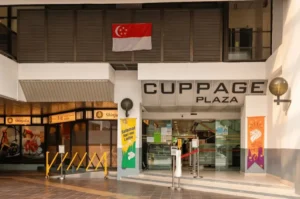
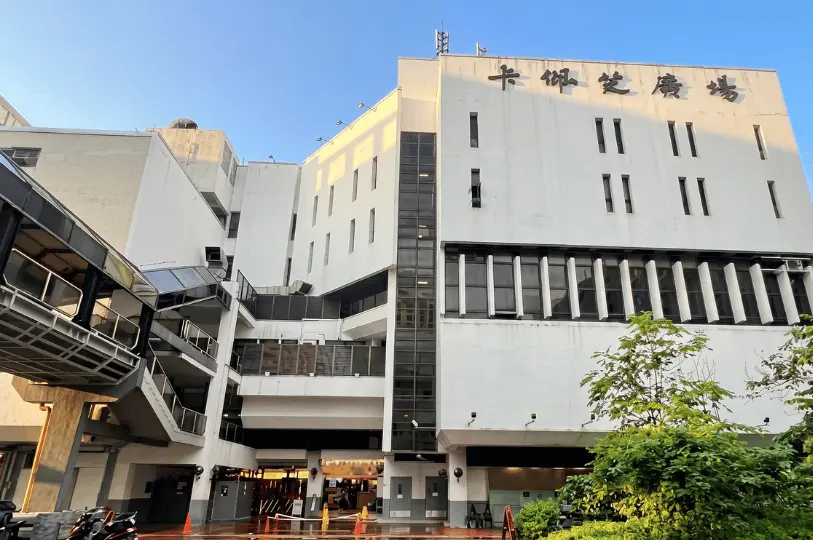
Cuppage Plaza, tucked just off Orchard Road at 5 Koek Road, has long felt like one of Singapore’s quieter dining pockets and a hidden gem for authentic Japanese cuisine. Its corridors are narrow, its signs glow softly, and many of its best meals happen behind modest doors. This is part of its charm and the main draw for food lovers seeking a genuine dining experience.
This guide is for anyone who wants to photograph dinner in Cuppage Plaza without becoming the person who disturbs it. The goal is not to make the room serve the camera. The goal is to let the room remain itself.
Why Cuppage Plaza Is a Hidden Gem for Food Photography
Cuppage Plaza is a hidden gem because it does not reveal itself all at once. You find it through small details: a noren curtain at the doorway, the sound of a grill from inside a Japanese eatery, a handwritten menu, a chef turning skewers with practiced hands.
Before taking a photo, look first. Notice where the light is coming from. Watch how the servers move through the aisle. See which tables sit closest to the kitchen glow or counter seating. In a place like this, the first photograph is made before the shutter moves.
A quiet photographer does not take over the room. A quiet photographer listens to it.
Photographing Little Tokyo Without Breaking the Atmosphere
Cuppage Plaza is often described as a small slice of Little Tokyo in Singapore, and that phrase makes sense once you step inside. There are izakayas, sumiyaki counters, sushi rooms like Sushi Masa, casual Japanese kitchens, and long-running restaurants that feel lived-in rather than staged surprises for you to enter.
But Little Tokyo is not a backdrop. It is a working dining environment tucked in this bustling city.
That means the photographer has to move with care. Do not stand in the aisle for a better angle. Do not ask staff to hold hot food while you adjust settings. Do not turn a shared dinner into a photoshoot.
The best approach is simple: stay seated, stay quiet, and shoot only what you can photograph without changing the rhythm of the meal.
No Flash in Cuppage Plaza’s Japanese Restaurants
Flash is the fastest way to flatten a room.
Inside many Cuppage Plaza Japanese restaurants, the beauty comes from warm light: the glow from a counter, the reflection on a lacquered bowl, the orange edge of cooked chicken or fish, the steam rising through shadow. Flash removes all of that. It also reminds everyone nearby that they are sitting close to a camera.
So the rule is simple: no flash.
Use your phone’s Night Mode. Brace your elbows against the table. Tap and hold to lock focus and exposure. If you are using a camera, choose a fast lens and a quiet shutter. Let the photo stay a little dim if the room itself is dim.
Do not try to make Cuppage Plaza look like daylight. Its atmosphere belongs to the evening.
How to Capture an Authentic Japanese Dining Experience Quietly
An authentic Japanese dining experience is not only in the food. It is in the pace of the meal, the care of the plating, the small greetings, the way a dish arrives and settles into the table.
To photograph that respectfully, build a short sequence instead of photographing everything.
Start with the approach: the signboard, the doorway, the corridor, the warm light spilling out from the restaurant. Then photograph the table before it becomes crowded: chopsticks, menu, drink, sauce dish, or the first small plate.
When the main dish arrives, take three quick frames:
- one wide shot for context,
- one close shot for texture,
- and one action shot if it happens naturally.
Then put the camera down.
Hanashizuku Japanese Cuisine and the Quiet Table Story
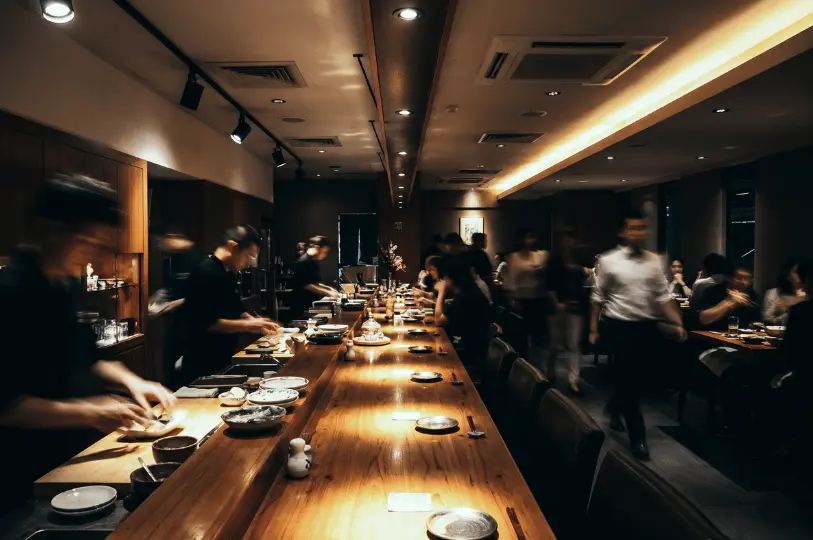
At a place like Hanashizuku Japanese Cuisine, the best photographs often come from restraint. Instead of chasing dramatic angles, look for balance: a dish placed cleanly on the table, a glass catching light, a pair of chopsticks resting beside a plate.
This kind of room asks for fewer movements.
A good frame might include the edge of the table, the dish, and just enough cooking background to suggest where you are. Avoid pointing the camera across nearby diners. Avoid photographing faces unless you have permission. If you want to capture the chef, staff, or preparation area, ask quietly first.
The lesson here is that elegance does not need a loud photograph. Sometimes, the strongest image is the one that leaves space around the food.
Discover the rich, comforting flavours of Japan’s best curry rice in Singapore with this ultimate street food photography guide.
Sushi Masa, Counter Seats, and When Not to Take the Shot
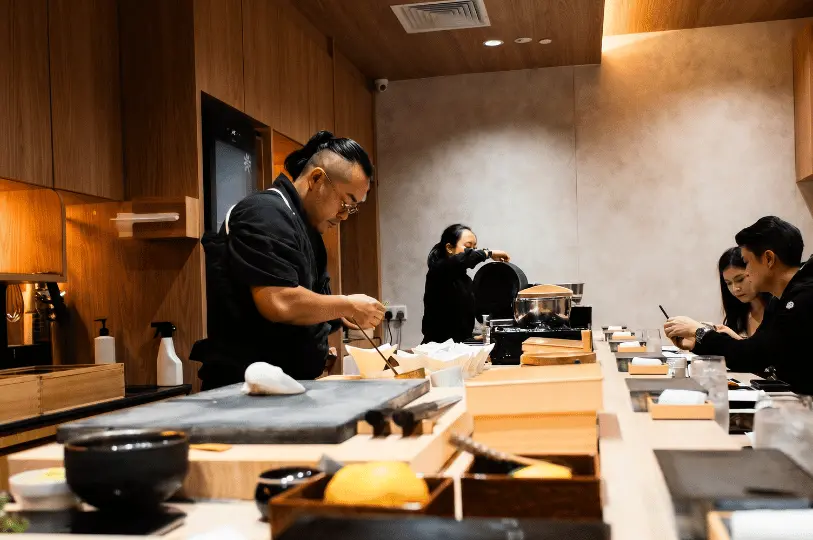
Counter dining requires extra care. Whether you are in a sushi restaurant such as Sushi Masa or another intimate Japanese counter in Cuppage Plaza, you are much closer to the chef, the food, and other diners.
That closeness can create beautiful photographs, but it also raises the responsibility.
Do not photograph the chef’s hands without permission. Do not point your lens into the preparation area as if it were a stage. Do not interrupt the pacing of the meal. At counter seats, every movement is more visible.
Sometimes the better choice is to let the moment pass.
A piece of sushi with fatty tuna or sashimi moriawase placed in front of you may be at its best for only a few seconds. Take one quick frame if it feels appropriate. Then eat it as intended.
Respect is part of the photograph, even when it cannot be seen.
Orchard Yong Tau Fu and the Local Side of Cuppage Plaza Food
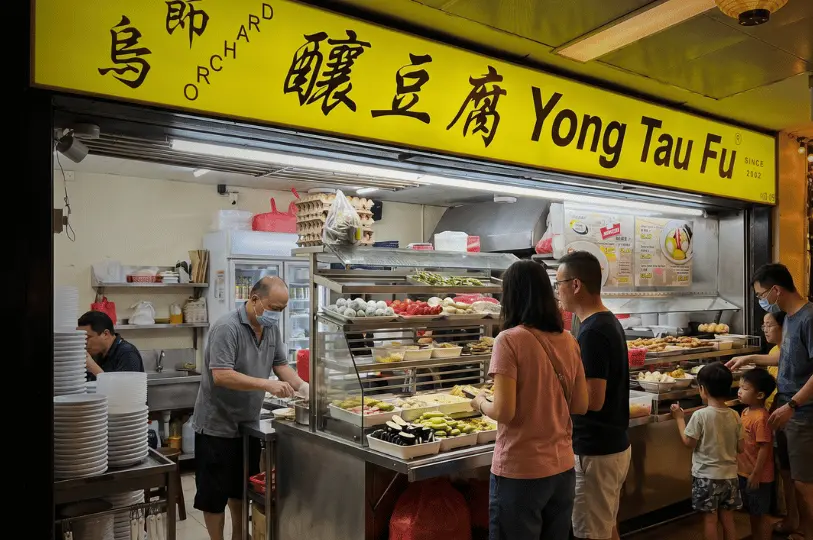
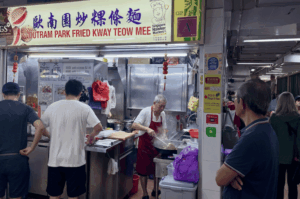
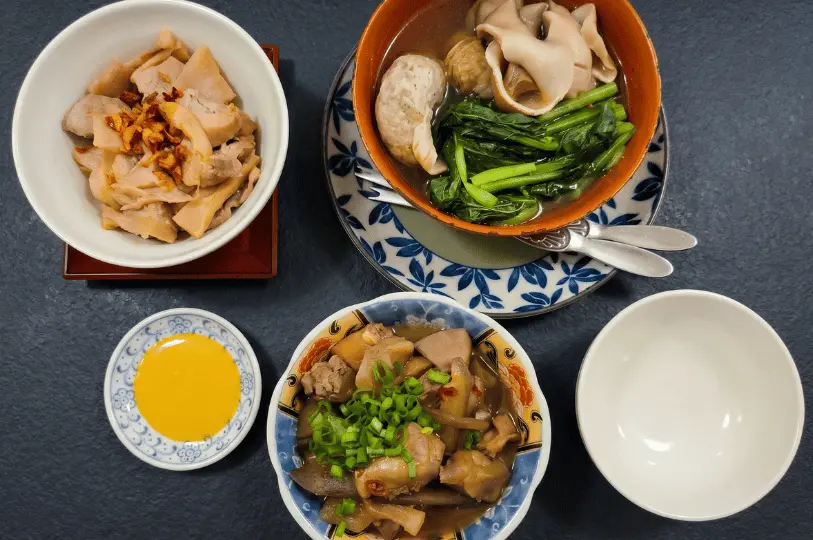
Cuppage Plaza is strongly associated with Japanese dining, but its food identity is not limited to that. Orchard Yong Tau Fu offers a useful contrast because it brings the photographer back to a more local rhythm: ingredients, broth, sauce, queue, table, and everyday comfort.
Here, the photography approach changes.
Instead of warm izakaya shadows, you may be working with brighter light and simpler table settings. Focus on clarity: the bowl, the broth, the ingredients, the texture of tofu or vegetables, the sauce on the side.
This is also a reminder that Cuppage Plaza is not just a themed dining destination. It is part of Singapore’s layered tasty food landscape, where different habits and cuisines share the same building.
Photographing Dinner Near Orchard Road Without Looking Like a Tourist
Because Cuppage Plaza sits near Orchard Road, it attracts office workers, regulars, visitors, and people who already know exactly where they are going. The building may be central, but many of its restaurants feel private. That privacy matters.
If you are photographing dinner here, act like a diner first. Keep your bag small. Turn off shutter sounds. Do not review your images for too long at the table. Do not make your dining companions wait while you adjust plates and glasses.
The camera should enter the meal lightly.
A useful rule is this: if your photography changes the mood of the table, you have gone too far.
Common Mistakes When Photographing Cuppage Plaza Food
The first mistake is trying to photograph every dish. This turns dinner into work and makes the meal feel interrupted. Not everything is worth the frame.
The second mistake is editing at the table. The food gets cold, the conversation thins out, and your attention leaves the room. Quality is out the door.
The third mistake is lifting the camera too quickly. A dish arrives, and the instinct is to shoot immediately. But a short pause often helps. Look at the food. See where the light falls. Notice what is behind it. Then take the picture.
The fourth mistake is including strangers in the background. In Cuppage Plaza’s tight rooms with small tables and counter seating, privacy is not automatic. You have to protect it through your angle, crop, and patience.
A Simple Checklist for a Respectful Dining Experience
- Before entering, turn off flash and shutter sounds.
- When seated, observe the room before shooting.
- Choose a corner seat or counter-end seat when possible.
- Photograph only your own food unless you have permission.
- Avoid faces, private tables, and staff under pressure.
- Use shadows instead of fighting them.
- Let hot food be eaten while it is still hot.
- Thank the staff if they allow you to photograph beyond your table.
- Leave the room as you found it.
Final Thoughts on Photographing Cuppage Plaza
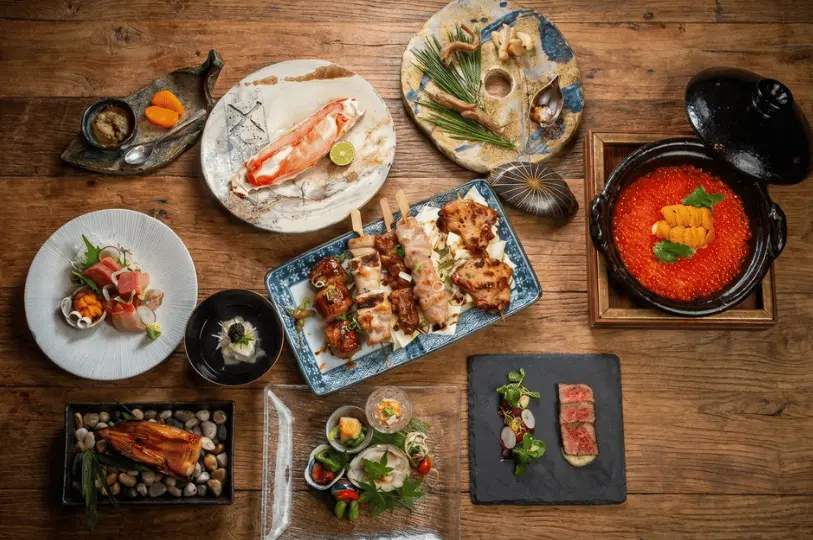
Photographing food in Cuppage Plaza is not only about camera settings. It is about behaviour. The building teaches a photographer to slow down, to notice, and to understand that atmosphere is fragile.
Some of the best photographs here are not the sharpest or brightest. They are the ones that remember the warmth of the room: the steam above a bowl of ramen or noodle dishes, the glow of a counter, the last skewer on a plate, the soft noise of dinner continuing around you.
So go to Cuppage Plaza to eat first.
If you take a photograph, take it quietly. Let it hold the feeling of the meal without taking that feeling away from anyone else’s life.

How to Photograph Cuppage Plaza Food Without Disturbing the Room
June 15, 2026
The camera flash went off by mistake. It was a small, clumsy decision, but in the narrow, slightly smoky space of Kazu Sumiyaki, it felt much larger than it was. A few heads turned. The…
-
To the Stirring of the Wok in the Early Hours
June 12, 2026
The first sound is not the flame. It is the metal ladle touching the side of the wok, a small, hollow note that carries across the half-awake floor of Hong Lim Market & Food Centre….
-
Cuppage Plaza Food Guide: Japanese Restaurants and Hidden Gems in Singapore’s Little Tokyo
June 11, 2026
I started coming to Cuppage Plaza for the light. The building is old, a little worn at the edges, with narrow staircases and corridors that smell faintly of charcoal and sake by early evening. But…
-
A Note to the Knife That Cuts, But Never Hurries
June 9, 2026
The knife lands softly before it cuts. I hear it before I lift the camera. A low wooden sound, not sharp, not rushed. At Maxwell Food Centre, the lunch crowd is already pressing into the…
-
Wang BBQ Chicken Wing & Satay: Photographing Smoke, Wings, and Skewers at Chomp Chomp Food Centre
June 8, 2026
I reached Chomp Chomp Food Centre at 20 Kensington Park Road, Serangoon Gardens, Singapore on a Tuesday evening around 7pm, just as the place was beginning to thicken with supper energy. The tables were filling…
-
To the Fragrance That Lingers Long After the Meal
June 5, 2026
The evening air at Old Airport Road Food Centre is thick and warm. It wraps around me the moment I step away from the open street. I walk past the bright neon signboards, letting the…
-
Lau Pa Sat Satay Street: Photographing After-Work Satay in Singapore’s CBD.
June 4, 2026
I visited Lau Pa Sat Satay Street on a Tuesday around 7pm, just as Boon Tat Street was changing its identity from a busy traffic route in Singapore’s CBD to a lively alfresco dining venue….
-
A Letter to the Hidden Moments Between the Shots
June 2, 2026
The afternoon heat settles heavily over Tiong Bahru Market. The frantic noise of the lunch hour is completely gone. I sit at a corner table near the open balcony. The green tiles reflect the warm,…
-
Izakaya Singapore: More Than Just After-Work Spots
June 1, 2026
When we talk about izakayas in Singapore, we often reduce them to simple after work drinks spots. We picture loud rooms where tired professionals go to drink cold beer and eat cheap bar snacks. But…
-
The Quiet Moments Before the First Order
May 29, 2026
The sky outside is still a deep, bruised purple. Inside the food centre at Toa Payoh Lorong 8, the air is cool and heavy with the scent of damp concrete and raw ginger. I sit…