It is 7:30 PM at Old Airport Road. The dinner rush is at its absolute peak, a chaotic symphony of scraping chairs, chattering families, and the heavy thud of cleavers against wooden blocks. Yet, as I stand by a cluster of green plastic tables near the center aisle, my attention is drawn to a single pocket of stillness.
Behind the glass of a corner stall, a man in a faded grey polo shirt stands before a massive cast-iron wok.
He does not shout out order numbers. He does not converse with the long line of customers waiting under the harsh fluorescent lights. His wife handles the transactions, passing him small, colored plastic chips that dictate the next dish. He just takes the chip, nods, and turns back to the fire.
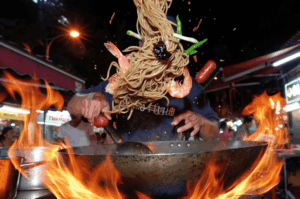
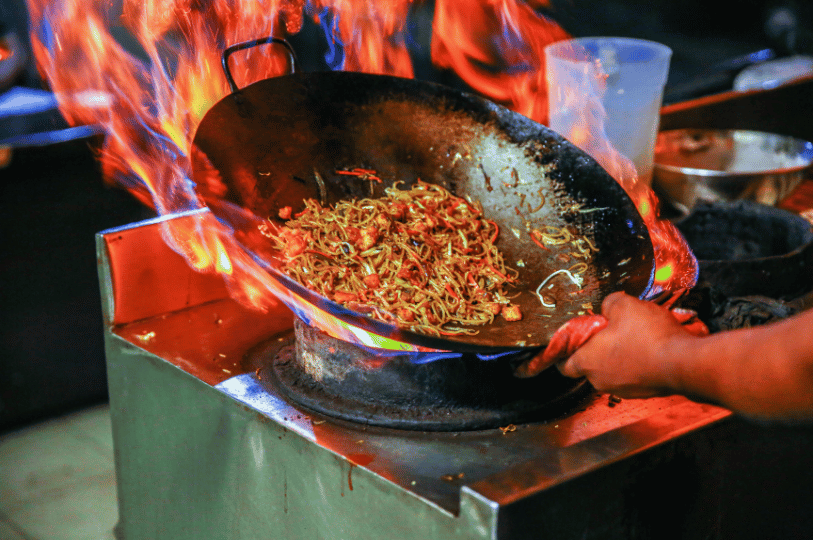
The heat radiating from his station is palpable even from ten feet away. I lift my camera slowly, resting the cold metal body against my cheek. Through the viewfinder, the world narrows down to the heavy iron curve of his wok and the fierce orange glow of the commercial gas burner. The ambient light of the hawker centre falls away. I expose for the flames.
He pours a ladle of oil into the smoking metal. The smell of charred garlic and dark soy sauce instantly cuts through the humid night air. He tosses the thick yellow noodles with a steady, rhythmic flick of his wrist. It is the muscle memory of ten thousand evenings. There is no hesitation in his movements, only a quiet, practiced certainty.
I wait for the exact fraction of a second when the ingredients leave the metal, suspended in the thick pillar of smoke. I adjust my aperture, letting the background blur into a wash of neon and movement. I want the focus to remain entirely on his hands. They are scarred, thick with calluses, and dusted with flour and ash. They are the hands of an artisan who has surrendered his life to the demanding rhythm of the fire.
I press the shutter just as the flames lick the edge of the wok, illuminating his face. He is not smiling, but he is not frowning either. He wears an expression of absolute, meditative focus.
In a modern city that constantly demands our attention with bright screens and loud notifications, there is something deeply grounding about watching a person completely absorbed in a singular, physical task. We often celebrate the vibrant energy of street food, the bustling queues, and the explosive flavors on the plate. We rarely pause to acknowledge the silent endurance required to create it day after day.
He plates the noodles, wipes a bead of sweat from his temple with a small towel draped over his shoulder, and immediately reaches for the next colored chip.
I lower my camera and let it rest against my chest. I do not order anything tonight. I simply stand there for a few more minutes, listening to the metallic scrape of his spatula against the iron. Some stories are told in loud voices, but the truest ones are spoken in quiet repetition.

The Peranakan Seduction: A Food Photography Photographer’s Insight
January 11, 2026
There are some cuisines that you photograph, and there are some that you court. Peranakan food falls firmly into the latter category. It is a seduction of the senses, a rich tapestry of history, flavor,…
-
Geylang’s Forbidden Flavors: The Best Foodies District
January 9, 2026
Mention Geylang, and you will likely get a mix of reactions. This neighborhood, with its gritty reputation and neon-lit side streets, exists in a space separate from Singapore’s polished image. But for those in the…
-
Holland Village: East Meets West Journey of Food and Photography
January 2, 2026
There is a corner of Singapore where the laid-back charm of a European village collides with the vibrant energy of a Southeast Asian city. It is a place where the aroma of freshly brewed espresso…
-
The Tease of Motion: Capturing Culinary Food in Photography
December 29, 2025
Food is rarely static. It drips, sizzles, steams, and crumbles. It is poured, flipped, chopped, and shared. Yet, so often, we see food in photography presented as a perfectly still, lifeless object on a plate….
-
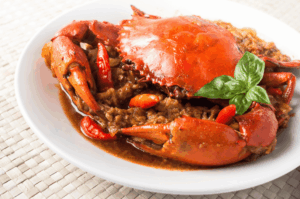
Chili Crab: Singapore’s Sultry Affair Captured in Food Photography
December 26, 2025
It arrives at the table not as a dish, but as an event. A magnificent Sri Lankan mud crab, resplendent in a sea of vibrant, glossy sauce the color of a tropical sunset. Steam rises…
-
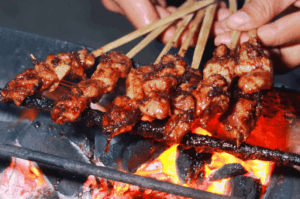
Flame & Flesh: The Primal Art of Satay Through Food Photography
December 22, 2025
Sparks dance into the twilight sky, illuminating a face etched with concentration. The air fills with the scent of charred meat, caramelized marinade, and burning charcoal. Rows of bamboo skewers are turned rhythmically over glowing…
-
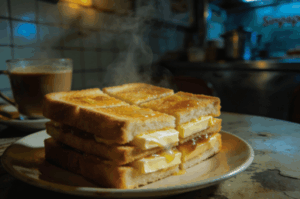
Hands of Time: A Food Photographer’s Encounter with Traditional Kaya Toast Masters
December 19, 2025
The air before dawn has a quality all its own. It is cool and hushed, thick with anticipation. On a quiet street corner in Singapore, long before the city awakens, a soft, golden light spills…
-
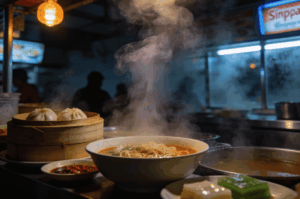
Steam & Seduction: Singapore for Foodies
December 15, 2025
The air in Singapore is never just air. It is a potent cocktail of sensation, a humid embrace laced with the fragrant perfume of pandan, the sharp zest of calamansi, and the deep, soulful aroma…
-
Spice Affair: Singapore Foodies’ Guide to Little India
December 12, 2025
The moment you step onto Serangoon Road, the world changes. The air grows thick with the heady perfume of jasmine garlands, sweet incense, and a complex blend of toasted spices that seems to emanate from…
-
The Morning Ritual: Street Food Hawkers Before Dawn
December 8, 2025
The world is dark, cloaked in a tranquil stillness that precedes the sunrise. A deep blue hue hangs over Singapore, and the only sounds are the distant hum of a lone vehicle or the gentle…