The Irresistible Aroma at the Hawker Centre
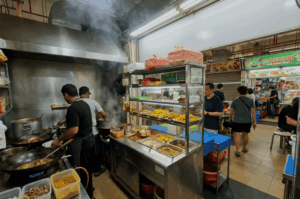
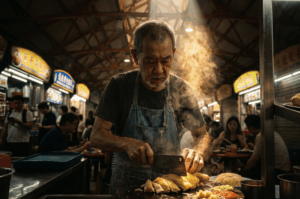
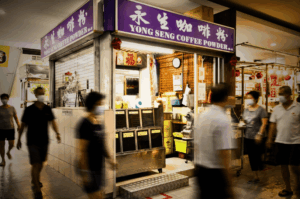
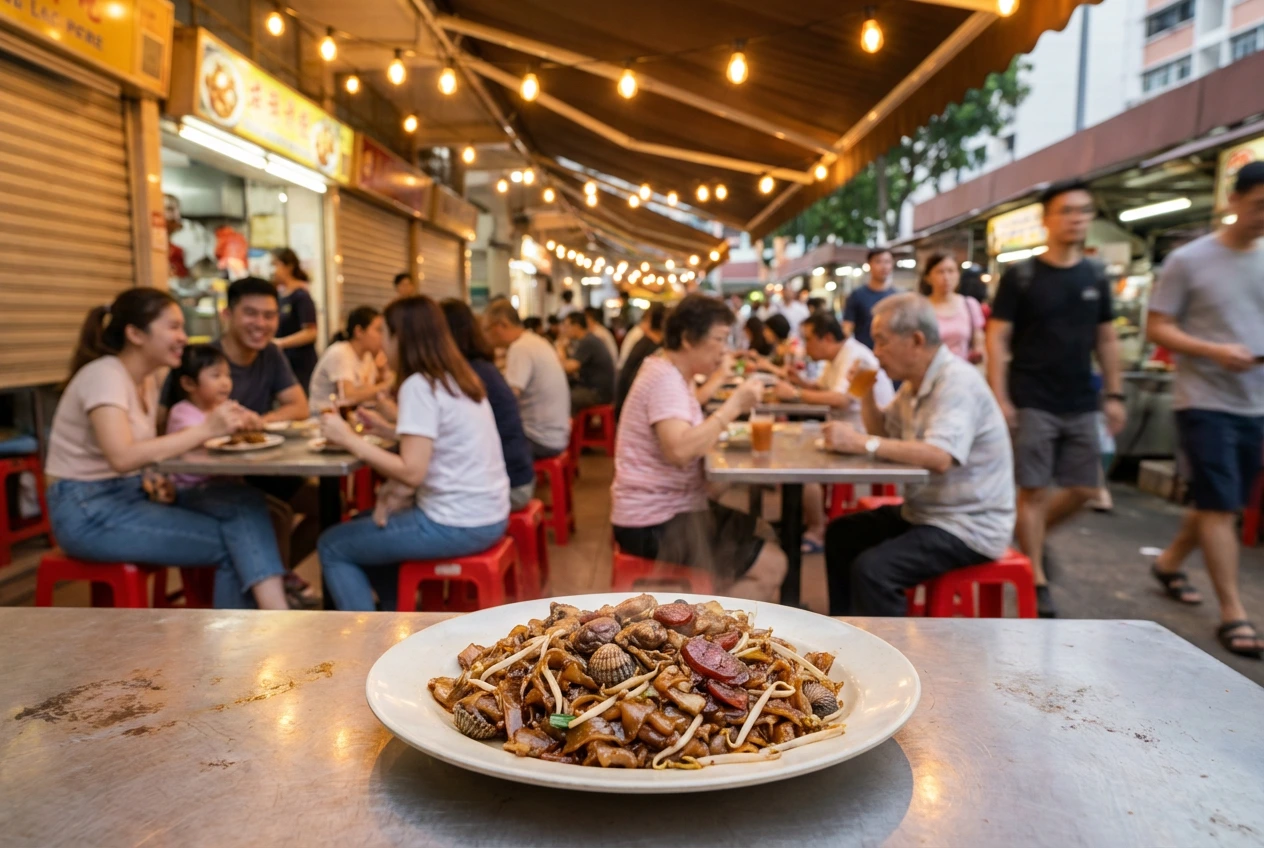
The air in the hawker centre is thick with a hundred different smells, but one always cuts through the noise: a smoky, sweet, and deeply savory aroma that is instantly recognizable. It’s the scent of char kway teow, a dish that, for me, is the sound of Singapore itself. I followed that scent to a humble hawker stall I’d been visiting for years, where a 70-year-old uncle stood before a massive, seasoned wok, his entire body moving in rhythm with the searing flames.
The Unsung Heroes of Hawker Stalls and Street Food
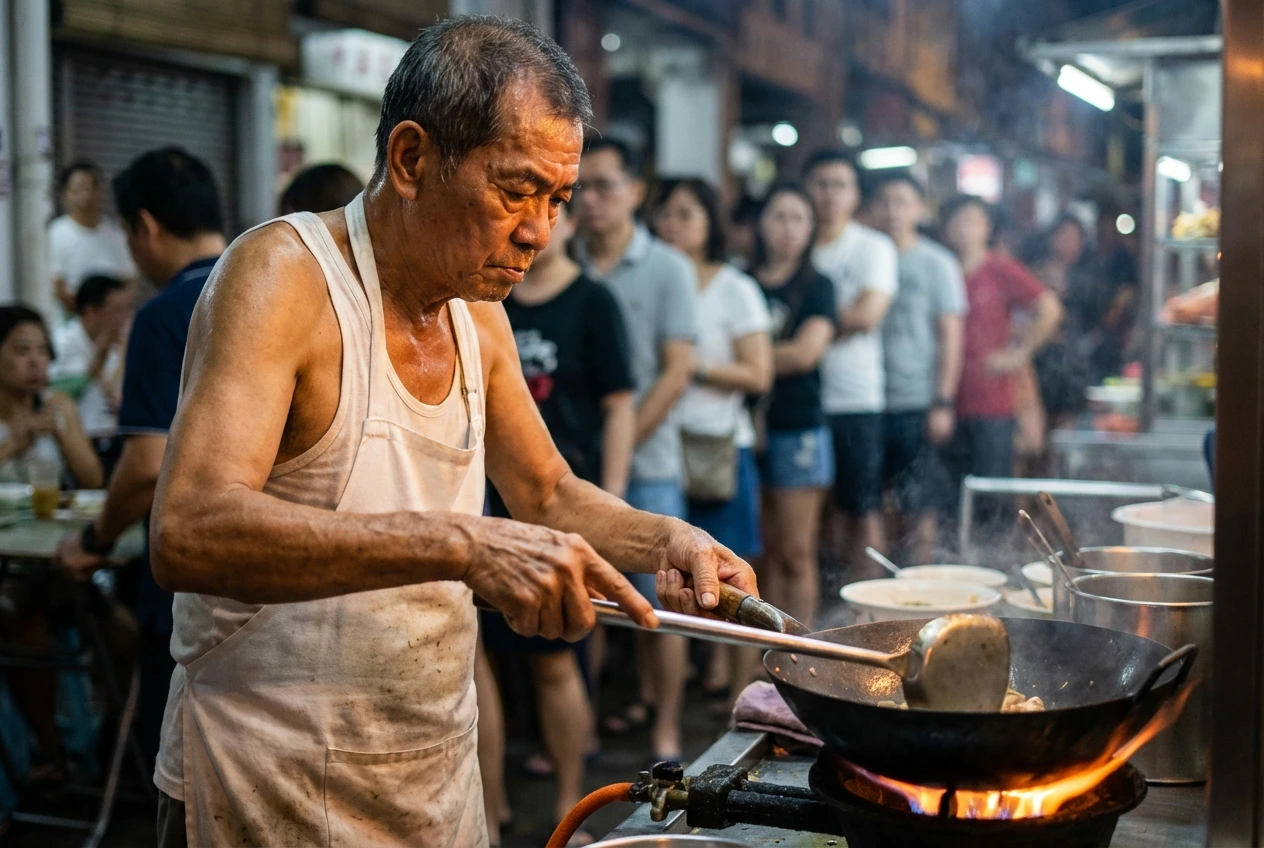
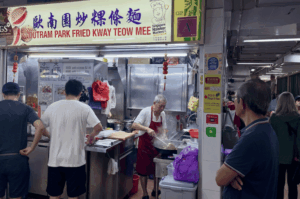
That day, I ordered my usual plate of char kway teow with extra blood cockles and ask the uncle to add shrimp for $5 at Hill Street Fried Kway Teow. The uncle behind the wok gave a slight nod—his attention fixed on the flames. Watching him cook reminded me of similar scenes at Outram Park Fried Kway Teow Mee, where the rhythm of fire, steel, and steam is everything. I’ve also spent mornings queuing at No. 18 Zion Road Fried Kway Teow, where the bold flavors and silky noodles always draw a faithful crowd.
Other favorites in my circuit include Dong Ji Fried Kway Teow at Old Airport Road, always bustling during lunch hour, and the smoky, umami-rich rendition from Meng Kee Char Kway Teow at Kallang Estate Food Centre. Each stall has its own loyal following, and every plate, despite subtle differences, delivers on that essential promise of wok hei and soul.
The Art of Wok Hei in Stir Fried Fresh Noodles
He tossed in a generous scoop of pork fat lard, which sizzled and melted in the skillet instantly. It's in the rhythm, the sheer indifference to the heat at this point that kept me watching. Then, in a blur, he added garlic, flat rice noodles and fresh yellow wheat noodles, his metal spatula scraping the wok in a percussive clang that echoed through the hawker centre. It’s the distinct sound you’ll hear at many of Singapore’s famous hawker stalls, which is always a promise of something special.
With each flick of his wrist, the noodles leap into the air, dancing with the flames in a fiery ballet. This is where the magic happens. This is the art of wok hei or the "breath of the wok." It's that elusive, smoky flavor that can only be achieved with intense high heat, a well-seasoned wok, and years of experience. It's a flavor you can't replicate at home, even with an induction stove, and it’s one of the main reasons Singapore foodies are willing to queue for over an hour for a good plate.
The Little Things That Make It Better: Chinese Sausage, Garlic Chives, Bean Sprouts
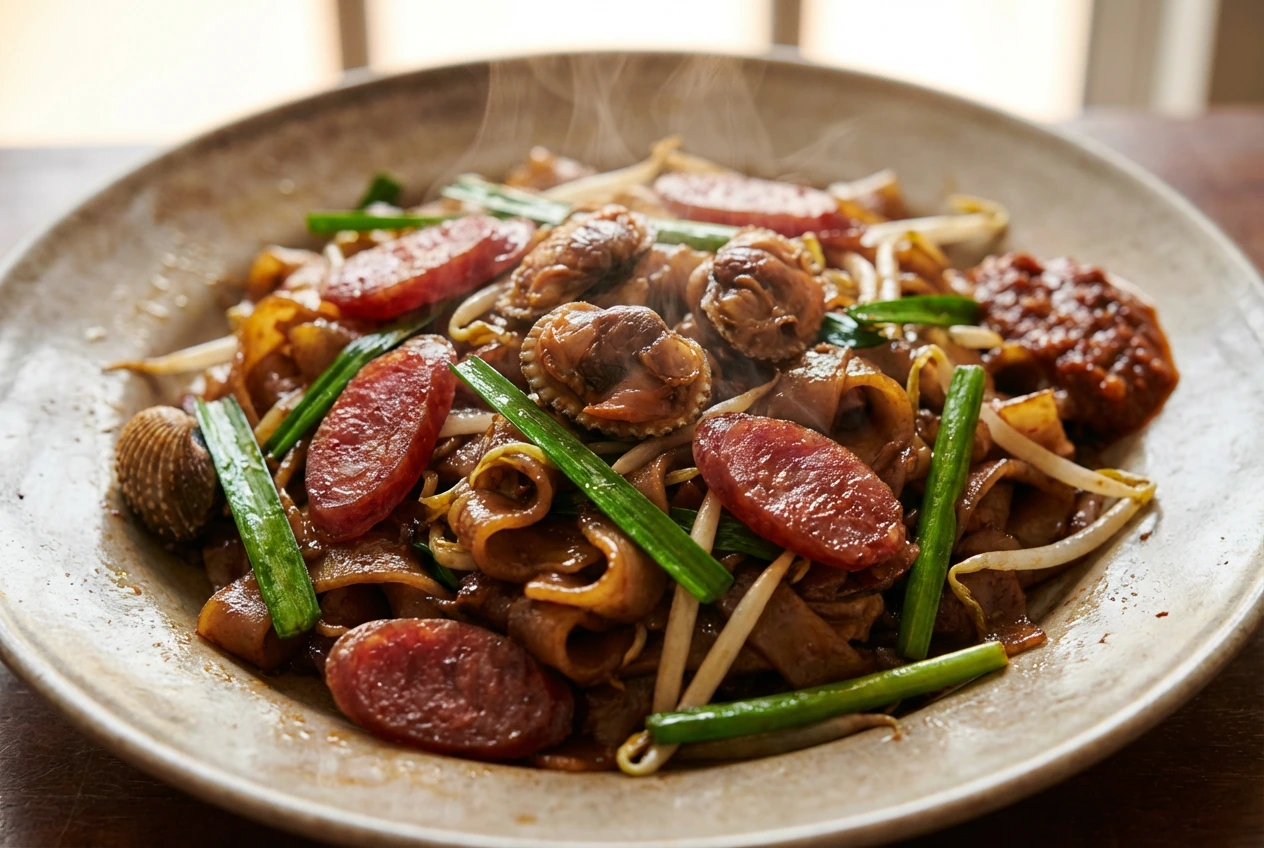
When my plate arrived, it was a beautiful mess of textures and colors. The noodles were slick with a sauce made from dark soy sauce, light soy sauce, and oyster sauce, interspersed with bright green garlic chives and chopped green onions, crunchy bean sprouts, slices of sweet Chinese sausage (lap cheong), and plump, juicy blood cockles, often garnished with chilli for you to smash into the noodles. The dish was still sizzling, the steam carrying that intoxicating wok hei directly to me.
The first bite is pure comfort. It’s a symphony of sugar, salty, and smoky flavors, with a hint of spice from the chili paste. The noodles are soft yet have a slight chew, while the bean sprouts provide a refreshing crunch. The cockles, blanched briefly in boiling water, are creamy and briny, adding another layer of complexity. Just when you thought it couldn't get any better, you add a dollop of chilli and suddenly, another flavor hits you, the spicy side. It's a dish that engages every sense.
A Dish with Humble Origins in Southeast Asia
Char koay teow has humble origins. Its name translates to "stir-fried flat rice noodles" or "stir-fried rice cake strips." It began as a peasant's dish, created by fishermen and laborers who would use leftover noodles and whatever scraps of seafood, soy sauce, chilli, or other ingredients they had. The high-fat content from the pork fat lard along with the char from the heat provided them with a cheap source of energy to get through a hard day's work. This history is embedded in the dish's soul; it’s a testament to the ingenuity of our ancestors and a core part of Singapore's culinary heritage.
On a recent visit on a Saturday around lunchtime, the queue was at least 20 people deep. I noticed the mix of people waiting patiently: families with young children, groups of friends, and elderly couples. Char kway teow is a dish that transcends generations. It’s a taste of childhood for the older generation and a comforting classic for the young. This shared experience is a vital part of Singapore food culture.
A Shared Culinary Experience of The Best Char Kway Teow
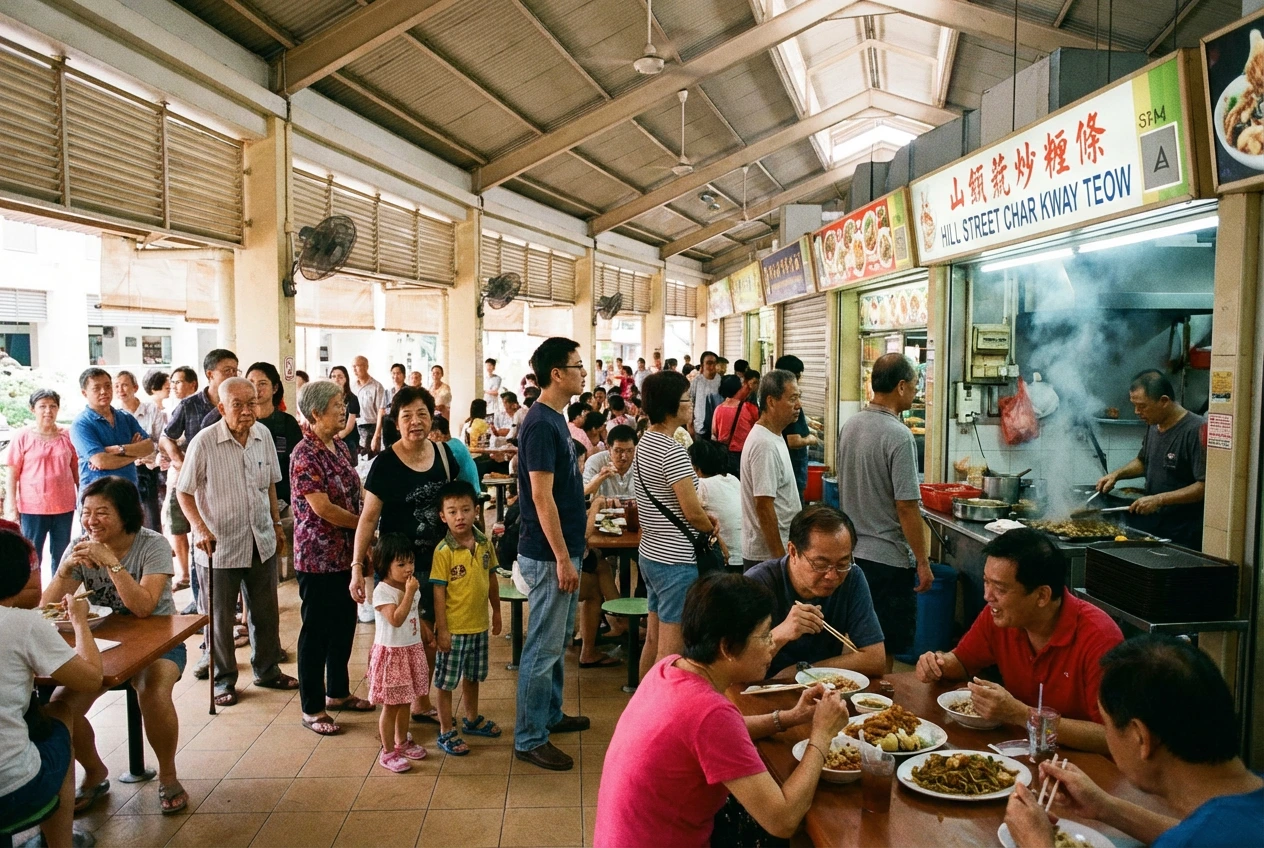
These street food artisans, the hawkers who dedicate their lives to perfecting a single dish, are the keepers of our heritage. I once had a brief chat with the uncle at this stall. He told me he starts his day at 4 AM, preparing his ingredients. He’s been standing in front of this same hot wok for over 40 years. He worries about who will take over when he retires, a concern shared by many multi-generation hawkers. His children have chosen different career paths, and the long hours and physically demanding nature of the job are a tough sell for the younger generation.
This is the bittersweet reality behind our beloved street food. For every delicious plate of char kway teow, there's a story of sacrifice and unwavering dedication. As a photographer, I feel an immense responsibility to document these stories. My goal isn't just to take beautiful pictures of food, but to capture the humanity behind it, the weathered hands, the focused eyes, the environment that has been shaped by decades of tireless work.
Capturing the Essence of an Iconic Dish at the Food Centre
For those wanting to photograph char kuey teow, my advice is to focus on the motion and the fire. The downside is that the action happens fast. You need to have your camera settings ready. I often use a fast shutter speed to freeze the noodles in mid-air. Don’t be afraid to shoot in the challenging light of a hawker centre; the steam catching the harsh fluorescent light can create beautifully dramatic images. It’s about finding beauty in the grit.
Why We Keep Coming Back for these Flat Rice Noodles
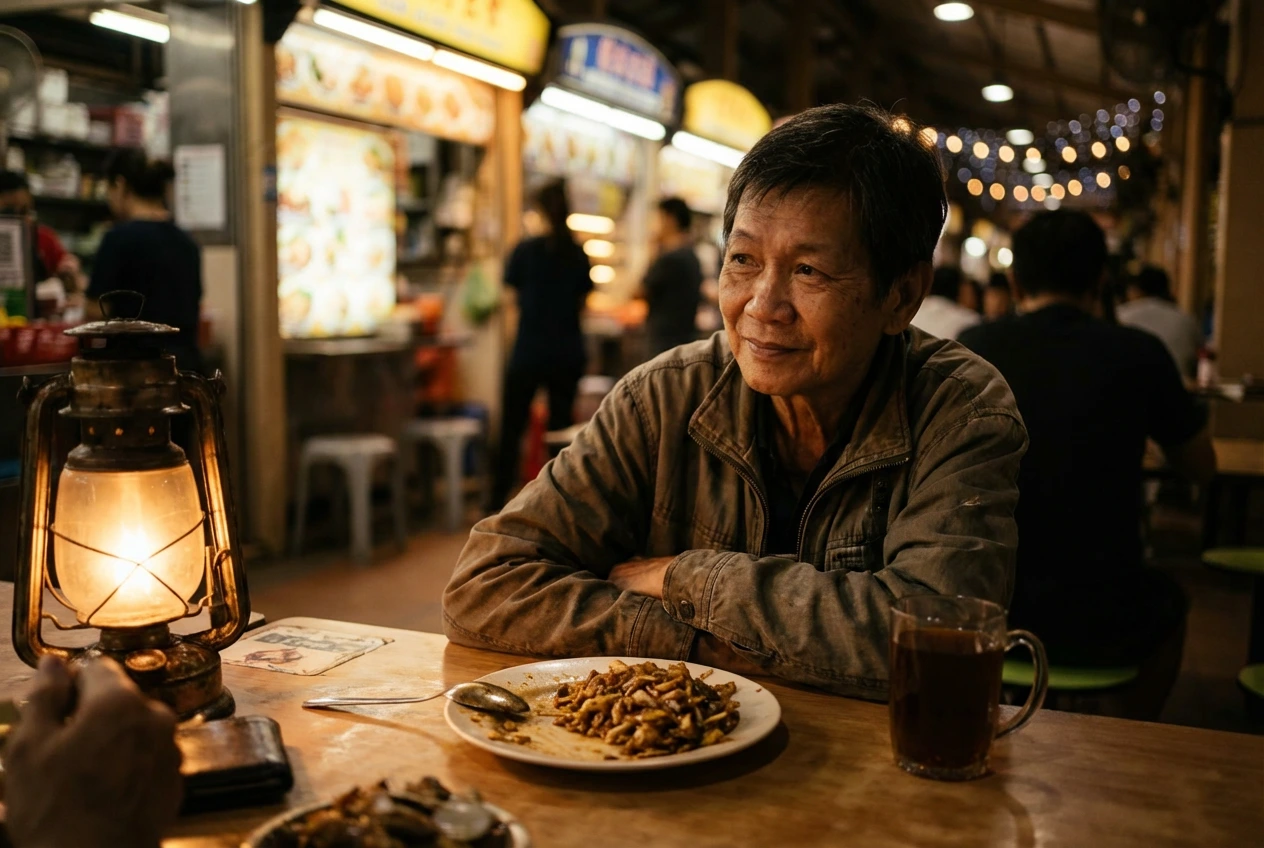
So, why do we keep coming back? It’s more than just the taste. We come back for the nostalgia, for that hit of smoky wok hei that reminds us of our childhood. We come back for the comforting feeling of a hearty, unapologetically flavorful meal. We come back to connect with a piece of our history, served on a simple plastic plate.
Every time I eat char koay teow, I feel a deep sense of gratitude for the hawkers who continue to practice these traditional techniques. They are not just cooks; they are cultural custodians. In a city that is constantly evolving, these humble hawker stalls are our anchors to the past. They remind us of where we came from and of the simple things that bring us joy. That is a flavor worth preserving.

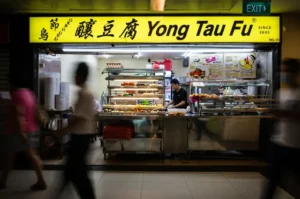
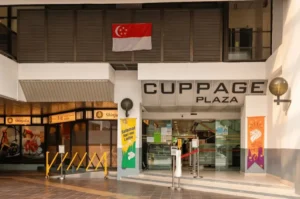
Savoring Orchard Yong Tau Fu: Cheap and Cheerful in Cuppage Plaza
June 18, 2026
I’d walked past this stall maybe a dozen times before I finally stopped. Cuppage Plaza isn’t the kind of place you go to be impressed, and that’s exactly why I keep coming back to it…
-
A Letter to the Faces Behind the Counter
June 16, 2026
You are turning over chicken wings when I first notice you. It is just past seven at Old Airport Road Food Centre, and the ceiling fans are pushing warm air down onto the tables. The…
-
How to Photograph Cuppage Plaza Food Without Disturbing the Room
June 15, 2026
The camera flash went off by mistake. It was a small, clumsy decision, but in the narrow, slightly smoky space of Kazu Sumiyaki, it felt much larger than it was. A few heads turned. The…
-
To the Stirring of the Wok in the Early Hours
June 12, 2026
The first sound is not the flame. It is the metal ladle touching the side of the wok, a small, hollow note that carries across the half-awake floor of Hong Lim Market & Food Centre….
-
Cuppage Plaza Food Guide: Japanese Restaurants and Hidden Gems in Singapore’s Little Tokyo
June 11, 2026
I started coming to Cuppage Plaza for the light. The building is old, a little worn at the edges, with narrow staircases and corridors that smell faintly of charcoal and sake by early evening. But…
-
A Note to the Knife That Cuts, But Never Hurries
June 9, 2026
The knife lands softly before it cuts. I hear it before I lift the camera. A low wooden sound, not sharp, not rushed. At Maxwell Food Centre, the lunch crowd is already pressing into the…
-
Wang BBQ Chicken Wing & Satay: Photographing Smoke, Wings, and Skewers at Chomp Chomp Food Centre
June 8, 2026
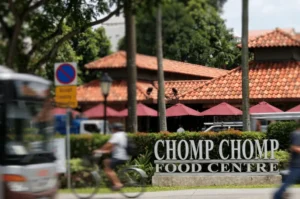
I reached Chomp Chomp Food Centre at 20 Kensington Park Road, Serangoon Gardens, Singapore on a Tuesday evening around 7pm, just as the place was beginning to thicken with supper energy. The tables were filling…
-
To the Fragrance That Lingers Long After the Meal
June 5, 2026
The evening air at Old Airport Road Food Centre is thick and warm. It wraps around me the moment I step away from the open street. I walk past the bright neon signboards, letting the…
-
Lau Pa Sat Satay Street: Photographing After-Work Satay in Singapore’s CBD.
June 4, 2026
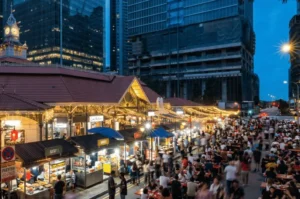
I visited Lau Pa Sat Satay Street on a Tuesday around 7pm, just as Boon Tat Street was changing its identity from a busy traffic route in Singapore’s CBD to a lively alfresco dining venue….
-
A Letter to the Hidden Moments Between the Shots
June 2, 2026
The afternoon heat settles heavily over Tiong Bahru Market. The frantic noise of the lunch hour is completely gone. I sit at a corner table near the open balcony. The green tiles reflect the warm,…