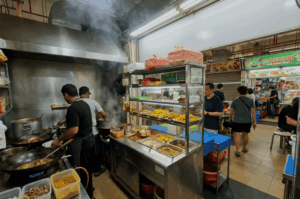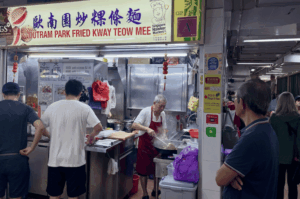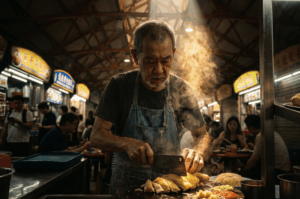
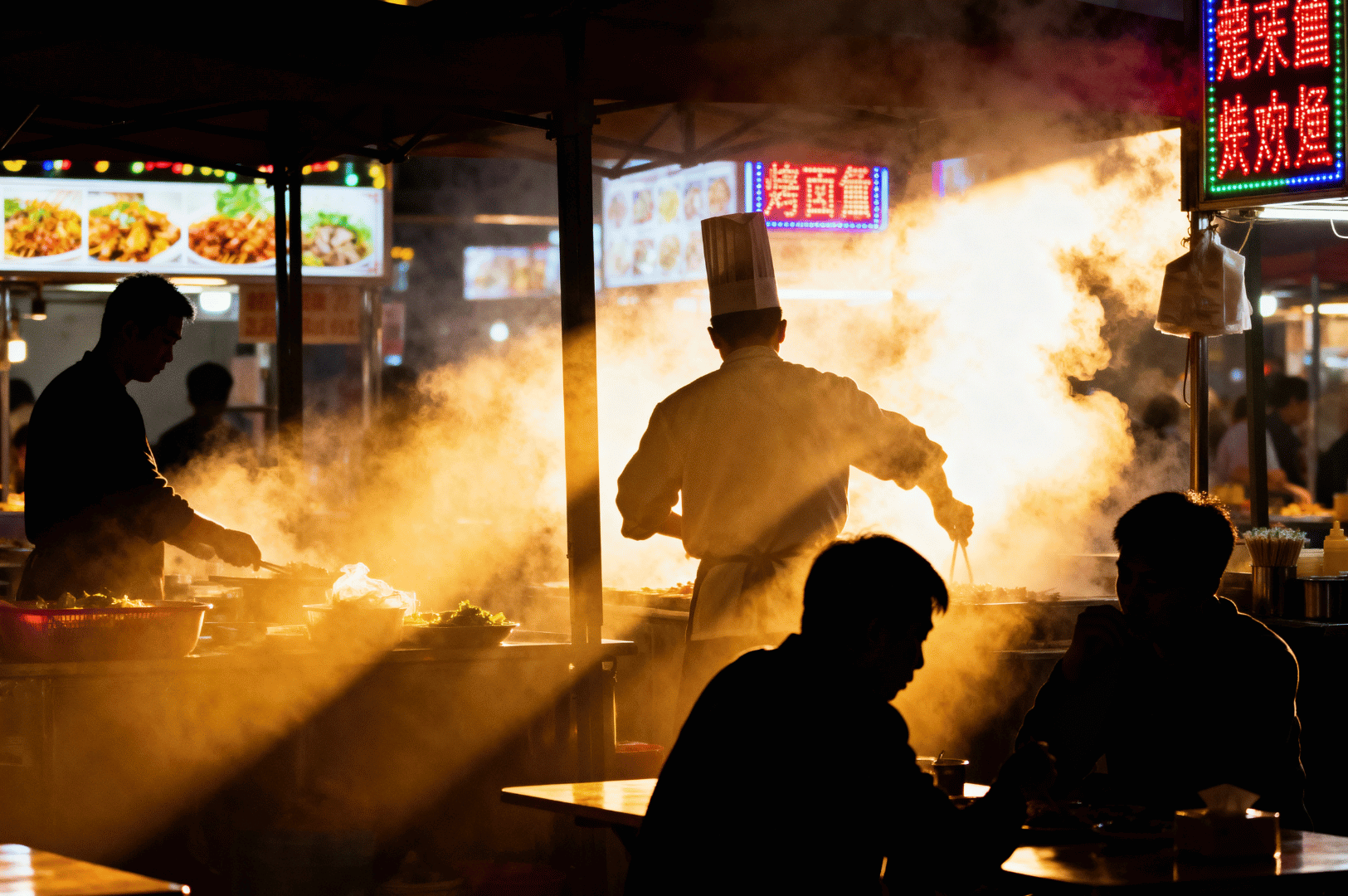
Under the roof of Maxwell Food Centre, steam and light collide, casting deep shadows across glowing stalls. This is the soul of Singapore hawker culture, where every hawker stall tells a story and every plate celebrates tradition. From a humble stall serving porridge to a popular stall dishing out world-famous chicken rice, the food centre is a living theatre of flavour.
The Origins of Hawker Centres
Hawker centres began in the 19th century as low-cost meals for dock workers and rickshaw pullers. Some recipes trace back to the British Navy, whose cooks introduced sauces and methods still seen today. Over time, hawkers moved from streets into covered food centres like Maxwell Market, creating communal dining rooms where strangers share tables and traditions. In 2020, UNESCO recognized Singapore hawker culture as Intangible Cultural Heritage.
Maxwell Food Centre Highlights
Maxwell remains one of the most popular hawker centres, a true treasure trove of tastes.
- Tian Tian Hainanese Chicken Rice – the legendary Hainanese chicken rice, praised by celebrity chefs like Anthony Bourdain and even challenged by Gordon Ramsay.
- Ah Tai Hainanese Chicken Rice – another favourite; loyal fans swear by Ah Tai’s silky chicken and chili sauce.
- Alimama Green Chilli Chicken Rice – a fiery twist that proves tradition can evolve.
- Maxwell Fuzhou Oyster Cake – golden, crispy oyster cakes filled with minced pork.
- Char Siew & Roast Duck Rice – caramelized char siew and succulent roast duck are Cantonese classics.
- Somerset Delicacies – wok hei–infused fried rice and noodles in generous portions.
- Special Shanghai Tim Sum – handmade dumplings and dim sum, alongside heritage snacks like hum jin pang and dough fritters.
- Fishball Noodle Soup – featuring silky rice noodles in a light, flavorful broth, this dish is a staple at several stalls, prized for the noodles' delicate texture and their role in authentic Asian recipes.
- Sweet endings – tapioca cake with palm sugar or gula melaka, comforting red bean soup with five spice powder, or a cooling chendol with red beans.
Other highlights include rendang chicken, chicken cutlet, pork chop Western food, luncheon meat dishes, and bowls of springy noodles, sour soup, or sliced fish topped with shredded chicken. Some stalls even once set out to sell Vietnamese food, but now serve unique bites like the south indian pancake—a popular breakfast dish from South India, made with fermented rice batter using traditional preparation methods, celebrated for its soft texture and subtle tang.
Choreography in the Stalls
Watch closely and each hawker becomes a performer. A head chef at Tian Tian wields his cleaver like percussion, while another tosses noodles with soy sauce under glowing flames. During the bustling lunch hour, Maxwell transforms into a stage of rhythm, flavour, and community.
Community Engagement at Maxwell
At the heart of Maxwell Food Centre is a spirit of togetherness that goes beyond just sharing a table. Social media has become an extension of this community, with Ah Tai and others encouraging diners to share their personal experiences through food photos online. The result is a vibrant tapestry of food photography, where natural light and creative angles capture the essence of each dish and the joy of community dining.
Tradition Meets Global Influence
Though rooted in heritage, Maxwell embraces multiculturalism. Alongside Thai food and banh mi, you’ll find Western food like pork chop or chicken cutlet. Stalls experiment while preserving techniques—braising, fermenting, and hand-rolling—that keep traditions alive.
Beyond Maxwell’s Shadows
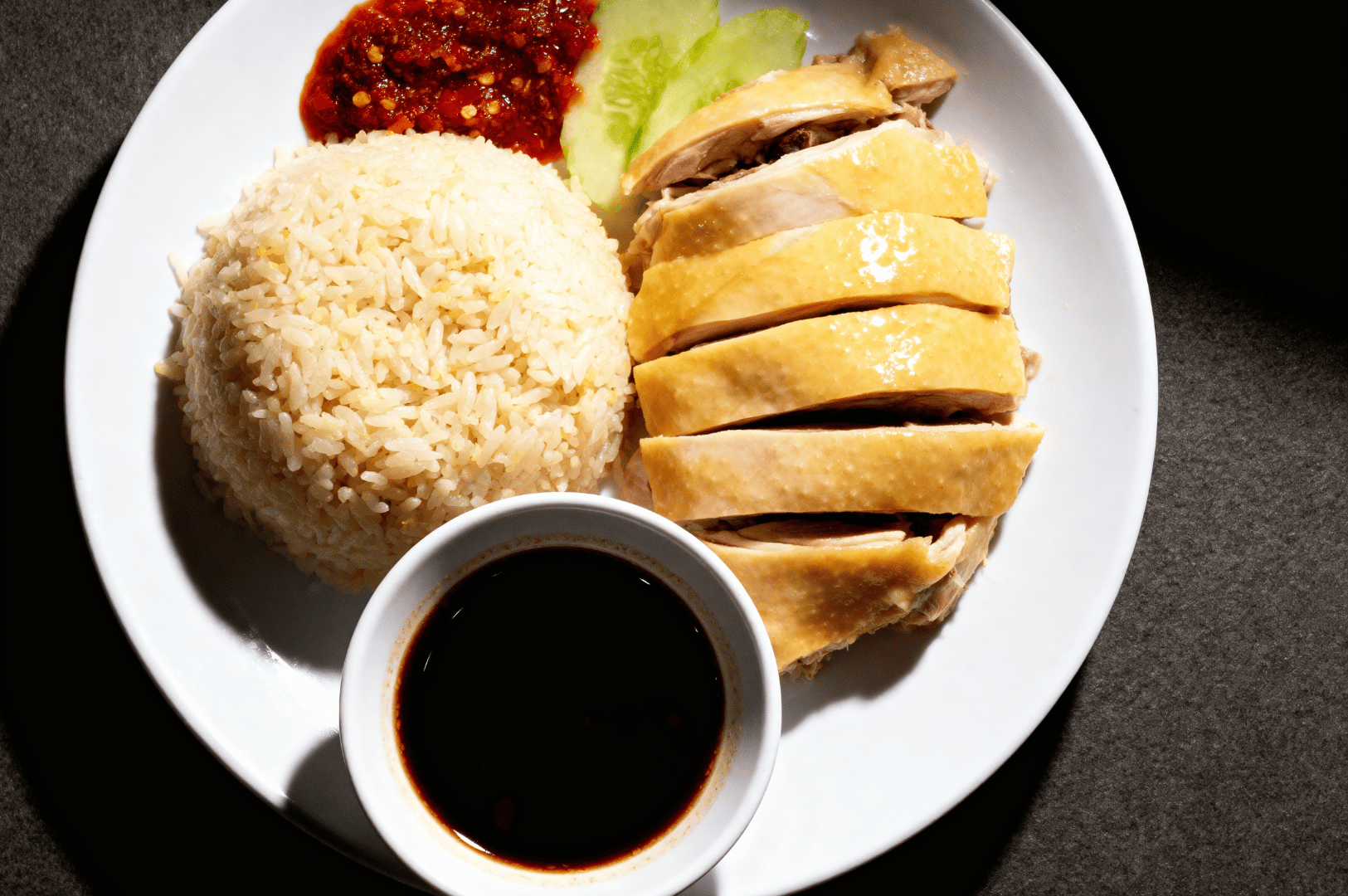
Other popular hawker centres add depth to the experience. At Chinatown Complex, you can enjoy jiang nan noodles, old Nyonya snacks, or comforting bowls of red bean soup. Elsewhere, stalls like Tai Hainanese Chicken Rice or Ah Tai Hainanese Chicken carry the torch of this shared tradition.
Food Photography Tips
Maxwell is equally a playground for cameras. To capture the perfect shot, use natural light where possible. Props like wooden boards or a dark plate help a dish pop and add texture. Incorporate deep shadows for mood, or focus on details—glossy sauces, crispy edges, or bubbling broths. These food photography tips bring dishes like fried chicken, oyster cakes, or dough fritters to life. Every photo tells a story, preserving both flavour and heritage.
Conclusion: A Taste of Singapore’s Soul
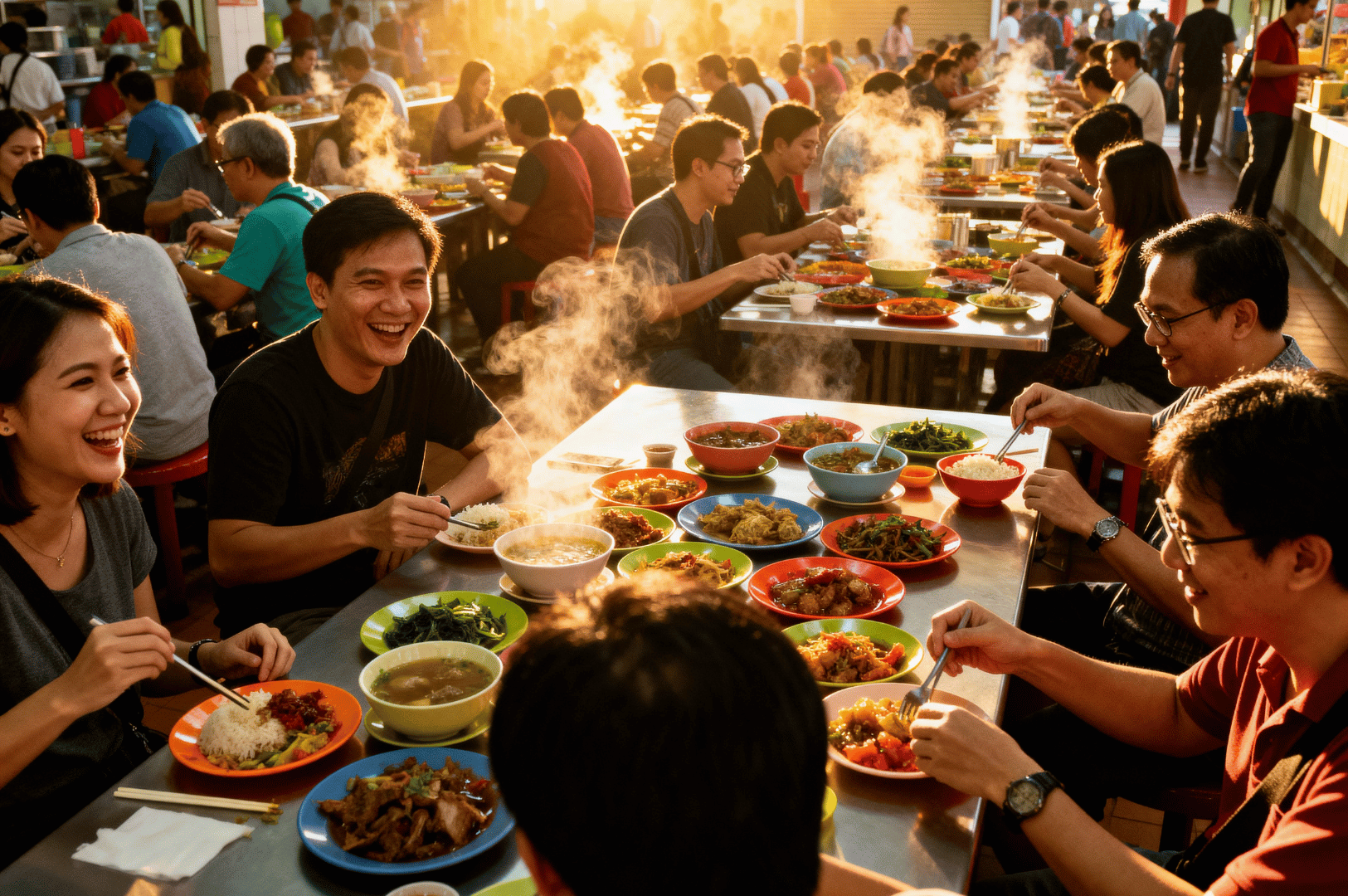
Dining at Maxwell is more than eating—it’s experiencing Singapore hawker culture in motion. From Hainanese chicken rice to braised duck, from century egg porridge to banh mi, every dish reflects history, innovation, and community. In this vibrant stage of steam and shadows, food is not just sustenance—it’s performance, preservation, and pride.
For more visual journeys through Singapore’s street food scene, explore the spice route of Little India or discover the smoky allure in our satay feature.

A Letter to the Faces Behind the Counter
June 16, 2026
You are turning over chicken wings when I first notice you. It is just past seven at Old Airport Road Food Centre, and the ceiling fans are pushing warm air down onto the tables. The…
-
How to Photograph Cuppage Plaza Food Without Disturbing the Room
June 15, 2026
The camera flash went off by mistake. It was a small, clumsy decision, but in the narrow, slightly smoky space of Kazu Sumiyaki, it felt much larger than it was. A few heads turned. The…
-
To the Stirring of the Wok in the Early Hours
June 12, 2026
The first sound is not the flame. It is the metal ladle touching the side of the wok, a small, hollow note that carries across the half-awake floor of Hong Lim Market & Food Centre….
-
Cuppage Plaza Food Guide: Japanese Restaurants and Hidden Gems in Singapore’s Little Tokyo
June 11, 2026
I started coming to Cuppage Plaza for the light. The building is old, a little worn at the edges, with narrow staircases and corridors that smell faintly of charcoal and sake by early evening. But…
-
A Note to the Knife That Cuts, But Never Hurries
June 9, 2026
The knife lands softly before it cuts. I hear it before I lift the camera. A low wooden sound, not sharp, not rushed. At Maxwell Food Centre, the lunch crowd is already pressing into the…
-
Wang BBQ Chicken Wing & Satay: Photographing Smoke, Wings, and Skewers at Chomp Chomp Food Centre
June 8, 2026
I reached Chomp Chomp Food Centre at 20 Kensington Park Road, Serangoon Gardens, Singapore on a Tuesday evening around 7pm, just as the place was beginning to thicken with supper energy. The tables were filling…
-
To the Fragrance That Lingers Long After the Meal
June 5, 2026
The evening air at Old Airport Road Food Centre is thick and warm. It wraps around me the moment I step away from the open street. I walk past the bright neon signboards, letting the…
-
Lau Pa Sat Satay Street: Photographing After-Work Satay in Singapore’s CBD.
June 4, 2026
I visited Lau Pa Sat Satay Street on a Tuesday around 7pm, just as Boon Tat Street was changing its identity from a busy traffic route in Singapore’s CBD to a lively alfresco dining venue….
-
A Letter to the Hidden Moments Between the Shots
June 2, 2026
The afternoon heat settles heavily over Tiong Bahru Market. The frantic noise of the lunch hour is completely gone. I sit at a corner table near the open balcony. The green tiles reflect the warm,…
-
Izakaya Singapore: More Than Just After-Work Spots
June 1, 2026
When we talk about izakayas in Singapore, we often reduce them to simple after work drinks spots. We picture loud rooms where tired professionals go to drink cold beer and eat cheap bar snacks. But…