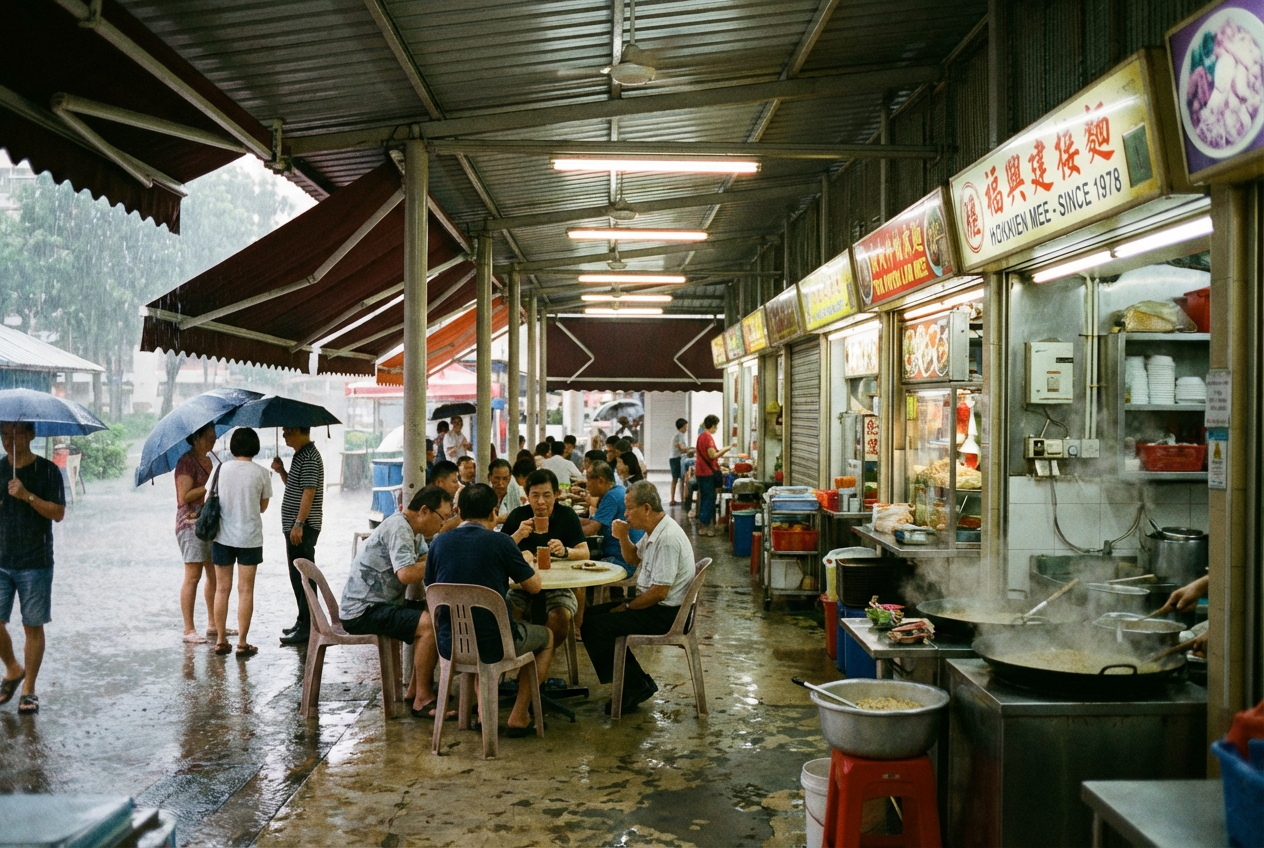
It was a rainy Tuesday afternoon about seven years ago, and I was just a guy with a camera looking for shelter. I ducked into an old, dimly lit hawker center in Toa Payoh to escape the sudden downpour. The air was thick with humidity and the sharp, metallic scent of wet asphalt. But underneath that, there was a deep, intoxicating aroma of dark soy sauce, star anise, and roasted garlic.
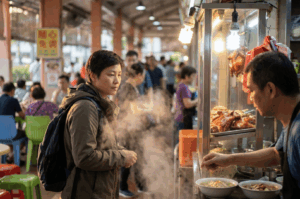
I followed my nose to a corner stall with a faded yellow signboard. An elderly uncle was standing behind the glass, his white singlet clinging to his back from the intense heat. I noticed his hands right away. They were scarred and stained, the hands of someone who had spent a lifetime perfecting a single craft.
I ordered the Braised Duck Rice. The rhythmic thwack of his heavy steel cleaver against the deeply grooved wooden chopping block echoed through the quiet afternoon. When he handed me the plate, the warmth radiated through the thin plastic. The overhead fan was barely working. I wiped sweat from my forehead as I ate, but I didn't care.
The meat was glistening under the harsh fluorescent lights, bathed in a thick, dark gravy. The first bite was an absolute revelation. The duck was incredibly tender, yielding instantly, while the herbal, savory notes of the braising liquid coated my mouth with rich umami. It tasted like pure history.
I realized right then that I wasn't just eating a cheap lunch. I was consuming decades of unwavering dedication. That was the exact moment the Street Food Photographer project went from a vague idea to a lifelong mission. I felt a sudden, urgent need to capture the story of this uncle and his braised duck.
I asked if I could take his portrait. He gave a shy, hesitant nod, wiping his hands on a towel. When I looked through my viewfinder, I saw the quiet dignity of Singapore’s culinary heritage staring back at me. I knew I had to tell his story.
Our hawker stalls are far more than just convenient places to grab a quick, affordable meal. They are living, breathing archives of our culture. But as I look around today, I see empty stalls and aging masters with no one to pass the torch to. The physical spaces are being renovated and modernized, but the human soul of these places is slowly slipping away.
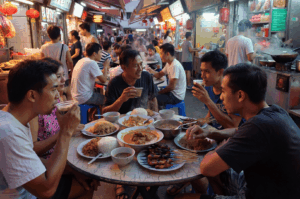
If you’re visiting a traditional hawker center, try to grab a table right next to the stalls. It’s definitely hotter and noisier, but it’s where you truly feel the pulse of the place. You'll hear the sizzle of the woks and see the quiet focus of the artisans.
We need to do more than just eat our favorite dishes. We need to truly see the people behind the plates. We must document their stories, honor their craft, and preserve this beautiful, gritty heritage before the lights go out on these generational stalls for good.

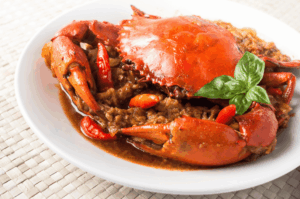
Chili Crab: Singapore’s Sultry Affair Captured in Food Photography
December 26, 2025
It arrives at the table not as a dish, but as an event. A magnificent Sri Lankan mud crab, resplendent in a sea of vibrant, glossy sauce the color of a tropical sunset. Steam rises…
-
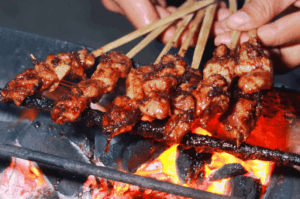
Flame & Flesh: The Primal Art of Satay Through Food Photography
December 22, 2025
Sparks dance into the twilight sky, illuminating a face etched with concentration. The air fills with the scent of charred meat, caramelized marinade, and burning charcoal. Rows of bamboo skewers are turned rhythmically over glowing…
-
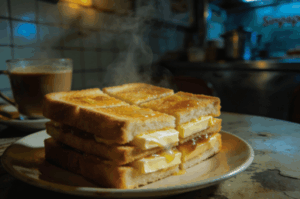
Hands of Time: A Food Photographer’s Encounter with Traditional Kaya Toast Masters
December 19, 2025
The air before dawn has a quality all its own. It is cool and hushed, thick with anticipation. On a quiet street corner in Singapore, long before the city awakens, a soft, golden light spills…
-
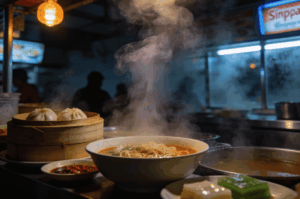
Steam & Seduction: Singapore for Foodies
December 15, 2025
The air in Singapore is never just air. It is a potent cocktail of sensation, a humid embrace laced with the fragrant perfume of pandan, the sharp zest of calamansi, and the deep, soulful aroma…
-
Spice Affair: Singapore Foodies’ Guide to Little India
December 12, 2025
The moment you step onto Serangoon Road, the world changes. The air grows thick with the heady perfume of jasmine garlands, sweet incense, and a complex blend of toasted spices that seems to emanate from…
-
The Morning Ritual: Street Food Hawkers Before Dawn
December 8, 2025
The world is dark, cloaked in a tranquil stillness that precedes the sunrise. A deep blue hue hangs over Singapore, and the only sounds are the distant hum of a lone vehicle or the gentle…
-
Midnight Confessions: The Secret Language of Supper in Food Images
December 5, 2025
The city exhales. Its daytime hustle recedes into a quiet hum, replaced by a different kind of pulse. On street corners bathed in the lonely glow of a single lamp post, a new world awakens….
-
Bespoke Tasting Tour: Michelin Street Food in Singapore
December 1, 2025
Imagine a culinary journey tailored just for you, a path that winds through the heart of a city’s most celebrated flavors, with every stop a new delight for both your palate and your camera lens….
-
Night Market Seduction: Low-Light Techniques for Food Photographer
November 28, 2025
The sun dips below the horizon, and a different kind of energy begins to hum. Lanterns flicker to life, steam billows into the cool night air, and the chaotic, beautiful symphony of a night market…
-
Best Street Food in Singapore: Roti Prata’s Sensual Stretch
November 24, 2025
The air in the coffee shop was thick with the rich scent of brewed coffee and the low hum of morning chatter. I found myself drawn to a brightly lit stainless steel stage where a…