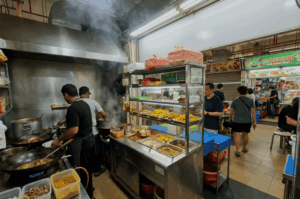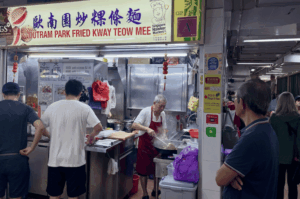
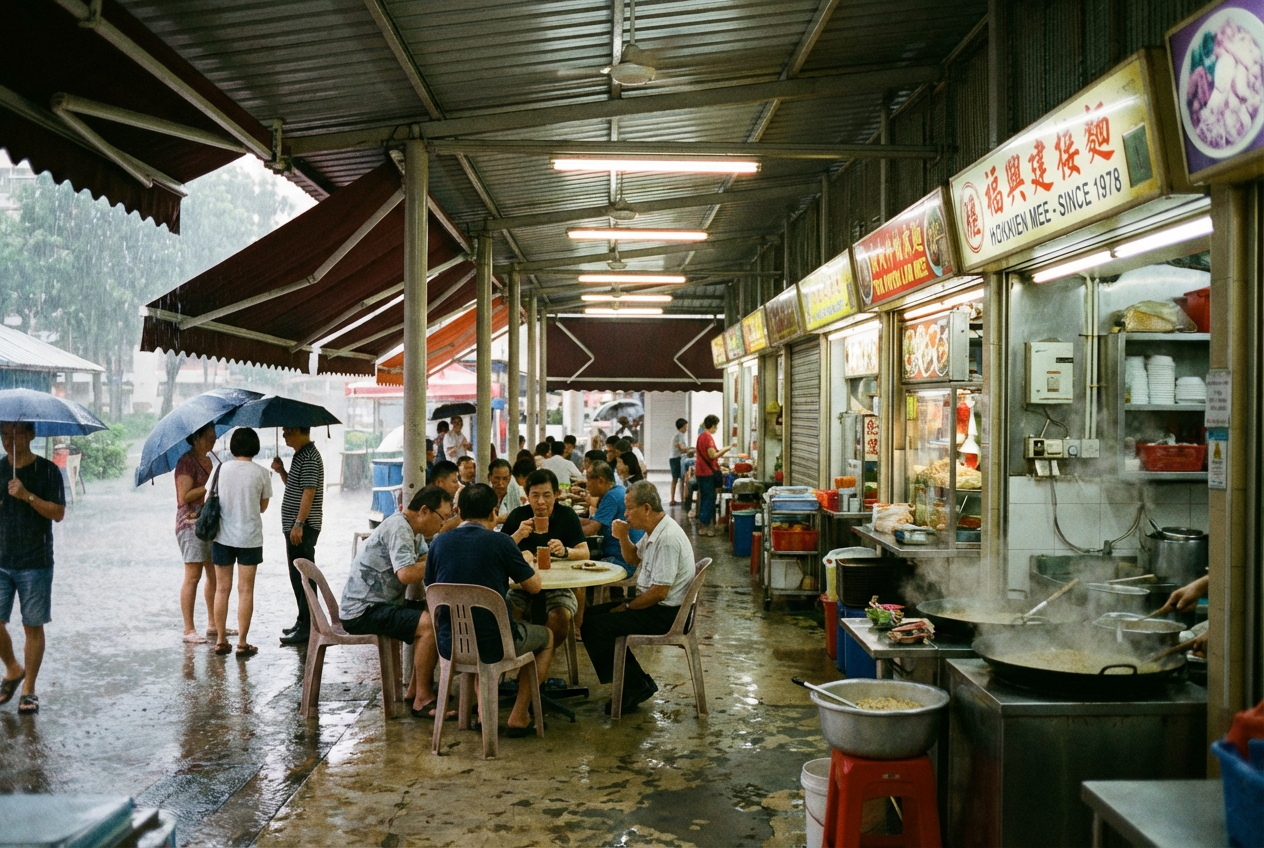
It was a rainy Tuesday afternoon about seven years ago, and I was just a guy with a camera looking for shelter. I ducked into an old, dimly lit hawker center in Toa Payoh to escape the sudden downpour. The air was thick with humidity and the sharp, metallic scent of wet asphalt. But underneath that, there was a deep, intoxicating aroma of dark soy sauce, star anise, and roasted garlic.
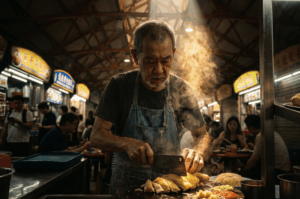
I followed my nose to a corner stall with a faded yellow signboard. An elderly uncle was standing behind the glass, his white singlet clinging to his back from the intense heat. I noticed his hands right away. They were scarred and stained, the hands of someone who had spent a lifetime perfecting a single craft.
I ordered the Braised Duck Rice. The rhythmic thwack of his heavy steel cleaver against the deeply grooved wooden chopping block echoed through the quiet afternoon. When he handed me the plate, the warmth radiated through the thin plastic. The overhead fan was barely working. I wiped sweat from my forehead as I ate, but I didn't care.
The meat was glistening under the harsh fluorescent lights, bathed in a thick, dark gravy. The first bite was an absolute revelation. The duck was incredibly tender, yielding instantly, while the herbal, savory notes of the braising liquid coated my mouth with rich umami. It tasted like pure history.
I realized right then that I wasn't just eating a cheap lunch. I was consuming decades of unwavering dedication. That was the exact moment the Street Food Photographer project went from a vague idea to a lifelong mission. I felt a sudden, urgent need to capture the story of this uncle and his braised duck.
I asked if I could take his portrait. He gave a shy, hesitant nod, wiping his hands on a towel. When I looked through my viewfinder, I saw the quiet dignity of Singapore’s culinary heritage staring back at me. I knew I had to tell his story.
Our hawker stalls are far more than just convenient places to grab a quick, affordable meal. They are living, breathing archives of our culture. But as I look around today, I see empty stalls and aging masters with no one to pass the torch to. The physical spaces are being renovated and modernized, but the human soul of these places is slowly slipping away.
If you’re visiting a traditional hawker center, try to grab a table right next to the stalls. It’s definitely hotter and noisier, but it’s where you truly feel the pulse of the place. You'll hear the sizzle of the woks and see the quiet focus of the artisans.
We need to do more than just eat our favorite dishes. We need to truly see the people behind the plates. We must document their stories, honor their craft, and preserve this beautiful, gritty heritage before the lights go out on these generational stalls for good.

A Letter to the Faces Behind the Counter
June 16, 2026
You are turning over chicken wings when I first notice you. It is just past seven at Old Airport Road Food Centre, and the ceiling fans are pushing warm air down onto the tables. The…
-
How to Photograph Cuppage Plaza Food Without Disturbing the Room
June 15, 2026
The camera flash went off by mistake. It was a small, clumsy decision, but in the narrow, slightly smoky space of Kazu Sumiyaki, it felt much larger than it was. A few heads turned. The…
-
To the Stirring of the Wok in the Early Hours
June 12, 2026
The first sound is not the flame. It is the metal ladle touching the side of the wok, a small, hollow note that carries across the half-awake floor of Hong Lim Market & Food Centre….
-
Cuppage Plaza Food Guide: Japanese Restaurants and Hidden Gems in Singapore’s Little Tokyo
June 11, 2026
I started coming to Cuppage Plaza for the light. The building is old, a little worn at the edges, with narrow staircases and corridors that smell faintly of charcoal and sake by early evening. But…
-
A Note to the Knife That Cuts, But Never Hurries
June 9, 2026
The knife lands softly before it cuts. I hear it before I lift the camera. A low wooden sound, not sharp, not rushed. At Maxwell Food Centre, the lunch crowd is already pressing into the…
-
Wang BBQ Chicken Wing & Satay: Photographing Smoke, Wings, and Skewers at Chomp Chomp Food Centre
June 8, 2026
I reached Chomp Chomp Food Centre at 20 Kensington Park Road, Serangoon Gardens, Singapore on a Tuesday evening around 7pm, just as the place was beginning to thicken with supper energy. The tables were filling…
-
To the Fragrance That Lingers Long After the Meal
June 5, 2026
The evening air at Old Airport Road Food Centre is thick and warm. It wraps around me the moment I step away from the open street. I walk past the bright neon signboards, letting the…
-
Lau Pa Sat Satay Street: Photographing After-Work Satay in Singapore’s CBD.
June 4, 2026
I visited Lau Pa Sat Satay Street on a Tuesday around 7pm, just as Boon Tat Street was changing its identity from a busy traffic route in Singapore’s CBD to a lively alfresco dining venue….
-
A Letter to the Hidden Moments Between the Shots
June 2, 2026
The afternoon heat settles heavily over Tiong Bahru Market. The frantic noise of the lunch hour is completely gone. I sit at a corner table near the open balcony. The green tiles reflect the warm,…
-
Izakaya Singapore: More Than Just After-Work Spots
June 1, 2026
When we talk about izakayas in Singapore, we often reduce them to simple after work drinks spots. We picture loud rooms where tired professionals go to drink cold beer and eat cheap bar snacks. But…