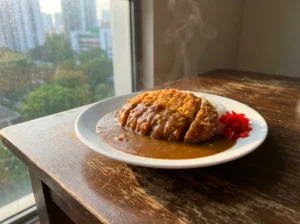
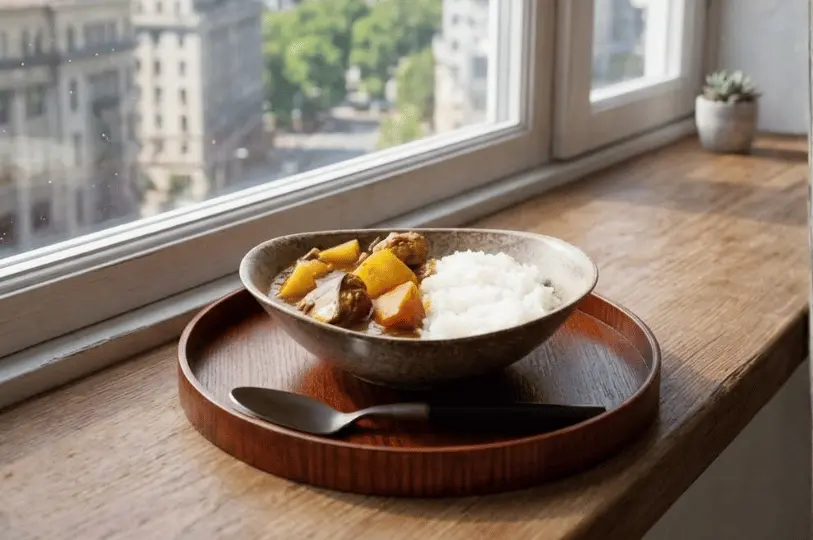
It was exactly 6:30 PM during the sunset golden hour. The sun was dipping low on the horizon, casting a long, warm beam of golden light directly across my wooden table. The waitress set down a 12 dollar plate of katsu curry, a classic Japanese curry rice dish. I did not immediately reach for my spoon. Instead, I watched how the low angle of the sun hit the thick, brown curry sauce.
When I first tried golden hour photography for food, I relied on harsh direct sunlight or flat afternoon light. Curry is notoriously difficult to photograph. It is essentially a brown, glossy liquid. But in that brief window of warm, soft light during the magic hour, the dish transformed.
I have found that understanding light is the only way to capture the true visual language of everyday food, especially Japanese curry. Photographing Japanese curry during golden hour requires a delicate balance of timing, technical control, and environmental awareness.
Why Golden Hour Matters for Food Photography: The Best Light for Curry Sauce
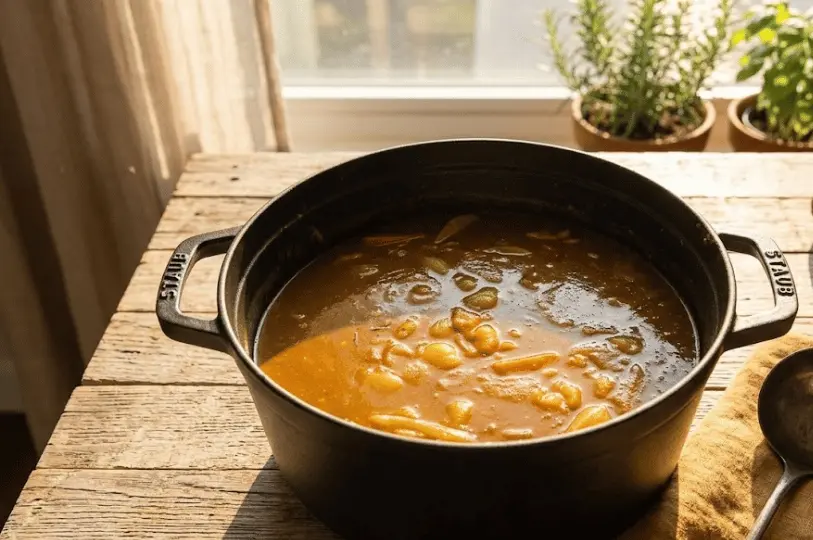
Golden hour refers to the short period of daytime shortly after sunrise golden hour or just before sunset golden hour. During this time, daylight is redder and softer than when the sun is higher in the sky, creating flattering light with longer shadows and a rich orange color palette.
For food photography, this light is entirely unmatched. The low angle of the sun creates long, soft shadows that give your dish depth and dimension. When you photograph a plate of Japanese curry rice under harsher light at midday, the glossy surface of the curry roux acts like a mirror. Golden hour light is much more forgiving. It wraps around the curves of the plate, warming the brown tones of the curry roux, making it look rich and deeply flavorful.
Sunrise Golden Hour vs. Sunset Golden Hour: Understanding the Differences
Both sunrise and sunset golden hours provide beautiful, warm light ideal for photographing Japanese curry, but each has its unique characteristics and challenges.
Sunrise Golden Hour
The sunrise golden hour occurs shortly after the sun rises, offering a fresh, calm atmosphere with fewer people around, making it easier to find a quiet spot for your shoot. This time is perfect for capturing the softest, most delicate light on your subject, with a subtle warmth that enhances the colors of the curry sauce and accompanying ingredients.
Sunset Golden Hour
Sunset golden hour happens just before the sun sets, delivering rich, warm tones and a more intense golden glow. The light tends to be deeper in color, casting longer shadows that add dramatic depth and texture to your images. The main challenge is that the golden hour window is short, and the light fades quickly, so preparation and timing are crucial to capture the best shots.
Preparing for the Shoot: Setting Up for Japanese Curry Roux Photography
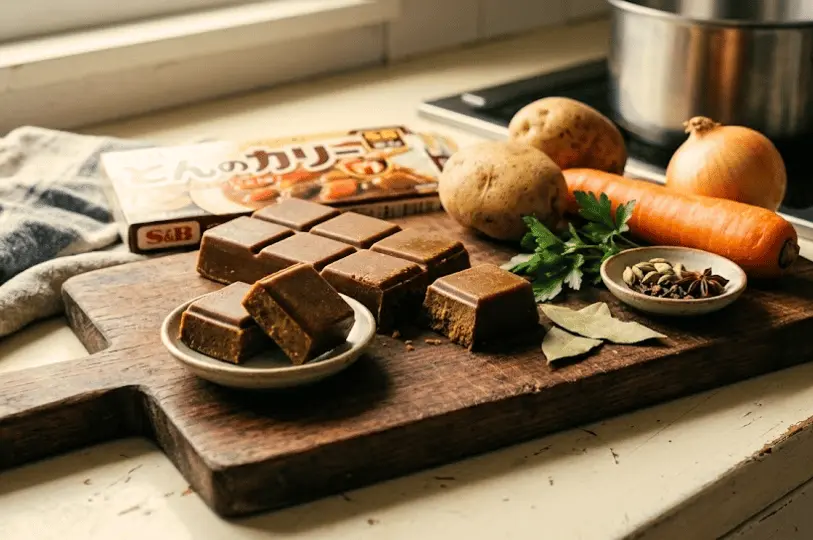
Golden hour does not wait for anyone. In a place like Singapore, this short window of perfect light lasts perhaps thirty to forty minutes. You need to prepare your environment long before the light peaks.
Step 1: Set up your shooting location
Find a table right next to a large window facing west to catch the sunset golden hour. You want the natural golden light to stream across the table, not directly behind you. I always clear the table of unnecessary clutter. Remove plastic napkin holders and bright promotional menus. You want a clean, quiet frame that complements the warm brown curry sauce and the vibrant vegetables.
Step 2: Gather your tools
You do not need a massive studio setup. Expect to spend about 50 to 80 dollars on a simple, foldable reflector. I highly suggest bringing a sturdy tripod. As the sun sets, you lose light rapidly, and a tripod prevents camera shake when your shutter speed drops.
Step 3: Prepare the curry
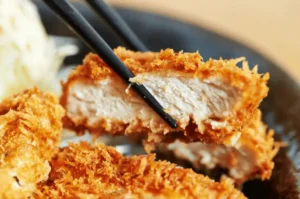
Order your food strategically. If you know the light will be perfect at 6:45 PM, place your order at 6:30 PM. Ensure the curry is freshly served when the warm light hits. A pork cutlet, or tonkatsu, adds crucial texture and shape to the frame. The contrast between the crispy pork and the smooth sauce is the visual anchor of your photograph.
Pro Tip:
Do not ask the kitchen to plate the food perfectly. The natural, slightly messy edges of a curry pour tell a better story. Let the food look like it is meant to be eaten, as most people enjoy their own version of Japanese curry.
Capturing Texture and Steam: Techniques for Photographing Curry Sauce and Cooked Rice
When I shoot a bowl of curry, I want the viewer to focus entirely on the main ingredients. I set my lens to a wide aperture, usually between f/2.8 and f/5.6. This creates a shallow depth of field. The crispy edge of the pork cutlet stays incredibly sharp, while the back edge of the bowl softly blurs into the background.
Capturing steam is a different challenge. Steam is translucent and moves quickly. If you use a slow shutter speed, the steam blurs into an invisible haze. You need a fast shutter speed, ideally 1/125th of a second or faster, to freeze the motion of the vapor.
Lighting is the secret to making steam visible. Steam only shows up on camera when it is backlit or side-lit against a dark background. Position your bowl so the golden light hits the steam from behind. The vapor will catch the golden light and glow, standing out clearly against the darker shadows of the restaurant.
Managing Challenges: Avoiding Reflections and Color Casts in Japanese Curry Photography
Photographing a highly reflective sauce brings immediate challenges. I have ruined many photos by ignoring reflections.
If you sit directly between the window and the bowl, you will cast a dark shadow over the food. If you shoot from the wrong angle, the sauce will reflect the bright window glass, turning into a distracting white patch. You have to move your body and your camera. I prefer shooting from a 45 degree angle. This usually allows the light to graze the surface of the sauce, highlighting its thickness without creating a glaring reflection.
You also have to balance the warm light with the vibrant colors of the dish. Golden hour light is heavily tinted orange and red. Sometimes, this makes the brown curry roux look muddy or the white rice look yellow. You might need to adjust your camera’s white balance slightly to keep the cooked rice looking clean while preserving the warmth of the scene.
Insider Knowledge:
If the shadowed side of your curry looks too dark, use a small white reflector to bounce the window light back onto the food. Even a white paper napkin held just out of frame works perfectly in a pinch.
Local Context in Singapore: The Unique Challenges of Shooting Japanese Curry at Golden Hour
Photographing food in Singapore comes with its own specific environmental factors.
First, our location near the equator means our sunsets happen quickly. The sun drops fast, creating a short window of golden hour light. You do not get a long, lingering evening. I always use an app like Sun Seeker to track exactly when the light will hit my chosen window.
Second, the humidity here heavily affects your ability to capture steam. In a heavily air-conditioned mall, the contrast between the hot curry and the cold air creates thick, visible steam. But if you are shooting at an open-air spot like Tiong Bahru Market, the high ambient humidity means the steam dissipates almost instantly.
We also have to consider cultural nuances. Japanese curry has become a deeply integrated comfort food here. Many local stalls serve it alongside house foods like kopi or other side dishes. Photographing a plate of curry rice sitting next to a cup of traditional kopi tells a distinctly Singaporean story. Look for these small cultural crossovers in your frame.
Common Mistakes to Avoid When Photographing Japanese Curry Roux and Other Curries
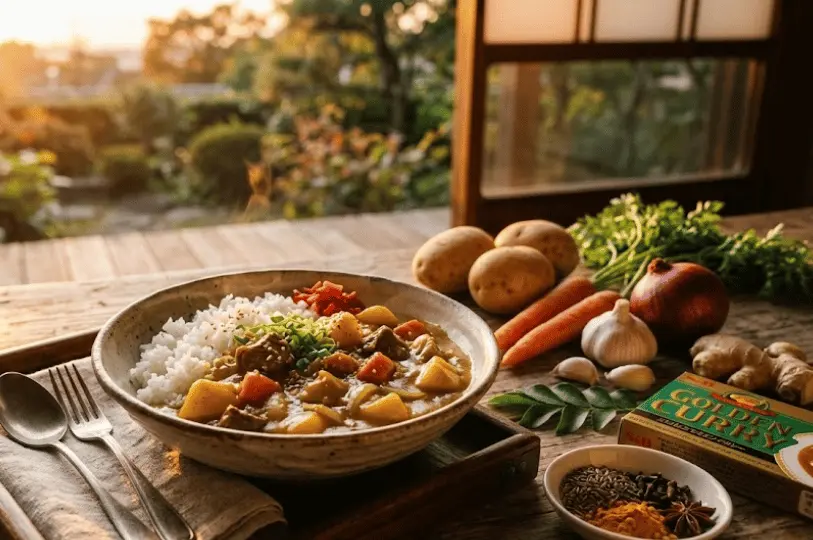
I have made plenty of mistakes while trying to master this specific type of golden hour photography. Here are the most common traps you should avoid.
Staging the food too much
Early on, I would use tweezers to arrange individual grains of cooked rice and wipe every drop of stray sauce from the bowl. The photos looked clinical and fake. Real everyday food is slightly messy. Let the curry drip over the rice naturally.
Missing the short window of golden hour
I once spent twenty minutes adjusting my tripod and testing my exposure. By the time I was ready to shoot, the sun had dipped behind an HDB block. The golden light was gone, replaced by a flat, gray shadow. Prepare your settings before the food arrives.
Letting the food cool down
Cold curry looks terrible on camera. The sauce forms a thick skin on the surface, and the meat loses its fresh shine. If the food gets cold while you are adjusting your camera, you have already lost the photograph. Shoot quickly.
Blue Hour: Extending Your Shoot Beyond Golden Hour
After the sun sets, the blue hour begins, a brief window when the world is bathed in soft blue light. While the warm golden light fades, the blue light creates a unique atmosphere perfect for moody, dramatic food images.
Though blue hour light is cooler and less flattering for skin tone or warm dishes like Japanese curry, it offers creative opportunities. Use this time to capture silhouette shots or emphasize the contrast between the warm curry and the cool blue sky outside.
Katsu Curry: A Visual Example of Golden Hour Photography with Japanese Curry Rice
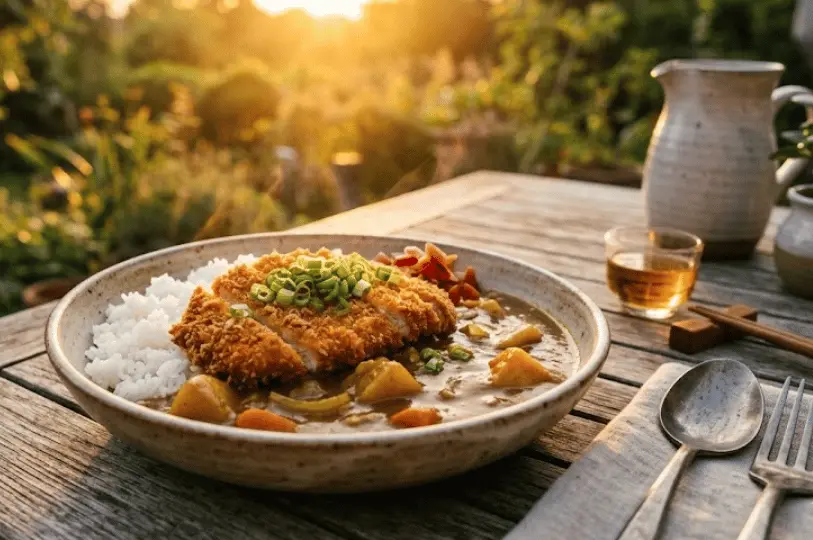
Katsu curry is a popular Japanese version of curry rice topped with a breaded pork cutlet. The crispy texture of the katsu contrasts beautifully with the thick curry sauce, making it an ideal subject for golden hour photography.
The combination of the golden light, the warm brown curry roux, and the rich orange carrots and potatoes creates a harmonious color palette that evokes comfort and homeliness. The soft light enhances the texture of the fried cutlet while the longer shadows add depth to the plate.
Conclusion: The Art and Concept of Golden Hour Photography with Japanese Curry
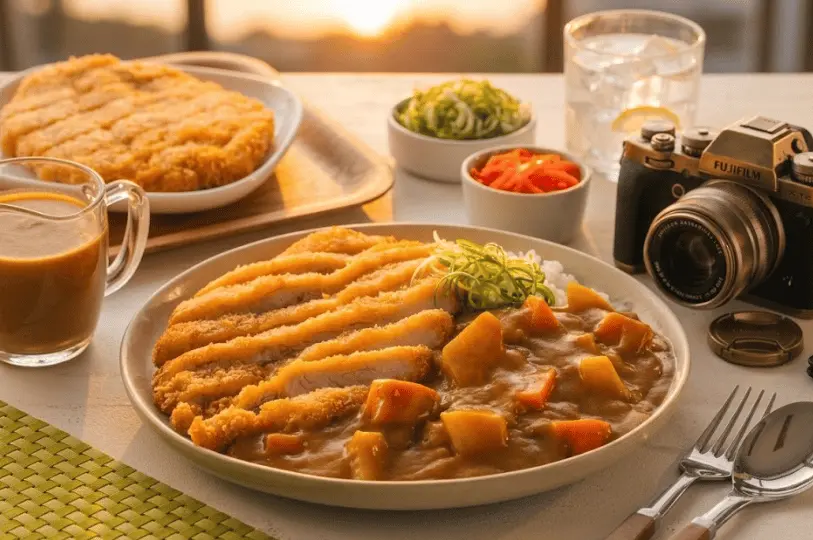
Capturing the visual language of Japanese curry is an art form that requires patience, observation, and an understanding of light. It forces you to slow down and truly look at your food before you consume it.
When you get the timing right, your photograph stops being just a picture of a dish. It becomes a record of a specific, comforting moment in the world, a moment of warmth and home.
I strongly suggest you try this yourself. Pick a clear evening this week. Find a quiet window seat, order a warm bowl of the Japanese food Singapore diligently makes, and watch how the light changes the scene. Keep your camera ready, trust your eyes, and capture the food while it is still breathing.

Quiet Imports: How Japanese Food in Singapore Settles Into Foreign Cities
April 27, 2026
It is just past one in the afternoon at a busy mall in Tampines. A man in a pressed white shirt stands up from a small wooden table. He picks up his plastic tray. On…
-
Still Hour Light in a Quiet Hawker Centre Stall
April 25, 2026
By Aaron Ong For Street Food Photographer It is 3:15 PM. The ceiling fans move air that feels heavier than it looks, pushing it in slow circles across rows of empty tables. The lunch rush…
-
Hands That Stir Slowly: The Quiet Discipline Behind a Japanese Tonkatsu Stall in Toa Payoh
April 24, 2026
It is 12:30 PM in Toa Payoh. The hawker centre hums with the midday rush. People balance plastic trays while scanning the aisles for empty tables. Amid the clatter of woks and shouting voices, there…
-
To The Quiet Man Behind The Wok
April 21, 2026
It is 7:30 PM at Old Airport Road. The dinner rush is at its absolute peak, a chaotic symphony of scraping chairs, chattering families, and the heavy thud of cleavers against wooden blocks. Yet, as…
-
Japanese Food Singapore: Mapping Ramen Bars and Curry Counters on the East Side
April 20, 2026
When I first moved my photography workflow to the East Side, I assumed my dining options would be strictly limited to local heritage food. I spent weeks eating Katong laksa and Joo Chiat prawn noodles….
-
The Weight of a Broth: Following Tonkotsu Through Japanese Food, from Long Simmer to Late-Night Bowls
April 17, 2026
I still remember the first time I sat down for a proper bowl of tonkotsu ramen. It was just past 9 PM in Tanjong Pagar. I was exhausted after a long day of shooting on…

A Note Left Between Bowls and Steam
April 14, 2026
It is 3:15 PM. The ceiling fans push thick, warm air across the empty tables. The lunch rush faded hours ago, and the evening crowd has yet to arrive. I am sitting two rows away…
-
Japanese Curry Singapore: How Did Curry Roux Blend Into The City’s Districts?
April 13, 2026
It is slightly past one in the afternoon at a crowded food court in Tanjong Pagar. The air is thick with the smell of roasted coffee beans, frying oil, and the sharp, fermented tang of…
-
The Evolution of Japanese Food in Singapore: From Luxury Dining to Everyday Comfort
April 10, 2026
I was standing outside Ramen Keisuke on a humid Tuesday evening, camera resting against my hip. The queue stretched past three adjacent storefronts, a quiet line of office workers, students, and couples waiting patiently for…

To The Stall That Opens Before Sunrise
April 7, 2026
It is 4:15 AM. The estate is completely still, save for the low hum of the expressway in the distance. I walk through the darkened aisles of the hawker centre, my footsteps echoing against the…