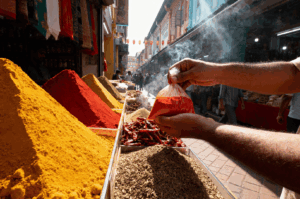
Before you even take a bite, a plate of Hainanese chicken rice beckons with its glossy, tender chopped chicken cut, silky chicken skin, and a mound of glistening, chicken fat-infused rice. The delicate fragrance of chicken broth, spring onions, and cool cucumber slices mingles with the spicy tang of house-made chilli sauce. This celebrated chicken and rice dish, called Hainanese chicken rice, stands as a national dish and an icon of Singapore street food—a dish that seduces by way of patience, precision, and sensory artistry. Brought to life by Hainanese immigrants with roots in Wenchang chicken and refined through local ingenuity, this classic dish is now a staple at every level, from humble hawker to celebrated restaurant. Embark on a journey of slow seduction—from technical Hainanese chicken rice recipe and poaching technique to cultural significance and the quest for the famous Hainanese chicken rice Singapore offers.
The Art of Poaching Hainanese Chicken: From Whole Chicken to Silky Skin
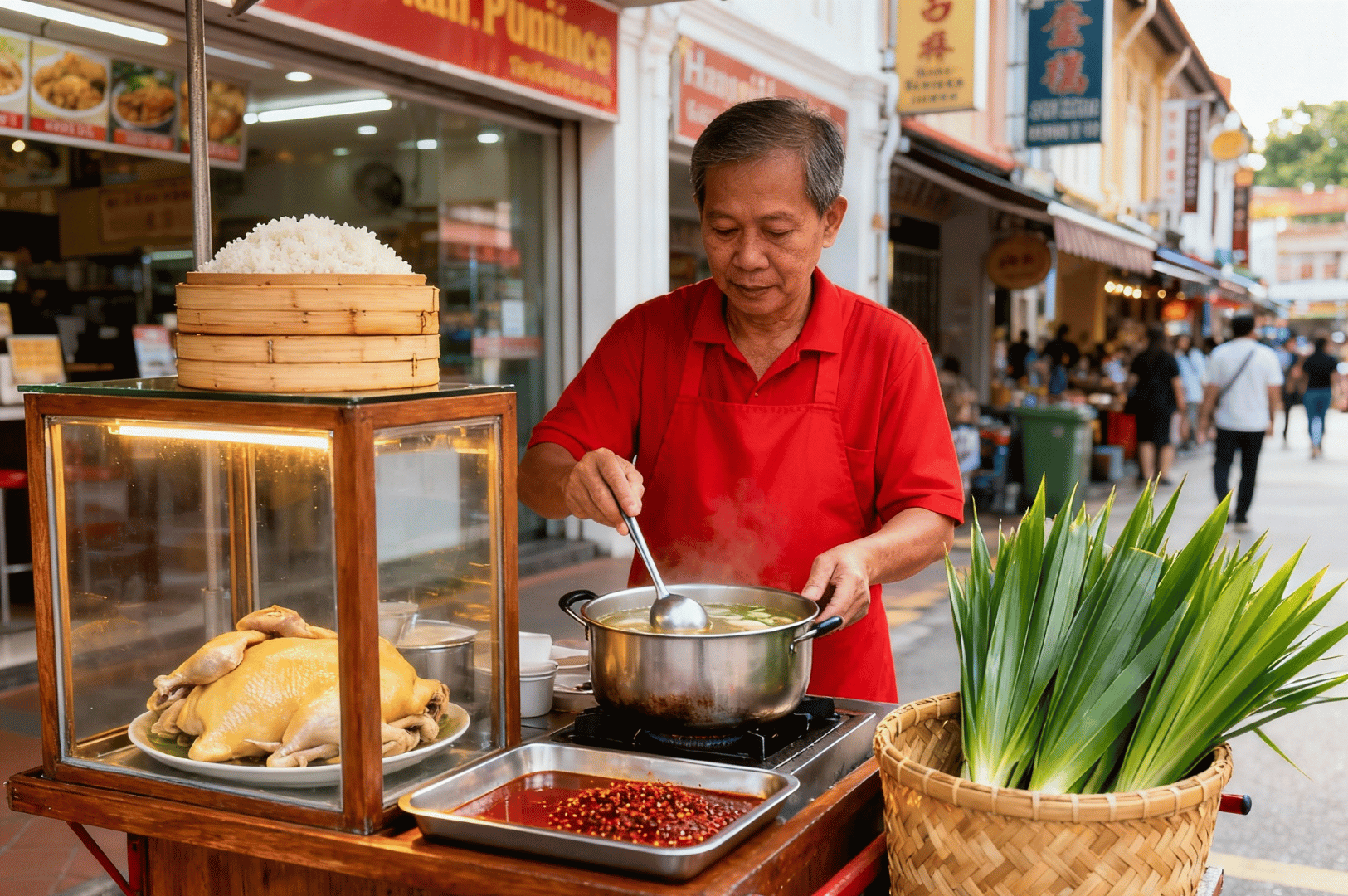
The soul of perfect Hainanese chicken rice lies in the poaching process, where a whole chicken (often chicken breast attached for extra succulence) is suspended on a poultry hook and submerged in simmering chicken stock. A precise, gentle heat—never above medium heat—ensures the poached chicken remains juicy and the chicken skin attains its famed silky texture.
As the chicken cooks, chefs monitor the cooking process with practiced eyes, adjusting time and temperature to guarantee tender meat and clear chicken broth. The key, shared by revered hawkers, is plunging the chicken into a large bowl of ice bath immediately after poaching. This step locks in moisture, tightens the skin, and creates that desired gelatinous texture. According to one famous Hainanese chicken vendor, “Every easy Hainanese chicken rice recipe will show you an ice bath, but it’s the patience, not shortcuts, that makes the chicken absolutely delicious.” Whether using a traditional small saucepan, an instant pot, or a modern rice cooker, the goal remains silky, flavourful steamed chicken—never overcooked, never dry.
Classic adaptations abound: some stalls use only chicken legs or chicken thighs for extra richness, while others rub sesame oil or vegetable oil over the skin for gloss. But the essentials endure—a carefully poached entire chicken, clear chicken broth, and artistry in every chopped chicken cut.
Chicken Fat and the Aromatic Rice Cooker Pot: Crafting Irresistible Fragrant Rice
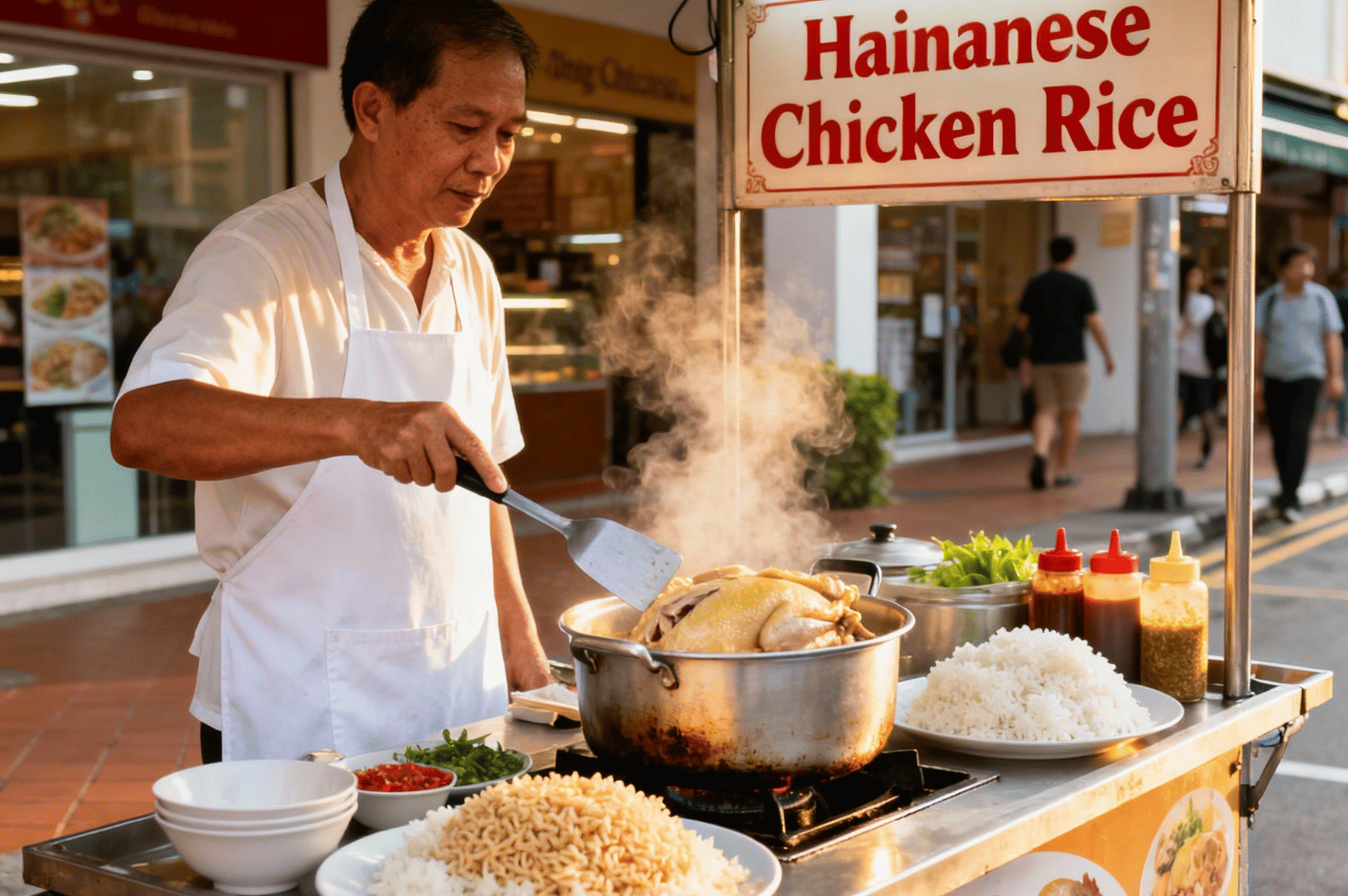
The rice dish is no mere sidekick; it is the aromatic foil that completes the Hainan chicken rice experience. Using a rice cooker, chefs first heat oil or, for tradition, chicken fat in a small frying pan. Into this hot fat go minced garlic, finely chopped minced ginger mixture, and occasionally shallots, which are stir fried gently to unlock their fragrance. The rice grains are then tossed, ensuring each becomes coated and glossy.
Next, chicken stock or clear chicken broth—seasoned with add salt, white pepper, and sometimes a splash of light soy sauce—joins the pot. Pandan leaves and a dash of sesame oil might infuse the mix, yielding a rice whose aroma fills the room. Some hawkers use jasmine rice for a floral lift, while others opt for a more oily rice for sumptuous mouthfeel. However prepared, the fragrant rice should be fluffy, each grain distinct and infused with the essence of chicken fat.
Variations are celebrated: the best chicken rice Singapore might lean oilier or drier, but always—according to generations of cooks—rice must be aromatic, moist, and act as the perfect base for every delicious bite of chicken.
The Holy Trinity: Chili Sauce, Ginger, and Dark Soy Sauce
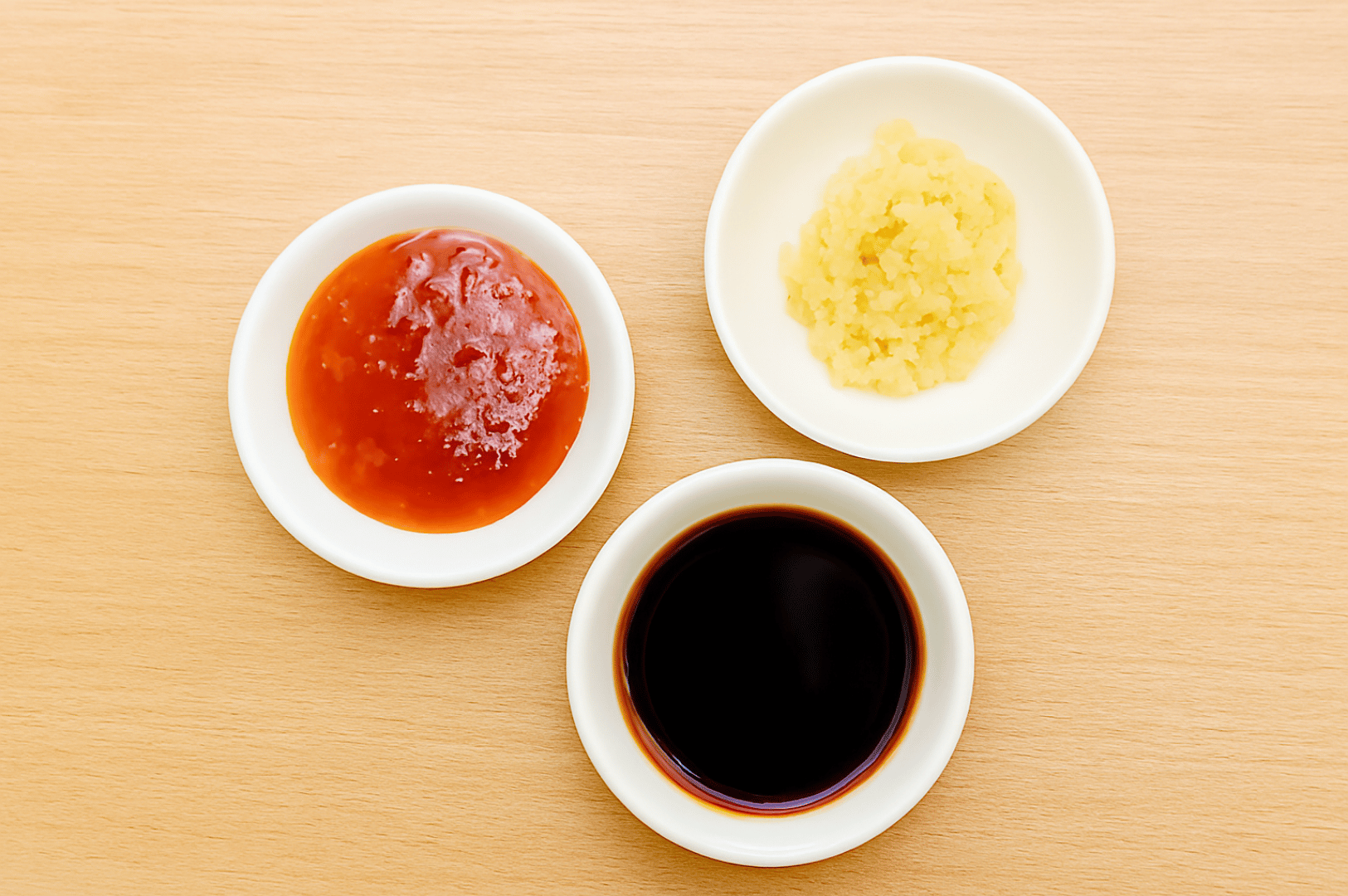
No complete Hainanese chicken rice is possible without its holy trinity of dipping sauce—chili sauce, ginger sauce, and dark soy sauce—which heighten and balance the dish.
The signature chilli sauce blends fiery red chilies, minced garlic, fresh lime juice, chicken stock, and sometimes ginger, blitzed together in a food processor. This spicy dipping sauce is bright and lively, offering heat that cuts through any richness. Next, ginger sauce is created from young ginger and spring onions, smoothed with hot oil and a dash of salt; sometimes this is served thick, sometimes almost runny, always zesty.
Finally, the rich, dark soy sauce—sometimes sweet, sometimes savory—provides umami depth, while a splash of light soy sauce can add light soy sauce complexity. Together, these sauces allow each mouthful to be calibrated: more chili sauce for fire, ginger for zing, and soy for savory sweetness. Many swear by combining all three with a piece of chicken sliced, a scoop of chicken fat rice, and a sliver of sliced cucumber or bok choy for the ultimate, absolutely delicious bite.
Hainanese Chicken Rice and Chicken Soup: Cultural Significance as a National Dish
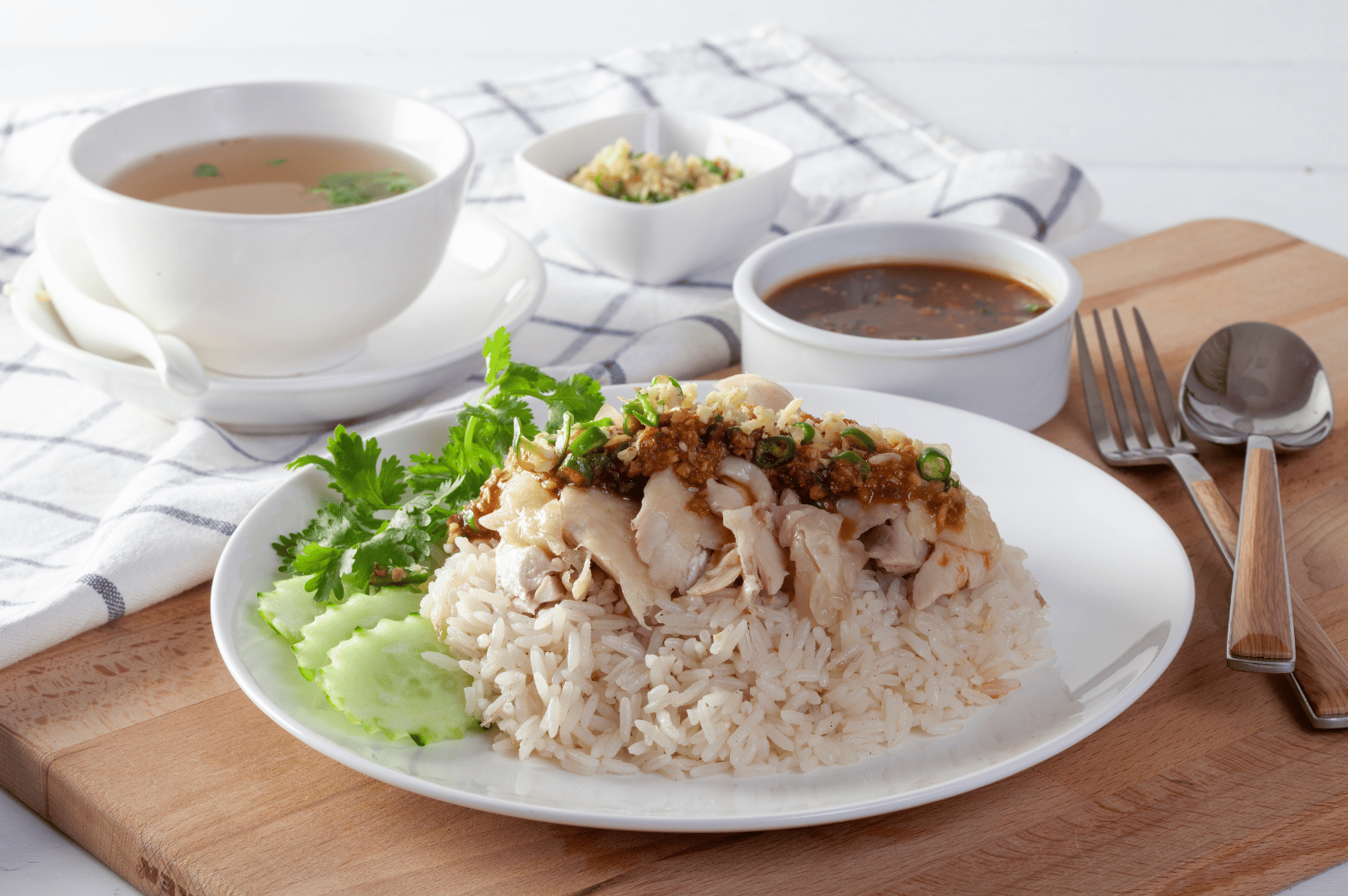
Called Hainanese chicken rice, this chicken and rice dish has grown beyond immigrant roots. It transcends food, acting as edible proof of Singapore’s multicultural fabric. Whether served in a densely packed hawker centre or a refined restaurant, chicken rice anchors family gatherings, business lunches, and Singapore’s culinary identity.
A bowl of chicken soup, conjured from chicken broth, ginger mixture, and delicate spring onions, usually accompanies the meal. The meal appears everywhere from school canteens to film, literature, and even official tourism campaigns—a dish that speaks of home and history. Like nasi ayam in neighboring cultures, Hainan chicken rice is developed from wenchang chicken and tailored for Singapore’s climate and taste. It stands as both a comfort food and a source of national pride, uniting generations and dialect groups in a shared tradition.
Where to Find the Best Hainanese Chicken Rice in Singapore

The best chicken rice Singapore has to offer takes center stage at Maxwell Food Centre, specifically at Tian Tian Hainanese Chicken Rice—famous for its classic dish and legendary snaking queue. Here, every plate features steamed chicken sliced to perfection, glistening chicken skin, cucumber slices, and immaculate rice.
Other icons include Boon Tong Kee, whose innovation lies in ultra-plump chicken and well-balanced dipping sauce; and Wee Nam Kee, where diners can opt for poached chicken, roast, or soy sauce chicken sliced to their liking. Each restaurant or hawker offers its own secret to the most fragrant rice—be it more chicken fat, extra ginger, or a dash of sesame oil—and each bowl of chicken soup tells the cook’s story.
First-timers should look for glistening chicken cut (never dry), vibrant sauces, and a balanced, chicken fat-scented rice dish. Beware of stalls with a minimal wait: the best bet is almost always where the line is longest.
Photographing Hainanese Chicken Rice: Showcase the Chicken Cut, Rice, and Cucumber Slices
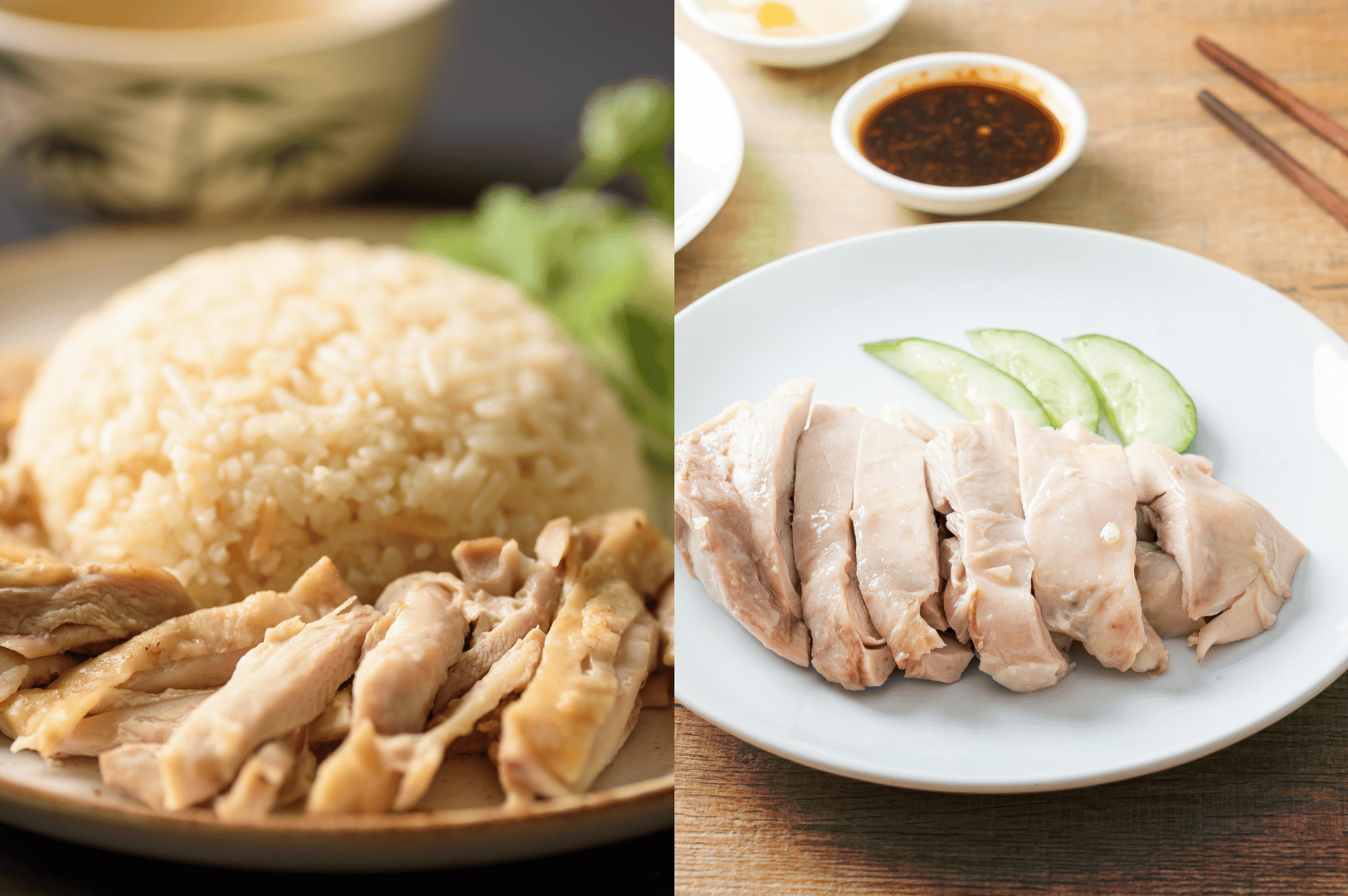
To capture the allure of Hainanese chicken rice, use soft, natural light to highlight the glistening chicken skin and golden, chicken fat rice. Compose the shot with a focus on textural contrast—close-ups of chicken sliced, shimmering rice grains, vibrant chili sauce, and refreshing cucumber slices. A slightly elevated angle best displays the harmonious composition, while a small bowl with dipping sauce in the frame adds mouth-watering appeal. Remember: the steam, sheen, and color make every shot a sensory invitation.
Conclusion
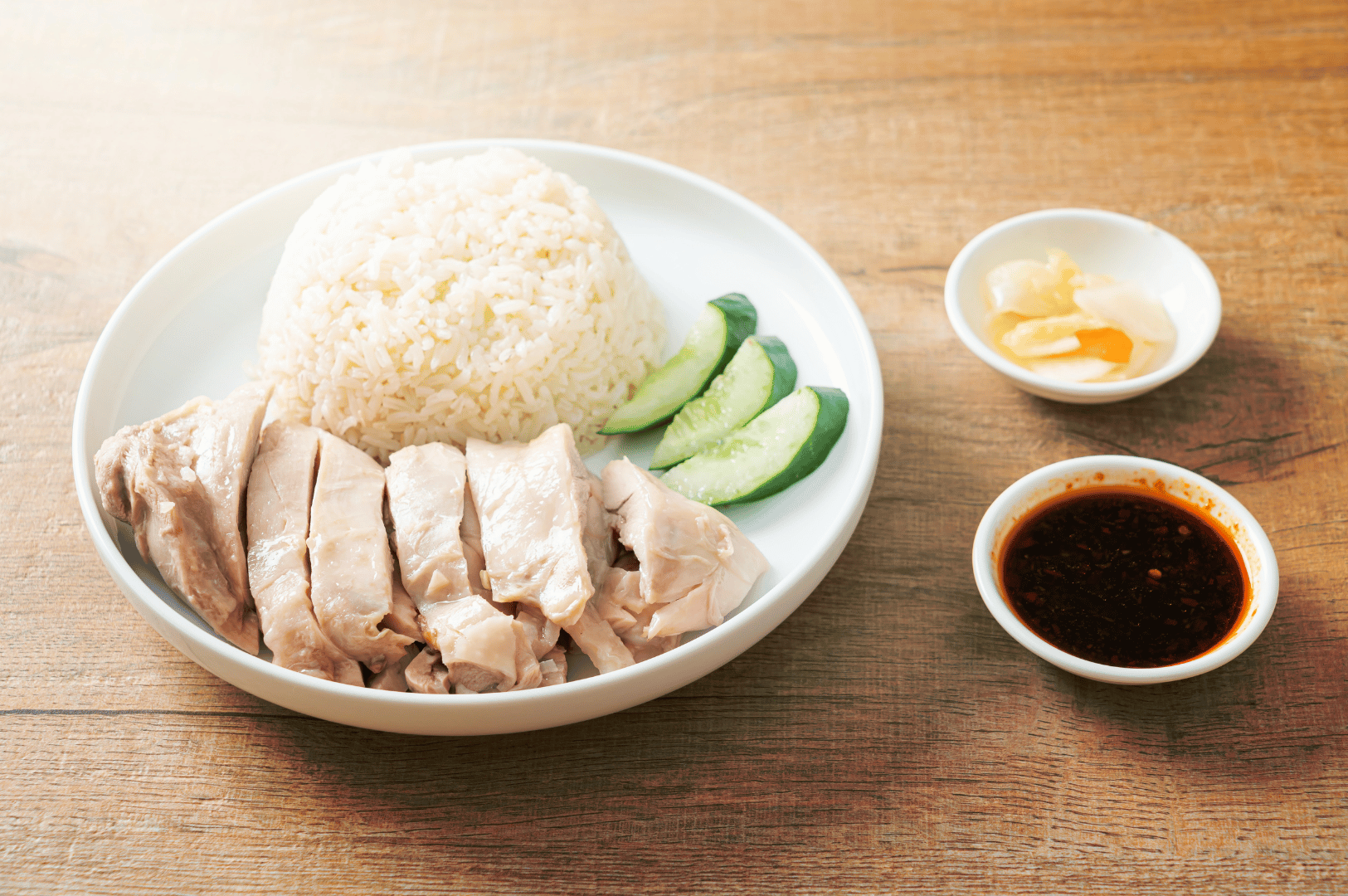
The slow seduction of Hainanese chicken rice is the story of patience rewarded—a union of technique, tradition, and taste. From the first poached chicken cut to the last grain of fragrant rice, every element celebrates what makes this national dish so beloved in Singapore: meticulous preparation, balanced flavours, and the promise of a quietly perfect, delicious meal.
If you want to continue exploring Singapore’s iconic street food, discover the smoky allure of satay in Flame & Smoke: The Essence of The Best Satay in Singapore, or head back to Street Food Photographer for more stories on the city’s culinary culture.

Katong: The Peranakan Pleasure Principle of Street Foods
November 21, 2025
Stroll through the streets of Katong, and you’ll feel a palpable shift in the air. The sleek modernity of Singapore’s city center gives way to a charming streetscape of colorful, ornate shophouses and a slower,…
-
The Laksa Queen’s Secret to Good Street Food in Singapore
November 17, 2025
In the maze-like corridors of Singapore’s hawker centres, where hundreds of vendors vie for attention, true legends are not made overnight. They are forged in decades of heat, steam, and unwavering dedication. One such legend…
-
Morning Rituals: Singapore Street and Food Awakens
November 14, 2025
The world is still cloaked in a deep, inky blue, but Singapore is far from asleep. A quiet energy hums beneath the surface, a city stirring not with the roar of traffic, but with the…
-
Singapore Chinatown Food Photography: A Photographer’s Guide to Chinese Culinary Heritage
November 10, 2025
The first light of dawn spills over the ornate rooftops of Singapore’s Chinatown, painting the streets in soft, golden hues. This is my favorite time to be here, camera in hand. Before the crowds descend,…
-
Whispers Across the Wok: Singapore Hawker Photography
November 7, 2025
The air in the hawker centre is cool, thick with the scent of brewing coffee and the sizzle of garlic in a hot wok. It’s a time when the city is just beginning to stir,…
-
Spice Routes & Silk Sheets: The Singapore Colonial Food History
November 3, 2025
Singapore’s food scene is a story shaped by oceans, empires, and centuries-old trade. As a photographer focused on our culinary traditions, I find inspiration not only at bustling markets and hawker centres, but in the…
-
Coffee Shop Chronicles: Singapore Kopitiam Traditions Uncovered
October 31, 2025
The true soundtrack of Singapore is not the hum of the city, but the gentle clink of a porcelain cup. It’s the familiar call for “Kopi C, siew dai!” echoing through a bustling coffee shop….
-
Forbidden Close-Ups: Macro Food Photography Singapore
October 27, 2025
As a food photographer in Singapore, my passion is capturing the city’s vibrant culinary soul. While wide shots of busy hawker centres tell one story, I’ve discovered a more profound narrative by getting closer. Using…
-
Wok Hei Photography: Capturing the Forbidden Pleasure of Char Kway Teow
October 24, 2025
In the heart of Singapore, amidst the symphony of sounds and smells that define its hawker centres, a culinary performance unfolds. The creation of char kway teow is a spectacle of fire and skill, a…
-
Little India Spice Photography: The Seduction of Senses on the Spice Trail
October 20, 2025
The moment I step into Little India, my camera feels like an extension of my senses. The neighborhood is a visual feast, a sensory overload that defines Singapore’s food scene. As a photographer dedicated to…