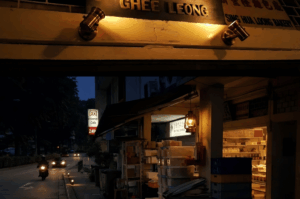
The air before dawn has a quality all its own. It is cool and hushed, thick with anticipation. On a quiet street corner in Singapore, long before the city awakens, a soft, golden light spills from a small stall. The air around it smells of charcoal, caramelizing sugar, and warm bread.
This was my entry into Singapore's world of traditional kaya toast masters, a journey that would challenge and reward me as a food photographer in ways I never expected. It was an encounter with living history, told through the simple, perfect act of making breakfast.
The Allure of an Ancient Food Styling
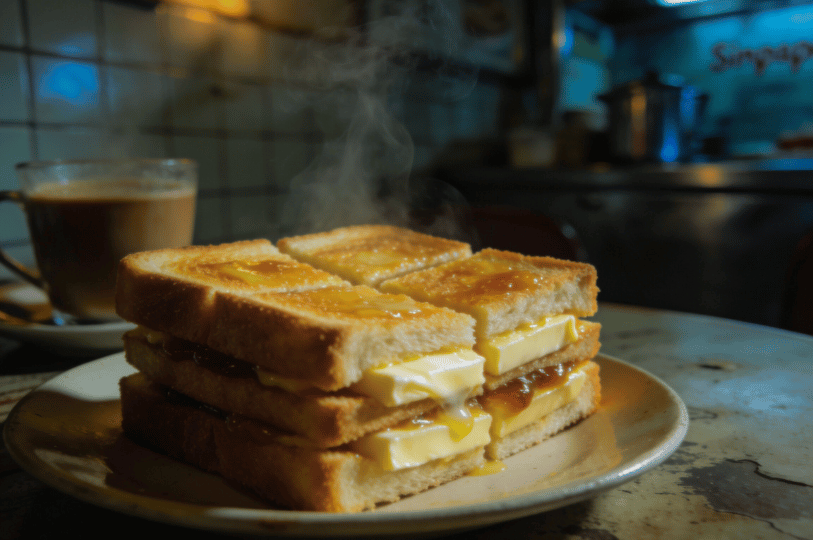
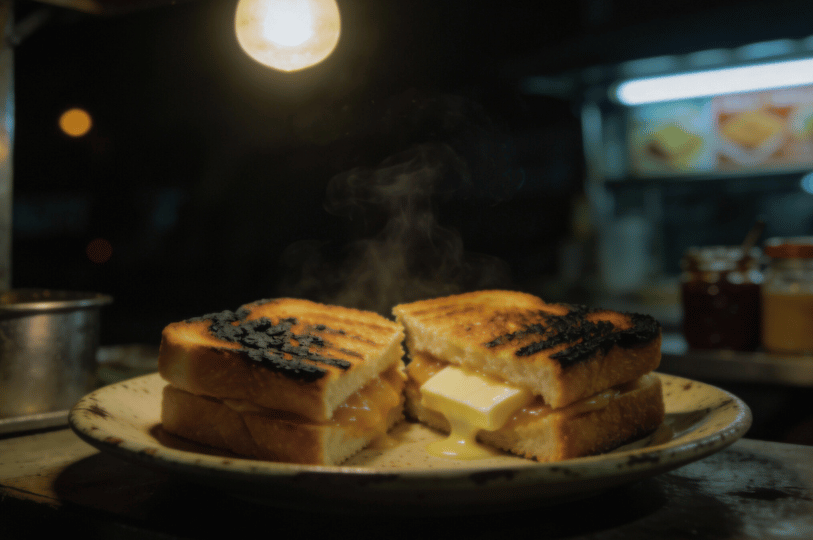
Kaya toast is more than just breakfast; it is a cultural touchstone in Southeast Asia and a beloved dish that resonates deeply with clients. It consists of toast, grilled over charcoal with precision, slathered generously with a sweet, fragrant coconut and pandan jam called kaya, and topped with a slab of cold butter. Paired with soft-boiled eggs and a strong cup of local coffee (kopi), this dish offers a unique taste experience that has fueled generations.
As a food photographer, I am drawn to stories that shows the heritage and style behind culinary concepts and the food that are presented to me. The traditional kaya toast making process, relying on manual skill and time-honored methods, presents a compelling style that reflects dedication and craftsmanship. In a world dominated by mass production, this handmade approach stands out, offering visuals full of warmth. It represents a perfect intersection of food, culture, and human composition—an ideal subject to capture for restaurants and businesses aiming to upraise their brand and connect with their audience through authentic storytelling.
Meeting the Masters of Time and their Signature Dishes
My quest led me to several artisans, each a guardian of this humble tradition. Their stalls were not flashy, but they were full of character and history, perfectly exhibiting the soul of traditional kaya toast craftsmanship. These are the perfect idealization of food styling that food photography should capture in Singapore.
Mr. Lim: The Charcoal Traditionalist
Mr. Lim’s small stall in an old housing estate has been his world since he was a teenager. He starts his day at 3 AM. His most prized possession is his charcoal grill, a custom-built contraption that he has used for decades. Watching him do his art was mesmerizing. He would deftly flip slices of thick-cut white bread over the glowing embers, his senses telling him the exact moment they were perfectly toasted. His dedication and passion were palpable, a quiet commitment to preserving a flavor he believed in, which attracts clients who appreciate authentic cuisine.
Madam Goh: The Kaya Alchemist
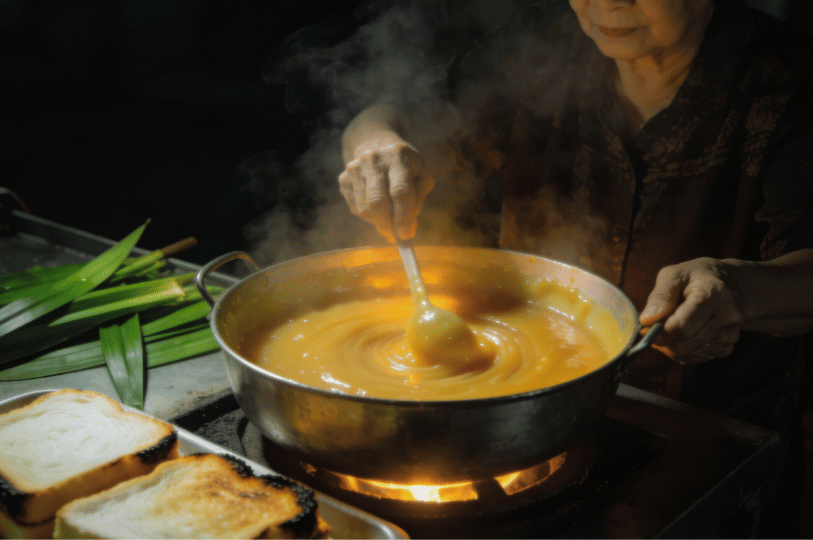
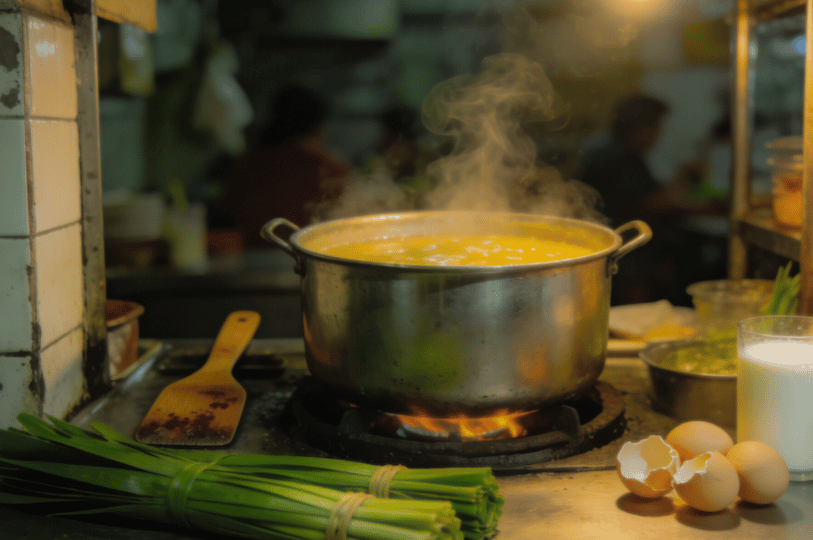
In another corner of the city, I found Madam Goh. Her specialty is the kaya itself. While many stalls now use factory-made kaya, she insists on making her own from scratch, a laborious process that takes over six hours. She stirs a large pot of coconut milk, eggs, sugar, and pandan leaves over a low flame, a process that requires constant attention. Her kaya had a deep, complex flavor and a beautiful, silky texture that no commercial brand could ever replicate. She is a true alchemist, transforming simple ingredients into liquid gold.
As someone who is passionate with food photography, capturing her process was a study in patience and focus, highlighting the artistry and precision behind this culinary tradition. Her story adds extraordinary depth to the portfolio of any food photography services aiming to portray the cultural heritage of Singapore’s cuisine.
The Photographic Process: Capturing Light and Legacy through Food Photography
Photographing these masters in their element was a challenge that required both sensitivity and technical skill. These are not polished studios; they are small, often cramped spaces with difficult lighting conditions. Which makes food photography difficult to pursue when capturing food styling.
The early morning hours offered a beautiful, soft illumination, but it was fleeting. I often had to work with the harsh, direct glare of a single fluorescent bulb combined with the warm glow from the charcoal grill. My approach as a food photographer in Singapore was to embrace this dramatic lighting style. I used it to sculpt my subjects, producing high-contrast images that emphasized texture and form. The warm illumination from the grill became a key element, highlighting the golden-brown crust of the toast or catching the steam rising from a cup of kopi.
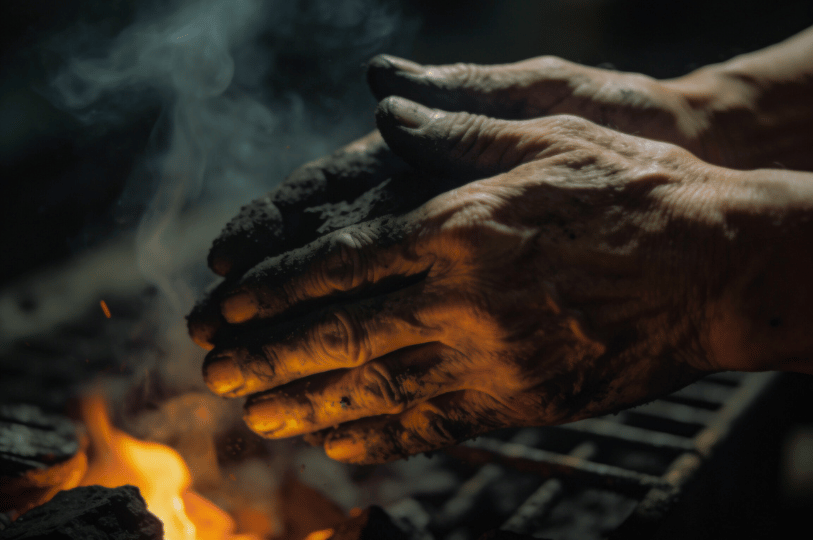
Composition was about finding order in the chaos. I focused on telling a photography story through details made to the client’s vision of how they see their food. A close-up of Mr. Lim's hands, gnarled and stained from years of handling charcoal, told a more powerful story than a wide shot of his entire stall. I used a shallow depth of field to isolate these details, blurring the busy background to draw the viewer's eye to the hands, the toast, or the focused expression of the master at work.
This style of food photography is designed to portray the authenticity and craftsmanship behind each dish, raising the brand and amplifying the menu’s visual attraction. Such images not only attract clients but also strengthen the identity of restaurants, reflecting the passionate culinary heritage of Singapore.
The Cultural Significance of a Simple Meal
Kaya toast is deeply woven into the social fabric of Singapore and Malaysia. It is the centerpiece of the kopitiam, the traditional coffee shop or café that serves as a community living room. These establishments, whether bustling restaurants or humble cafés, are places where people from all walks of life gather to chat, read the newspaper, and start their day. This simple meal transcends social and economic boundaries, attracting a wide variety of clients and customers.
Documenting this magic felt like preserving a piece of the region’s soul and showcasing the spirit of local cuisine. A culinary photographer has the privilege and expertise to capture these disappearing scenes, using creativity, props, backdrops, and illumination to intensify the story. Such food photography are designed to strengthen the people's interest of traditional dishes and bring the unique concept and brand of these places to life, creating an impression that resonates with both locals and tourists alike.
The Technical Mastery Behind the Toast
The beauty of traditional kaya toast lies in its deceptive simplicity, showcasing the expertise of chefs who specialize in this art. Behind each perfect set is a series of masterful techniques that reflect years of experience.
The toasting process is an art form in the food industry. The charcoal must be maintained at the right temperature—hot enough to crisp the bread quickly but not so hot that it burns. The kaya making is a marathon of patience, requiring constant, gentle stirring to achieve a smooth, creamy consistency. Even the coffee, or kopi, involves its own ritual. Brewed using a cloth "sock" filter, this method produces a strong, robust brew that is then designed and customized with sweetened condensed milk or evaporated milk. Each step is a deliberate act, a crucial aspect of the overall culinary experience.
As a food photographer, capturing these moments in photography demands a tailored approach to the photoshoot, working closely with the team to explain illumination, props, and backgrounds that best highlight the rich colors and textures of the dishes. This attention to detail helps to provide an authentic glimpse into the traditional preparation process, intensifying the visual appeal of the menu and website content for restaurants and cafes alike. Absolutely essential to showcasing the soul of this beloved dish, these images bring the chef’s vision and passion to life, attracting clients and fortifying the business’s brand identity.
Behind the Scenes: A Food Photographer's Journey
Documenting this photography story was not without its challenges. Earning the trust of these masters took time. Initially, my camera felt like an intrusion into their sacred morning rituals. I spent days just sitting, observing, and drinking coffee before I even took a single picture. I grasped that being a good food photographer in this context is about being a good listener first. I had to show them that I was there not just to take something, but to understand and honor their work.
The physical conditions were also tough. The heat from the charcoal grills was intense, and the small spaces required me to be nimble and unobtrusive. There were moments of frustration, when the illumination was gone or a perfect shot was missed. But these challenges were part of the process, pushing me to be a more patient and resourceful photographer. This experience taught me valuable lessons about the types of situations a food photographer must adapt to, and the importance of creativity and play in producing compelling images. Working closely with the team, discussing illuminations, props, and backgrounds, helped me enhance the quality and essence of each dish. Such dedication is essential to provide state-of-the-art food photography services that truly elevate a restaurant’s brand and attract customers, ultimately benefiting their business.
The Human Connection: Lessons in Craft and Food Photography Services
Over weeks of early mornings, a bond formed. Mr. Lim started saving me the perfectly toasted corner pieces. Madam Goh would let me taste the kaya at different stages of its long cooking process. We moved beyond the roles of photographer and subject. I learned about their families, their struggles, and their quiet pride in their work.
Their dedication taught me a profound lesson about craft in the modern age. In a world that values speed and convenience, they choose to honor tradition. Their work is a quiet rebellion against disposability. They taught me that the most valuable ingredient in any dish is time, and that the story of food is ultimately a human story. This is a crucial insight for any food photographer who wants to photograph images with soul.
Conclusion: Preserving Stories, One Frame at a Time
My photography journey into the world of kaya toast masters was a powerful reminder of why I became a food photographer. It is a privilege to witness such profound dedication and to be entrusted with telling these stories through expert food photography. The images I captured are more than just pictures of food; they are a tribute to the hands that create it, and a taste of the traditions they uphold, and the communities they serve. In a rapidly changing world, these artisans are anchors to a rich cultural past.
My role as a food photographer is to document their legacy, using creativity, styling, and tailored photoshoots to ensure that the warmth, dedication, and flavor of their craft are not lost to the hands of time. Working closely with the team, discussing lighting, props, and backgrounds, I strive to enhance the essence of each dish, elevating the visual appeal for restaurants, cafes, and businesses. This full day of shooting allowed me to capture the essence of their signature dishes, creating images that attract customers and strengthen the brand identity of these establishments.
If you have any questions about the food photography process or how to showcase your cuisine's unique story, feel free to reach out to Street Food Photographer and learn how professional food photography can elevate your business.

The Quiet Moments Before the First Order
May 29, 2026
The sky outside is still a deep, bruised purple. Inside the food centre at Toa Payoh Lorong 8, the air is cool and heavy with the scent of damp concrete and raw ginger. I sit…
-
Flame, Smoke, and Sizzle: The Art of Grilling in Singapore’s Izakayas
May 28, 2026
A chef stands behind a trough of white-hot binchotan charcoal. He holds a fan in one hand and carefully turns a row of wooden chicken skewers with the other. He does not rush. He waits…
-
To the Vendors Who Know No Rest, Yet Keep Going
May 26, 2026
The air at Chinatown Complex Food Centre always carries a thin layer of grey soot by the time the evening arrives. I stand near the edge of the green tiled floor. The noise of the…
-
The Heart of the Grill: The Master Craftsmen Behind Izakayas Singapore Prides On
May 25, 2026
When I first started photographing food in Singapore, I had a very narrow view of what Japanese dining looked like. I walked right past the smoky, loud, narrow storefronts of local izakayas. I thought they…
-
A Quiet Reflection from the Corner of the Hawker Centre
May 22, 2026
The red plastic chair scrapes against the tiled floor. I set my camera bag on the empty seat next to me. The afternoon heat at Old Airport Road Food Centre is thick. A slow ceiling…
-
Capturing the Essence of Izakayas: How Izakaya Photography Brings These Hidden Gems to Life
May 21, 2026
I clearly remember my first time bringing a professional camera into Shukuu Izakaya & Sake Bar on Stanley Street. I walked in with a rigid plan to photograph their famous mentaiko rosti. I spent a…
-
To the Light That Only Appears at 5AM
May 19, 2026
The wet market floor at Tekka Centre reflects the deep blue of the pre-dawn sky. It is exactly five in the morning. The main overhead lights are still off. A heavy, damp quiet hangs in…
-
Where Night Settles Into the Grill: Shooting The Best Izakaya Singapore
May 18, 2026
I have spent the last three years carrying my camera through the smoky, cramped corridors of the acclaimed “best izakaya” Singapore has. I’ve tried all of these spots, spending countless nights waiting for the perfect…
-
A Note to the Streets That Have Yet to Wake Up
May 15, 2026
The asphalt is slick with leftover midnight rain. It is 4:30 AM on Balestier Road. The city is completely silent, wrapped in a heavy, humid darkness. I stand on the corner across from Sing Hon…
-
Days Without Meat: A Study of Habit Inside Fortune Centre’s Vegetarian Culture
May 14, 2026
Let me tell you about the first time I walked into Fortune Centre with my camera. I expected a standard Singaporean food court experience: loud, chaotic, and heavily focused on the usual meat-heavy local dishes….