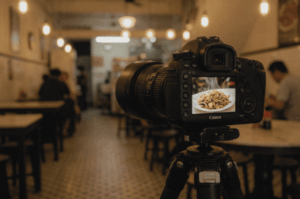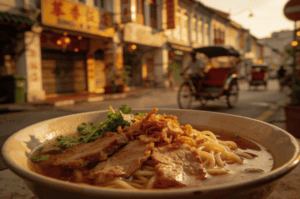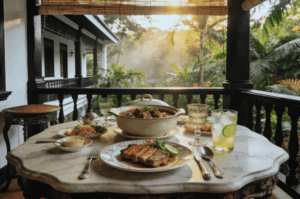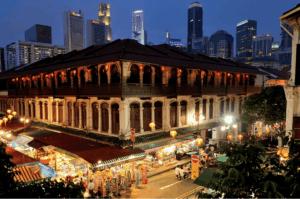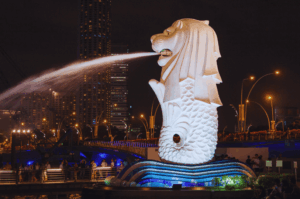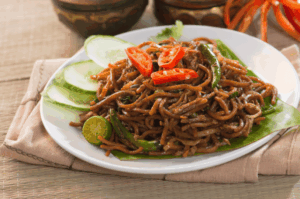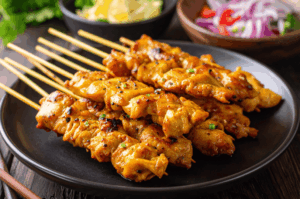
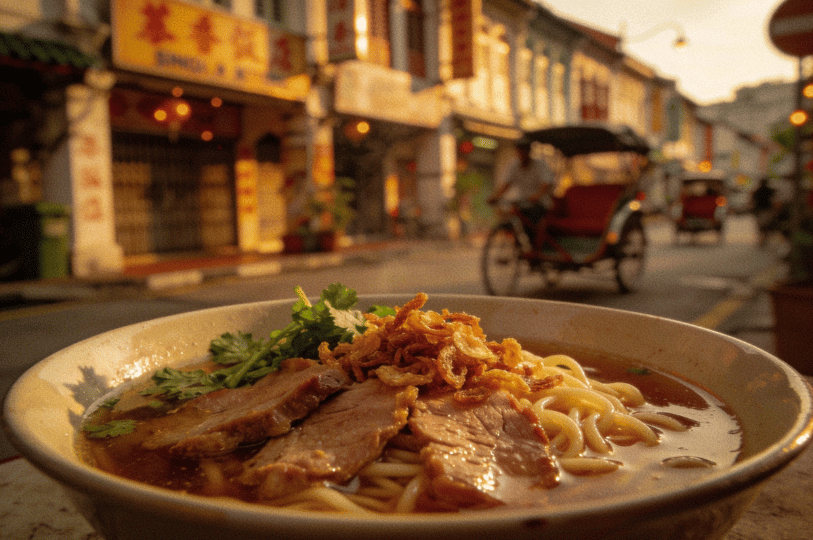
When I look through the viewfinder at a plate of heritage kueh or a steaming bowl of rickshaw noodles, I am not just capturing food; I am framing a memory. The challenge for any documentary photographer shooting Singapore’s disappearing culinary landscape is ensuring the final image feels as true as the moment itself. Modern digital sensors capture every detail with clinical sharpness, but Singapore food history is textured, warm, smoky, and often bathed in imperfect tungsten light.
Raw files can feel too clean and sterile to convey the soul of these historic flavors. Post-processing becomes an act of translation; not manipulating reality, but recovering the emotional truth of the scene. How do we edit images to honor the past without falling into cliché sepia-toned nostalgia? How do we use modern tools to evoke period authenticity while maintaining documentary integrity?
Honoring the Atmosphere of the Hawker Centres
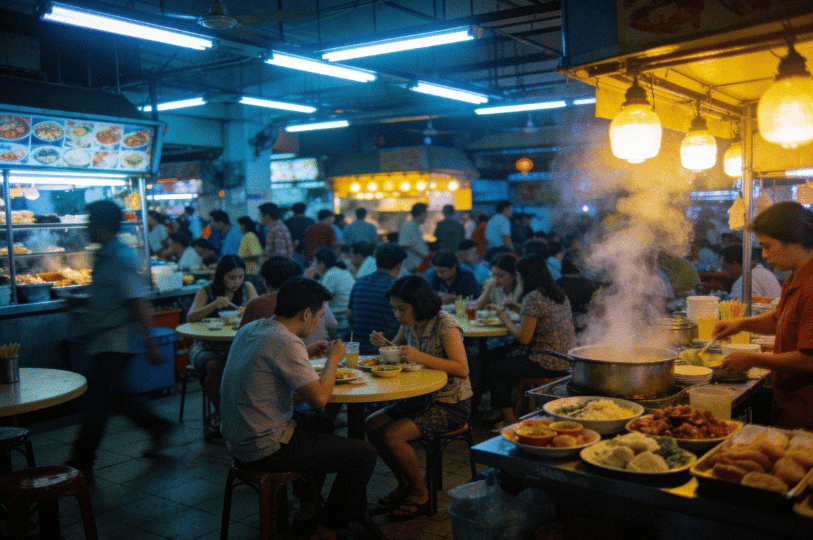
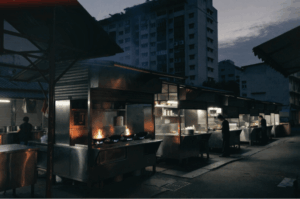
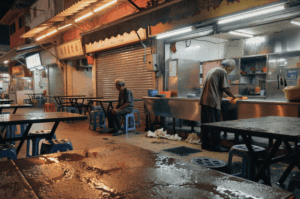
The atmosphere of a traditional hawker center or an old-school kopitiam is unmistakable. It is heavy with humidity, layered with the rich aromas of charcoal, local coffee, and the unmistakable scent of rice cooked over chicken fat. The lighting is a chaotic mix of fluorescent tubes and warm stall lights, casting a nostalgic glow over the bustling scene. When I process photos of traditional food Singapore, my first goal is to preserve and respect this authentic atmosphere.
Many photographers instinctively correct white balance to make it "neutral," but in a heritage setting, neutral often strips away the soul of the image. If the hawker stall is bathed in the warm, yellow glow of an incandescent bulb, correcting it to a perfect white washes out the intimate heat of the cooking and the age-old charm of the establishment.
In Lightroom or Capture One, I lean into these color casts rather than fighting them. I slightly desaturate the greens and blues (tones that feel modern and clinical) while preserving the warmth of oranges, reds, and browns that dominate traditional cooking scenes.
This approach helps convey the sensory experience of the hawker centre, from the sizzle of flat rice noodles stir fried with egg noodles and Chinese sausage to the rich coconut milk base of laksa simmering nearby. The post-processing should make the viewer almost smell the chili sauce, and the sweet aroma of kaya toast toasted over charcoal in a nearby coffee shop.
By embracing the imperfect lighting and the local food’s cultural context, be it the spicy chili sauce on a plate of Hainanese chicken rice or the smoky char kway teow sizzling on a wok, we honor Singapore’s national dish and the vibrant hawker stalls that bring these flavors to life.
Balancing Modern Tools with Timeless Aesthetics
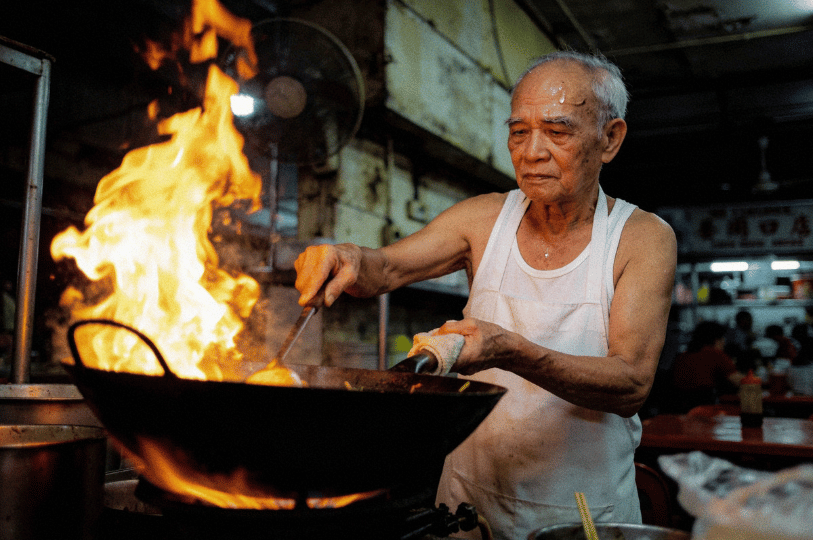
There is a delicate balance between high-quality documentation and aesthetic nostalgia when shooting Singapore’s vibrant food scene. Images must be sharp enough to reveal craftsmanship, the pleats of a dumpling, the char on the best satay in Singapore, the sheen of chili crab sauce, without becoming overly commercial.
To achieve a timeless quality, I draw inspiration from classic film stocks like Kodachrome, which offer rich colors, deep blacks, and subtle grain. I avoid pushing clarity and texture sliders too high to prevent a harsh digital look. Instead, I lift blacks gently for a matte finish and add subtle grain to soften the image, echoing the gritty reality of hawker stalls and open-air food courts.
This technique honors the sensory experience of iconic Singaporean dishes like Hainanese chicken rice, the rich coconut cream base of laksa, or the savory layers of char kway teow stir fried with egg noodles and flat rice noodles. It also respects the humble yet beloved snacks such as carrot cake made from rice flour, tofu puffs, and fish balls, served alongside soft boiled eggs and drizzled with dark soy sauce.
Focusing on the Hawker Stalls' Soul
By balancing sharpness with subtle nostalgia, we preserve the dignity of the hawker’s labor and the soul of Singapore food culture; a culture that thrives in bustling hawker centres like the famed Airport Road Food Centre and Old Airport Road Food Centre, where the best hawker stalls serve up local vegetables, curry chicken, oyster omelette, and more.
In post-processing, this restrained approach ensures the final image reflects both the beauty and authenticity of Singapore’s culinary heritage, from the spicy chili sauce and sambal chili that define many Peranakan dishes, to the sweet aroma of kaya toast on toasted bread, and the rich flavors of chili crab and black pepper crab; the country’s famous seafood delights.
Ultimately, this editing style bridges the gap between digital precision and the tactile, lived experience of Singapore food, capturing not just what the food looks like, but how it feels to enjoy it amid the vibrant energy of local food courts and open-air dining spaces.
Technical Guidance: Grading for History
When grading for period authenticity, subtlety is your best tool. Here is how I approach the technical side when I photoshoot Singapore heritage food:
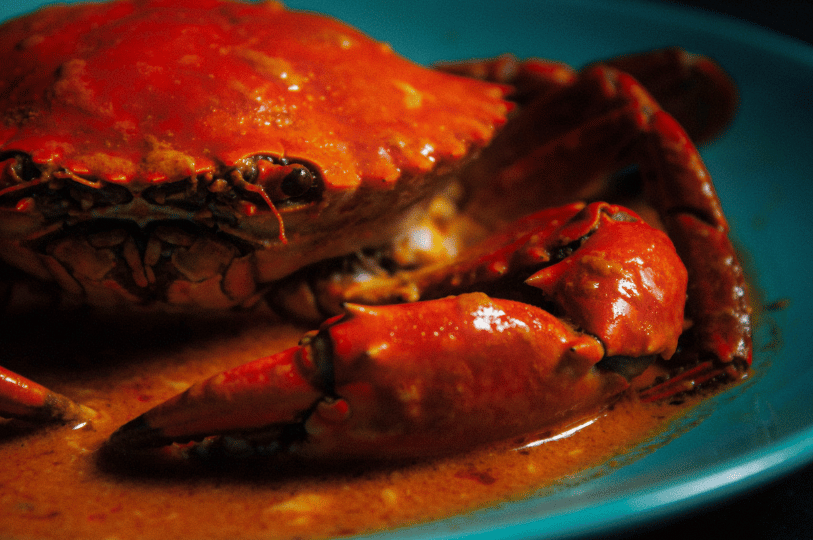
- Split Toning (Color Grading): I often apply a very subtle warm tone (orange or cream) to the highlights and a cool tone (teal or blue) to the shadows. This mimics the color contrast found in older film prints and adds depth to the image. However, the key is opacity. I usually keep these adjustments at 5-10% intensity. For instance, when shooting a plate of chili crab, the warm highlights bring out the rich, tangy sauce's vibrant reds and oranges, while the cool shadows add depth to the dark soy sauce glaze and the crab’s shell.
- Tone Curve: The "S-curve" is standard for contrast, but for heritage shoots, I flatten the top of the curve slightly. This brings down the brightest highlights, ensuring that the whites don't look blown out or digital. It gives the image a creamier, more vintage feel. Take Hainanese chicken rice as an example, flattening the highlights preserves the delicate creaminess of the fragrant rice cooked in chicken fat and keeps the soft boiled eggs looking natural without losing detail.
- HSL (Hue, Saturation, Luminance): I pay close attention to the reds and oranges. Food needs to look appetizing, so I ensure these colors remain vibrant. However, I often desaturate the yellows slightly to avoid the sickly look that fluorescent lighting can sometimes create. When photographing laksa, this means keeping the chili paste and sambal chili hues rich and inviting, while toning down the yellows in the coconut milk base to maintain a balanced, mouth-watering look.
- Vignetting: A very slight, soft vignette can help center the eye on the subject, mimicking the natural fall-off of older lenses. This should be almost imperceptible. For example, when shooting a bowl of bak chor mee, the vignette subtly draws focus to the minced pork, yellow egg noodles, and fish cake, enhancing the dish’s inviting textures without distracting from the overall composition.
Respecting the Subject and Context
Ultimately, post-processing is an ethical choice. As storytellers capturing the essence of Singapore’s vibrant food culture, the way we render each dish shapes how its story is told. Over-processing (with heavy HDR effects or excessive saturation) risks turning a dignified hawker scene into a caricature, making traditional food Singapore appear exotic or alien instead of familiar and comforting.
I always ask myself: Does this edit honor the person who cooked this food? Does it reflect the dignity of their labor and the rich heritage behind dishes like Hainanese chicken rice, or the spicy chili sauce that defines many Peranakan food specialties?
For example, when photographing a wet market at dawn, the light is dim and mixed. Brightening the image until it looks like midday destroys the reality of the hawker’s early morning sacrifice. Keeping the shadows deep and the light moody respects the truth of their working conditions and the authentic atmosphere of hawker centres where you might find stalls serving chili crab, curry chicken, or fried chicken alongside steamed rice and local favorites like carrot cake made from rice flour.
We are not trying to "fix" the scene; we are trying to represent it honestly, capturing the textures of pork belly sizzling on the grill, the glutinous rice wrapped in pandan leaves, or the subtle sheen on fish paste stuffed tofu puffs. This approach helps preserve the soul of Singapore food culture, from the bustling open-air food courts to the intimate coffee shops where kaya toast and soft boiled eggs are traditionally eaten with kopi.
By embracing authenticity in post-processing, we pay tribute to the rich tapestry of Chinese culture, Malay cuisine, Indian food, and Peranakan influences that converge in each dish. It’s about more than just an image; it’s about conveying the connection between people, place, and the popular dishes that define Singapore’s culinary identity.
Conclusion: The Dignity of Authentic Editing
In the end, thoughtful post-processing is about preservation: capturing not just the visual details but the soul of Singapore’s rich food heritage. As modernization reshapes the landscape, our photographs may become the only record of beloved dishes and the vibrant hawker centres where they are born. By editing with restraint and authenticity, we honor the sensory experience of iconic local foods like chili crab glazed with its rich chili sauce, fragrant rice cooked in chicken fat, and the smoky layers of char kway teow stir fried with egg noodles and flat rice noodles.
We owe it to the hawkers, chefs, and artisans to portray their craft in a way that’s true to their labor and legacy. Future generations should not only see what these dishes looked like but feel the atmosphere: sitting on a plastic stool amidst the hustle of open air food courts, the aroma of sambal chili mingling with the scent of palm sugar desserts like those made with red beans, and the lively chatter over plates of Chinese rojak and Indian rojak, both showcasing the influence of Indian cooking.
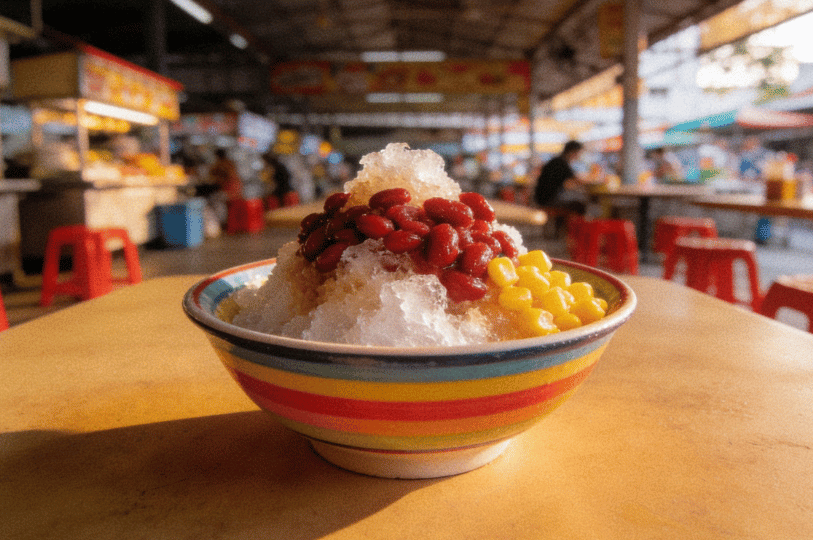
This is the power of the edit: bridging the gap between pixel and memory, preserving the essence of Singapore food culture with all its Chinese and Malay influences, vibrant hawker stalls, and the unmistakable taste of local favorites like rice cakes, bean sprouts, and a side of spicy chili paste. The tropical heat of Southeast Asia often calls for refreshing treats, and shaved ice desserts are a beloved way to cool down after a hearty meal, adding another layer to the sensory story we capture through our lens.
Through this lens, we celebrate not just the food but the stories and traditions that make Singapore’s culinary scene a living, breathing heritage; one that deserves to be remembered as vividly as the flavors themselves.

Imperial Diversity Through Photo Shoot Singapore Projects
March 2, 2026
When I set up my tripod in a bustling kopitiam or a quiet heritage restaurant, I am constantly reminded that I am not just photographing a meal. I am photographing a map. Every photo shoot…
-
Historic Flavors Shoot Singapore: Post-Processing for Period Authenticity
February 27, 2026
When I look through the viewfinder at a plate of heritage kueh or a steaming bowl of rickshaw noodles, I am not just capturing food; I am framing a memory. The challenge for any documentary…
-
Colonial Cuisine Photoshoot: Styling Singapore’s Historic Flavors
February 23, 2026
When I first embarked on a photoshoot focusing on Singapore’s colonial cuisine, I didn’t realize how deeply food could connect us to history. It wasn’t just about snapping pictures of dishes; it was about capturing…
-
Coal, Fire, and Memory: A Singapore Food Blogger Revisits Tanjong Pagar’s Industrial Kitchens
February 20, 2026
It had been a while since I set a day to wander through the back lanes of Tanjong Pagar. When I decided to come back to the place left me star-struck, not by the polished…
-
Three Generations, One Perfect Dumpling: A Food Blogger’s Journey in Chinatown’s Hidden Alley
February 16, 2026
Why This Alley is a Must-Visit for Food Lovers and Food Bloggers The first time I ventured into this tucked-away alley in Singapore’s Chinatown, I was awestruck by how different it felt from the bustling…
-
After Dark Cravings: A Guide to Night Singapore for Foodies
February 13, 2026
When I first landed in Singapore, I thought I knew what to expect: futuristic skylines, spotless streets, and, of course, amazing food. I did end up seeing all those things but what truly blew me…
-
Dawn Awakening: Morning Market Food Blog
February 9, 2026
The city is still dreaming when the first fires are lit. It is 4:30 AM, an hour that belongs to the insomniacs and the dedicated artisans of our food culture. While the skyscrapers of the…
-
The Last Hour: Closing Time Through the Eyes of A Food Blogger
February 6, 2026
The roar of the hawker center fades as the clanking woks and sizzling grills soften to a murmur. Most plastic tables are empty, wiped clean, awaiting a new day. This last hour is a sacred,…
-
Food Blogs as Cultural Archives: Photographing Religious Culinary Traditions
February 2, 2026
We often think of food photography as a way to stimulate appetite or showcase a chef’s creation. However, in multicultural Singapore, it captures much more: history, faith, and identity. Food blogs have evolved from recipe…
-
Composition’s Sweet Spot: A Guide in Framing Desire for Food Bloggers in Singapore
January 30, 2026
You have found the perfect bowl of bak chor mee. The noodles glisten, the minced pork is perfectly seasoned, and the chili sauce adds a vibrant splash of red. You snap a quick picture, but…