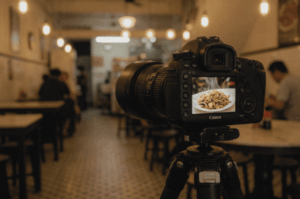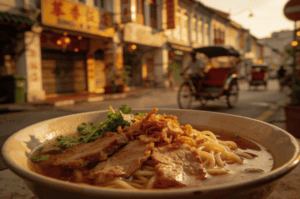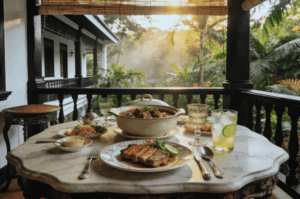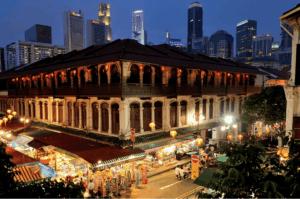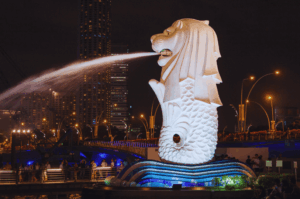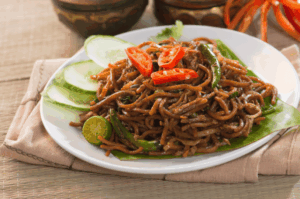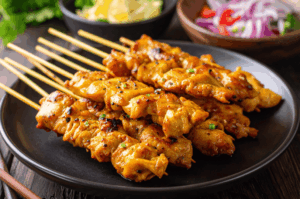
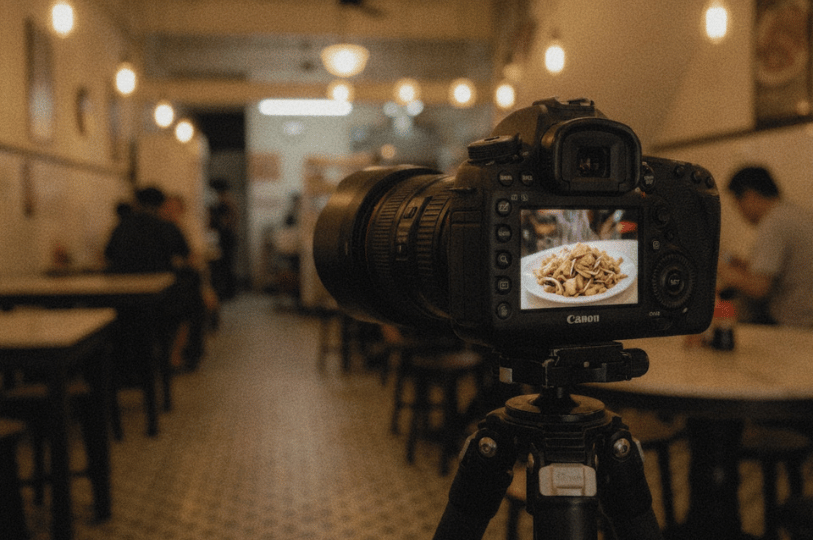
When I set up my tripod in a bustling kopitiam or a quiet heritage restaurant, I am constantly reminded that I am not just photographing a meal. I am photographing a map. Every photo shoot Singapore hosts is a visual exploration of a complex historical journey. The colors on the plate: the fiery red of a sambal, the stark white of Hainanese chicken, the rich ochre of a fish curry, are vibrant markers of the people who traveled here, settled here, and built this nation.
Through the lens, the diversity of our food landscape transforms into a coherent narrative, telling the story of an island that has always been a meeting point for the world.
A Culinary Crossroads
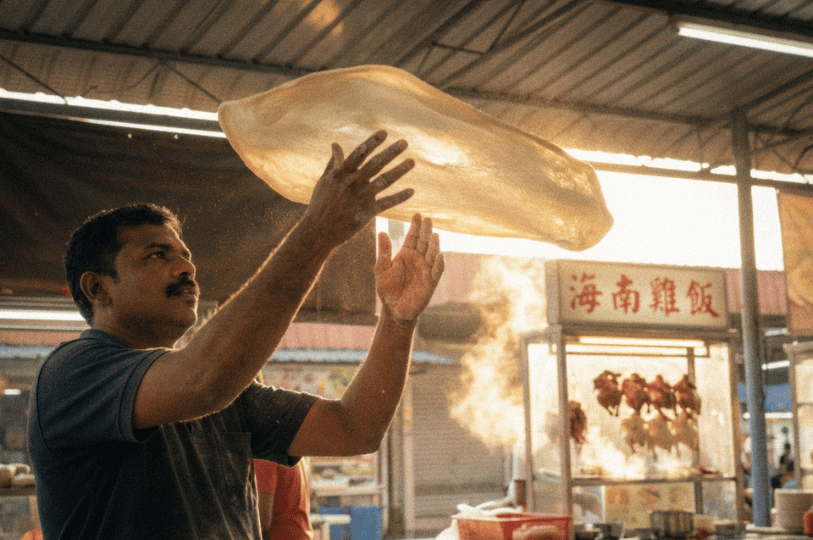
To truly understand the cultural food in Singapore, we need to look back at the forces that shaped our rich culinary identity. Rooted deeply in our history as a British imperial trading post, Singapore was the vibrant crossroads where the East India Company’s trade routes converged, drawing laborers and merchants from China, the Malay Archipelago, India, and Europe. Each community brought their own ingredients, cooking techniques, and religious dietary customs, which collectively influenced the island’s food landscape.
In those early days, these communities lived in distinct enclaves, but their food began to speak to one another across boundaries. The Cantonese amah learned to incorporate local spices; the Indian spice merchant supplied the Malay cook. This proximity created an extraordinary culinary ecosystem that still thrives in hawker centres and food courts today. When I document these dishes during a photo shoot Singapore project, I’m capturing the legacy of that era.
A simple plate of Roti Prata is not just breakfast; it’s a testament to South Indian migrants who adapted their flatbreads to suit local tastes. The visual texture of the dough, stretched thin and fried to golden brown crispy goodness, tells a story of adaptation and survival dating back to the colonial period.
This story extends beyond just one dish. The fragrant rice served alongside poached chicken in the iconic chicken rice is infused with chicken broth and often accompanied by chili sauce and soy sauce, reflecting Chinese culinary influence.
In hawker stalls across Maxwell Food Centre and other food centres, you’ll find local favourites like nasi lemak, with its pandan leaves-infused fragrant rice, coconut milk, and spicy sambal chili sauce, or beef rendang, slow-cooked to tender slices of rich, spicy perfection. These dishes awaken the taste buds and represent the shared family and community spirit that defines Singapore’s food culture.
Each bite, from the tofu puffs in laksa to the stir fried char kway teow with Chinese sausage and prawns, is more than just one meal, it’s a culinary experience that encapsulates the island’s diverse heritage. Capturing these moments through photography is about more than just food; it’s about honoring the vibrant tapestry of cultures that come together in every food stall and hawker centre, creating a feast for both the eyes and the palate.
Capturing Cultural Singapore Food: A Visual Dialogue
The true beauty of a photo shoot Singapore project lies in documenting the coexistence of these distinct traditions. It is rare to find a city where you can photograph a traditional Teochew porridge stall, a Malay Nasi Padang vendor, and a Tamil Muslim Mamak shop all within a single city block, each serving dishes rich with their own unique recipe and flavors.
When photographing cultural food in Singapore, I focus on the unique visual language of each tradition. For Chinese cuisine, it is often about the gloss of the glaze on roast meats or the delicate translucency of a dim sum wrapper, complemented by the crunch of bean sprouts and a drizzle of chili sauce. For Malay dishes, it is the rich, textured pastes of the rempah, capturing the fibrous quality of lemongrass and galangal, often accompanied by peanut sauce and sambal stingray. Indian cuisine bursts with vibrant, staining colors of turmeric and saffron, with aromatic garlic and onions enhancing the creamy curries.
Peranakan cuisine offers perhaps the most visually intricate subject matter. Born from the intermarriage of Chinese immigrants and local Malays, it is the physical embodiment of cultural synthesis. Photographing a bowl of laksa is a study in contrasts: the pale rice noodles submerged in a sunset-orange broth enriched with coconut milk, topped with the bright green of laksa leaves, shrimp, and tofu puffs. It is a dish that refuses to be singular, demanding that the camera capture every layer of its complex heritage.
A Conversation Between Food Centre Dishes
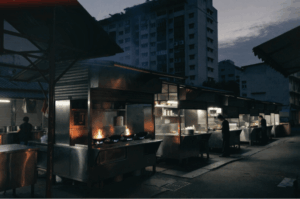
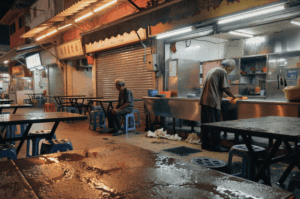
Beyond the dishes themselves, the scene is often set in open air hawker centres where the aroma of kaya toast, butter, and condensed milk wafts through the air, mingling with the sounds of sizzling mee goreng and the chatter of long queues forming for the best stalls. These vibrant food stalls are more than just places to eat, they are living museums of Singapore’s culinary history, where every plate tells a story of migration, adaptation, and community.
In capturing these moments, a photo shoot Singapore project becomes a celebration of the island’s rich, sweet, and savory food culture, inviting viewers to taste the history through their eyes and awaken their taste buds to the harmonious blend of spices, seafood, and traditional Singaporean breakfast staples that define this remarkable city.
Fusion Food: The Evolution of Tradition
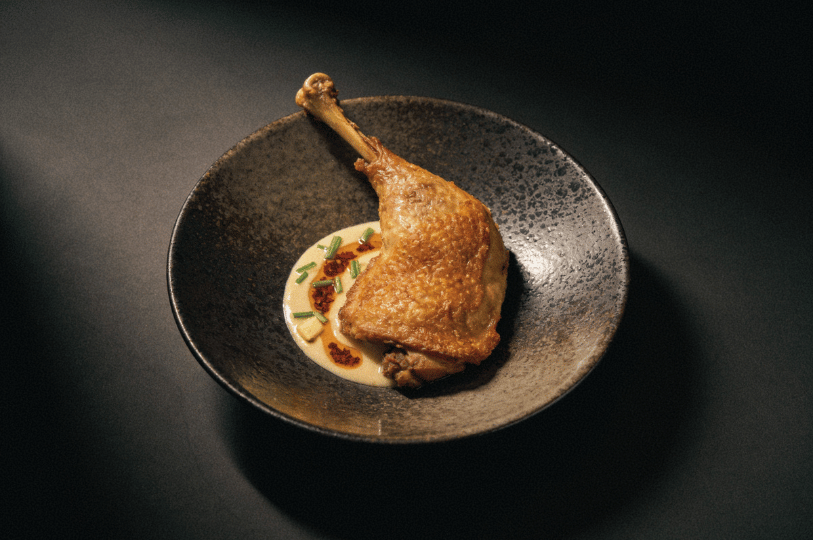
While preserving the old is vital, the story of Singaporean food is also one of constant evolution. Fusion food Singapore is often misunderstood as a modern trend, but in reality, fusion is our oldest tradition. The very act of migration necessitated fusion, blending flavors from the Middle East, China, India, and beyond.
Today, however, we see a new wave of culinary expression that honors this spirit of innovation. Contemporary chefs are taking the building blocks of heritage cuisine and reassembling them in exciting new forms. I recently photographed a dish that combined the French technique of confit with the flavors of salt-baked chicken. Visually, it was stunning: the skin crisp and golden brown like a classic French roast, yet served with a ginger-scallion sauce that smelled unmistakably of a Chinatown kitchen, accented by a subtle drizzle of chili sauce.
Capturing these dishes requires a different approach. The lighting might be moodier, the styling more minimalist, but the goal remains the same: to find the thread of authenticity. Even in modern interpretations, the soul of the ingredient must shine through.
A photo shoot Singapore focused on fusion cuisine is not about documenting confusion; it is about documenting the confidence of a culture that knows its roots well enough to play with them. Just like the perfect balance of kaya toast, coffee, and soft boiled eggs in a traditional Singaporean breakfast, these fusion creations awaken the taste buds with layers of spice, sweetness, and savory richness.
In this evolving culinary landscape, the use of ingredients like coconut milk, sugar, and fresh seafood continues to tie new dishes back to the island’s rich heritage. Whether it’s the crispy goodness of stir fried char kway teow with Chinese sausage or the tender slices of beef rendang slow-cooked in fragrant spices, every dish tells a story. And yes, even the iconic chili crab with its luscious chili sauce remains a beloved staple, reminding us that fusion and tradition walk hand in hand in Singapore’s food scene.
The Photographer’s Role as Archivist
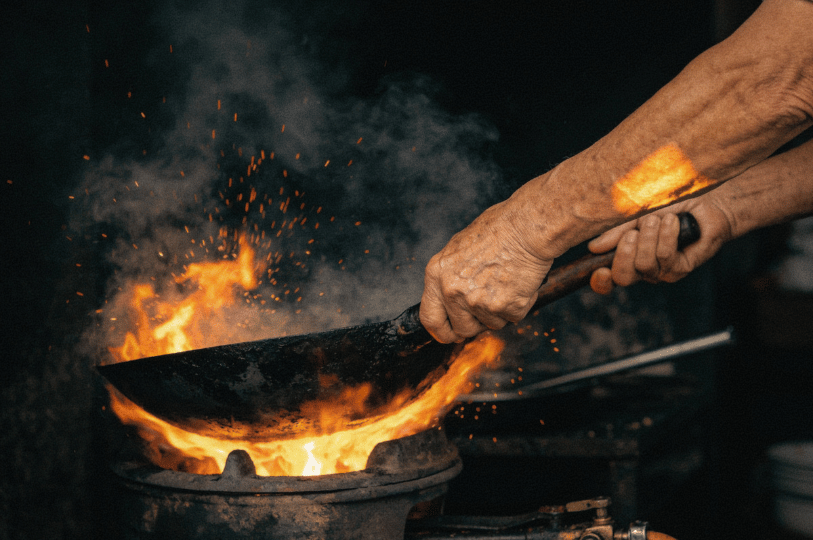
As a documentary photographer, I see my role as more than just a creator of beautiful images. I am an archivist. The hawkers who wake up at 4 AM to prepare their broths, the grandmothers who guard their spice blends, and the young chefs experimenting with molecular gastronomy; they are all authors of our national story.
When we conduct a photoshoot Singapore project, we are freezing these moments in time. We are preserving the way the light hits a bowl of soup in a humid hawker center, a sight that might not exist in twenty years. We are documenting the hands that wrap the dumplings and the worn-out woks that impart the breath of fire. From the vibrant red of chilli sauce drizzled over a plate of chilli crab to the delicate texture of shaved ice desserts cooling down the tropical heat, every element tells a story.
This visual archive is essential. It teaches us that diversity is not just a buzzword; it is a tangible, edible reality. It shows us that harmony does not mean sameness. In a single frame, we can see how different cultures have maintained their distinct identities while contributing to a shared table.
Conclusion
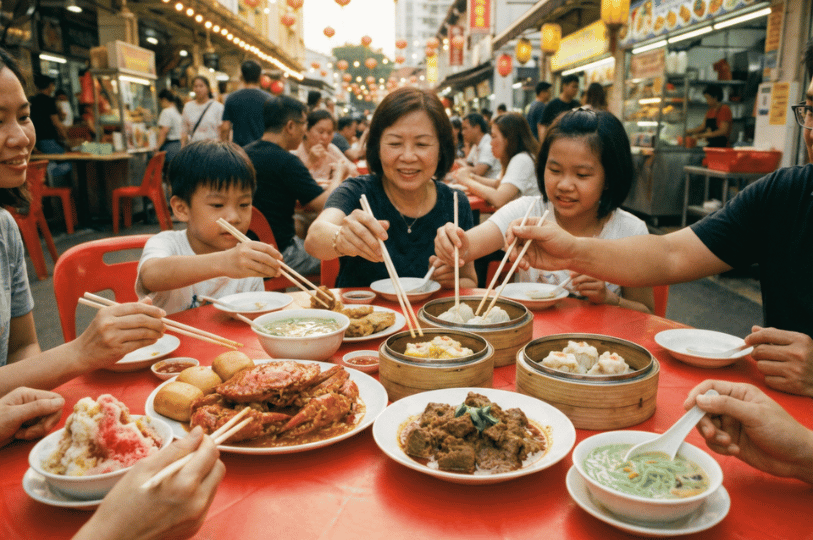
The imperial diversity of Singapore is not a relic of the past; it is a living, breathing, and eating experience. Through the medium of photography, we can peel back the layers of history to reveal the human stories beneath. Whether it is the timeless comfort of cultural food in Singapore or the exciting potential of fusion food Singapore, each dish offers a glimpse into who we were and who we are becoming.
For the street food photographer, the mission is clear. We must continue to document this diversity with respect and empathy. We must ensure that the visual record of our culinary heritage is as rich and varied as the flavors themselves. In doing so, we preserve a legacy of multiculturalism that serves as a lesson to the world; a reminder that when we make room for everyone at the table, the result is nothing short of a masterpiece.

Imperial Diversity Through Photo Shoot Singapore Projects
March 2, 2026
When I set up my tripod in a bustling kopitiam or a quiet heritage restaurant, I am constantly reminded that I am not just photographing a meal. I am photographing a map. Every photo shoot…
-
Historic Flavors Shoot Singapore: Post-Processing for Period Authenticity
February 27, 2026
When I look through the viewfinder at a plate of heritage kueh or a steaming bowl of rickshaw noodles, I am not just capturing food; I am framing a memory. The challenge for any documentary…
-
Colonial Cuisine Photoshoot: Styling Singapore’s Historic Flavors
February 23, 2026
When I first embarked on a photoshoot focusing on Singapore’s colonial cuisine, I didn’t realize how deeply food could connect us to history. It wasn’t just about snapping pictures of dishes; it was about capturing…
-
Coal, Fire, and Memory: A Singapore Food Blogger Revisits Tanjong Pagar’s Industrial Kitchens
February 20, 2026
It had been a while since I set a day to wander through the back lanes of Tanjong Pagar. When I decided to come back to the place left me star-struck, not by the polished…
-
Three Generations, One Perfect Dumpling: A Food Blogger’s Journey in Chinatown’s Hidden Alley
February 16, 2026
Why This Alley is a Must-Visit for Food Lovers and Food Bloggers The first time I ventured into this tucked-away alley in Singapore’s Chinatown, I was awestruck by how different it felt from the bustling…
-
After Dark Cravings: A Guide to Night Singapore for Foodies
February 13, 2026
When I first landed in Singapore, I thought I knew what to expect: futuristic skylines, spotless streets, and, of course, amazing food. I did end up seeing all those things but what truly blew me…
-
Dawn Awakening: Morning Market Food Blog
February 9, 2026
The city is still dreaming when the first fires are lit. It is 4:30 AM, an hour that belongs to the insomniacs and the dedicated artisans of our food culture. While the skyscrapers of the…
-
The Last Hour: Closing Time Through the Eyes of A Food Blogger
February 6, 2026
The roar of the hawker center fades as the clanking woks and sizzling grills soften to a murmur. Most plastic tables are empty, wiped clean, awaiting a new day. This last hour is a sacred,…
-
Food Blogs as Cultural Archives: Photographing Religious Culinary Traditions
February 2, 2026
We often think of food photography as a way to stimulate appetite or showcase a chef’s creation. However, in multicultural Singapore, it captures much more: history, faith, and identity. Food blogs have evolved from recipe…
-
Composition’s Sweet Spot: A Guide in Framing Desire for Food Bloggers in Singapore
January 30, 2026
You have found the perfect bowl of bak chor mee. The noodles glisten, the minced pork is perfectly seasoned, and the chili sauce adds a vibrant splash of red. You snap a quick picture, but…