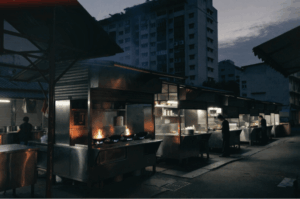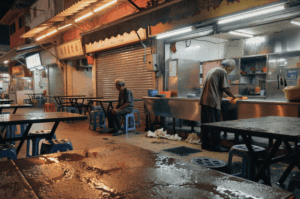
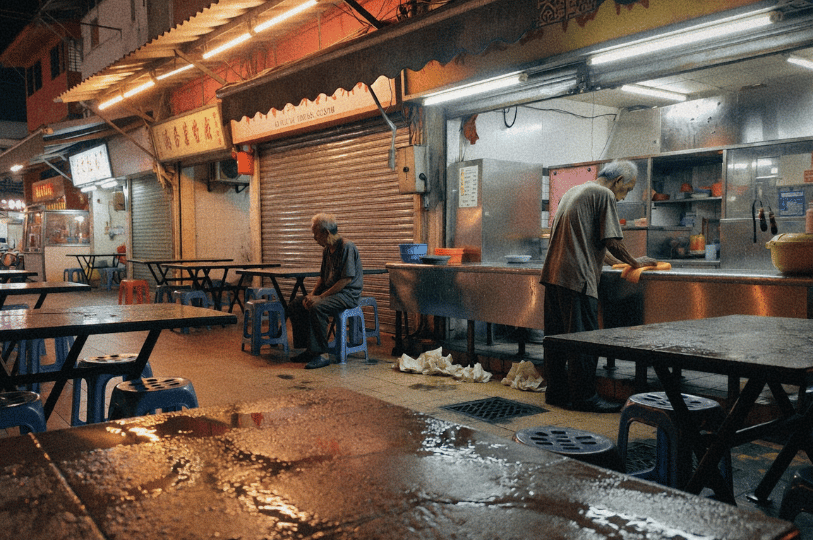
The roar of the hawker center fades as the clanking woks and sizzling grills soften to a murmur. Most plastic tables are empty, wiped clean, awaiting a new day. This last hour is a sacred, liminal space between the frantic service and the quiet night. For a food blogger or photographer, it offers a rare glimpse behind the curtain; a moment of raw intimacy revealing Singapore at night in its most authentic form.
In this final hour, the focus shifts from food to people, from plates to winding down. The air, thick with the ghosts of meals, clears to reveal stories of exhaustion, resilience, and quiet satisfaction. It’s a deeply sensual experience rich with visual texture and untold narratives, waiting for a lens to capture its truth.
The Symphony of the Wind-Down in Singapore's Hawker Centers
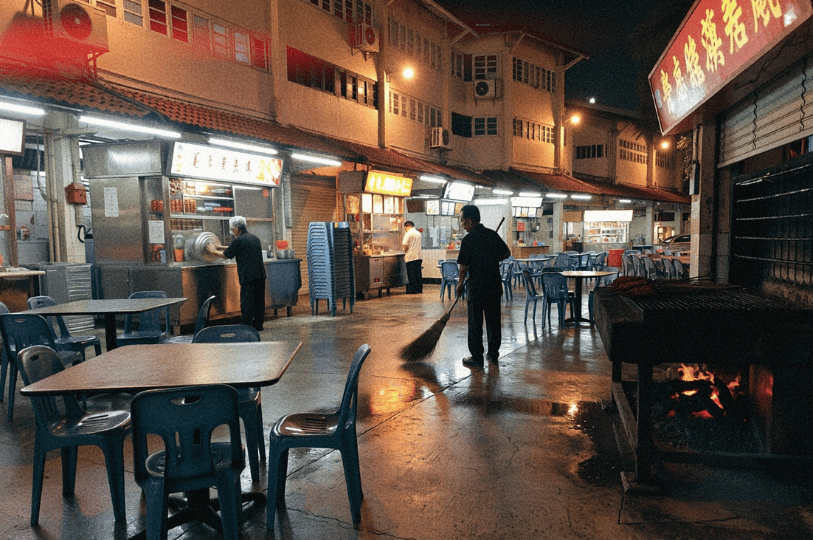
The sensory landscape of a hawker center changes dramatically in its last hour. The experience becomes more focused, more personal, revealing the essence of Singapore's hawker culture.
The sounds are the first things you notice. The high-pitched hiss of the burners is replaced by the rhythmic clatter of metal on metal as hawker stalls are scrubbed clean. The percussive chop of a cleaver gives way to the swoosh of a broom across the concrete floor. You can hear the street food vendors talking to each other, their voices no longer needing to compete with the din of the crowd. Their laughter is softer, their conversations more personal. It is the sound of a community shedding its public face within these open air food courts.
The smells evolve too. The sharp, vibrant aroma of frying garlic, chili, and spicy food makes way for the clean, soapy scent of detergent and hot water. The sweet smoke from the satay grill on Satay Street has dissipated, leaving behind the faint, earthy smell of cooling charcoal. It is a scent of completion, of a job well done. For a food blogger, documenting these sensory shifts is as important as photographing the food itself. It is about capturing the full atmosphere of the place, from the bustling hawker centre to the quiet moments after dinner.
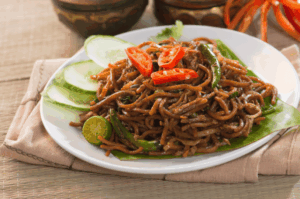
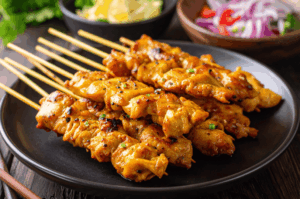
In these last moments, you might catch glimpses of iconic local dishes like Hainanese chicken rice, char kway teow with Chinese sausage, thick rice noodles, and spicy satay skewers being packed away. The vendors, many of whom have worked tirelessly since the early hours, begin to wind down, their faces reflecting the pride and exhaustion of a day spent feeding the city.
For visitors who have just arrived via Singapore Changi Airport or those staying near the Central Business District, these closing moments at hawker centres like Maxwell Food Centre, Lau Pa Sat, or Tekka Centre offer a rare, authentic insight into Singapore's food scene beyond the tourist hotspots. Whether you’re catching the last bites before heading to the Singapore Flyer or winding down after a stroll along the Singapore River, the last hour in a hawker centre is a unique experience that captures the heart of local cuisine and the spirit of community.
The Photographer's Nocturnal Playground
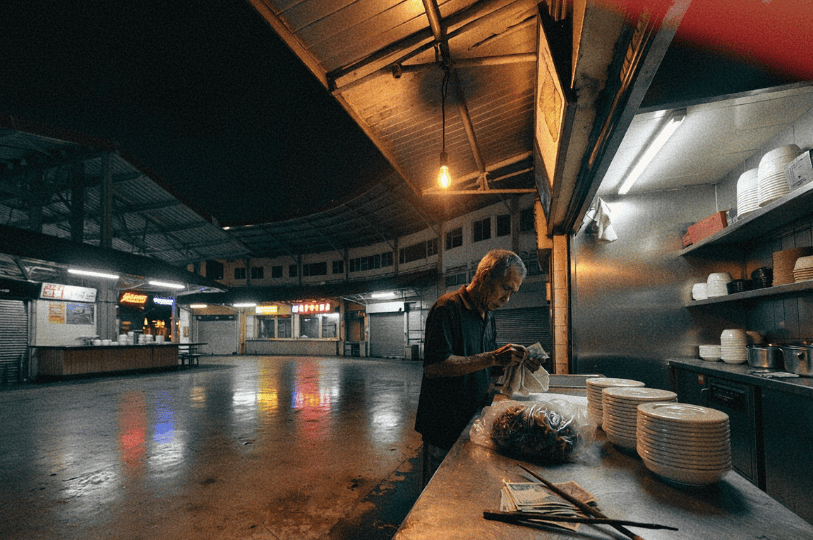
Photographing a hawker center during its closing hour presents a unique set of challenges and beautiful opportunities. The lighting is often difficult, a mix of harsh fluorescent overheads and the warm, single bulbs illuminating individual stalls. This is not a weakness; it is a gift.
This dramatic, high-contrast lighting is perfect for creating moody, atmospheric images that capture the essence of Singapore's hawker centers. Look for pockets of light and shadow. A vendor’s face, illuminated by a single bulb as they count their earnings, can become a powerful portrait. The gleam of water on a freshly mopped floor, reflecting the neon signs from outside, creates a cinematic feel. This is where you can truly experiment with the principles of composition to create compelling visuals. Finding a "Composition's Sweet Spot" in this environment means embracing the shadows and using light to tell a story of solitude and reflection.
Angles become more interesting. Without the crowds, you can get low to the ground, capturing the vast emptiness of the space. You can shoot through the metal shutters of a half-closed stall, framing a scene of quiet activity within. The details come into focus: a stack of freshly washed bowls catching the light, a single abandoned chopstick on a table coated with sweet sauce, or the tired lines on a hawker’s hands. These are the small, intimate details that make your images feel real and emotionally resonant.
For a food blogger, these moments provide hidden gems to showcase the authentic local foods and the dedication of street food vendors who have been serving many stalls throughout the day. Capturing the atmosphere of a hawker center in its last few hours offers a unique perspective on Singapore’s vibrant food markets and hawker culture.
If you visit Singapore and want to experience this firsthand, consider heading to must-visit spots like Maxwell Food Centre, Lau Pa Sat, or Tekka Centre near the MRT stop at Tanah Merah MRT Station on the East West Line. These centers are home to many stalls offering iconic dishes like hainanese chicken rice, char kway teow with Chinese sausage, and hokkien mee. The experience is enhanced by the knowledge that these stalls, including famous ones like Hawker Chan (recognized by the Michelin Guide) are part of Singapore's rich culinary heritage.
Photographing the last hour also allows you to capture the contrast between the bustling daytime activity and the quiet, reflective night. It’s a chance to tell a story beyond eating and restaurants, revealing the human side of the hawker center and the spirit of community that thrives even as the lights dim.
This unique time also highlights the connection to iconic Singapore experiences, such as sipping a Singapore Sling at the Long Bar in Raffles Hotel or enjoying the view of Marina Bay Sands as the city winds down. For food bloggers and photographers, these moments provide a rich tapestry of stories and images that elevate a trip to Singapore beyond the typical tourist experience.
The Human Stories After the Rush of Hawker Food and Hawker Stalls
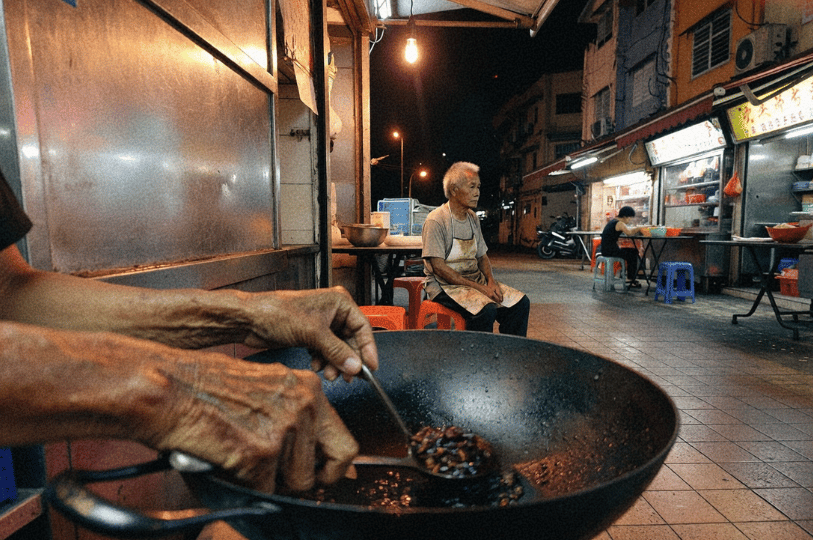
The last hour is when the human element of the hawker center truly shines. The hawkers, who have been tireless engines of production for hours, finally slow down. Their movements become less frantic, more deliberate.
This is the time to capture their stories, but with immense respect. A wide shot of a vendor sitting on a stool in their now-quiet stall, staring into the distance, can speak volumes about the physical and emotional toll of their work. A close-up of their hands, scrubbing a well-worn wok, tells a story of dedication and craft. These are not just food producers; they are artisans, embodying the heart of Singapore's hawker culture.
You also see the last of the night's diners. The stragglers, the shift workers, the insomniacs seeking a final, comforting meal. There is an unspoken camaraderie among them, a shared experience of being awake while the city sleeps. A food blogger can capture this feeling of quiet community, of finding solace in a shared space within these open air food courts. A photograph of a lone diner hunched over a steaming bowl of hainanese chicken rice or char kway teow with Chinese sausage, bathed in the soft glow of a stall light, is a powerful image of urban solitude and comfort.
Like mentioned before, many of these hawker stalls, including famous ones like Hawker Chan (recognized by the Michelin Guide and visited by Anthony Bourdain) are part of Singapore's rich culinary heritage. So you don't forget; located in must-visit spots such as Maxwell Food Centre, Lau Pa Sat, and Tekka Centre, they offer iconic local dishes featuring springy noodles, thick rice noodles, and spicy satay skewers. These centers are often just a short walk from MRT stops like Tanah Merah MRT Station on the East West Line, making them accessible gems for visitors eager to experience authentic hawker food.
Capturing the last hour also highlights the contrast between the bustling daytime activity and the serene night, revealing the human stories behind Singapore's vibrant food markets. For a food blogger, this moment provides hidden gems to showcase the dedication of street food vendors and the enduring spirit of community that thrives in Singapore's hawker centres, beyond the glitz of luxury hotels and tourist hotspots.
A Guide for Respectful Documentation
As a food blogger or photographer, entering this space requires sensitivity. You are a guest in someone's workplace at the end of a long day.
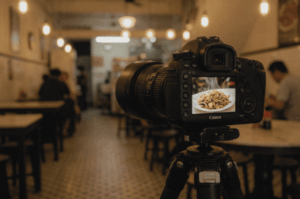
- Be Invisible: Avoid bright flashes or elaborate setups. Use a small, discreet camera with a fast prime lens (like 35mm or 50mm f/1.8) for low light without drawing attention.
- Ask for Permission: Always ask before taking portraits or close-ups. A smile and gesture toward your camera help. Respect their privacy if they decline.
- Buy Something: Support the street food vendors by ordering a drink or small dish from an open stall.
- Know When to Leave: When shutters close and lights go off, it's time to leave. Respect that their workday is ending, not the start of your photoshoot.
Why This Final Hour Matters
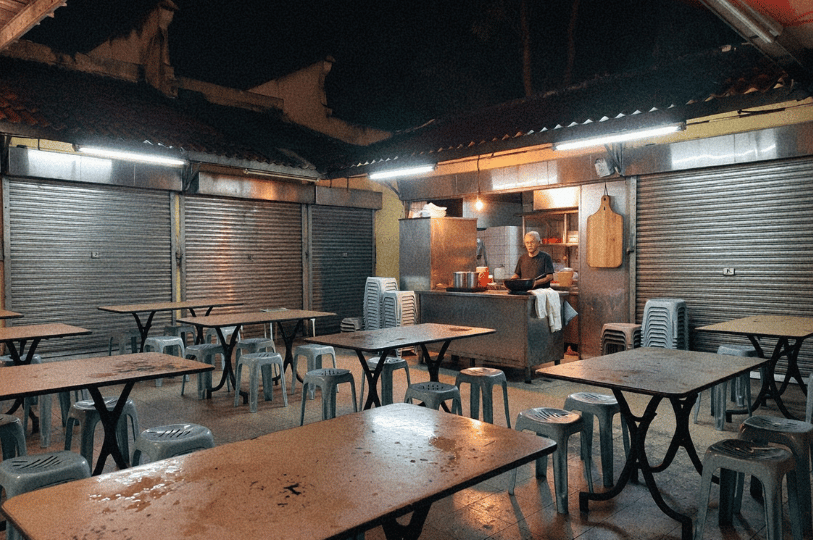
The last hour in a hawker center reveals Singapore at night in a way few see. Far from rooftop bars and nightclubs, it is real and deeply human. For a food blogger, it offers a chance to add soul to your work by telling a fuller story beyond "the top five chicken rice stalls."
Documenting this quiet time honors the hard work behind Singapore’s famous food culture. It shows the effort and humanity behind the counter. These images pay tribute to the unsung culinary heroes, reminding us that every delicious plate has a story of passion, perseverance, and a long day. This story shines not in daylight but in the fading glow of closing time.

Imperial Diversity Through Photo Shoot Singapore Projects
March 2, 2026
When I set up my tripod in a bustling kopitiam or a quiet heritage restaurant, I am constantly reminded that I am not just photographing a meal. I am photographing a map. Every photo shoot…
-
Historic Flavors Shoot Singapore: Post-Processing for Period Authenticity
February 27, 2026
When I look through the viewfinder at a plate of heritage kueh or a steaming bowl of rickshaw noodles, I am not just capturing food; I am framing a memory. The challenge for any documentary…
-
Colonial Cuisine Photoshoot: Styling Singapore’s Historic Flavors
February 23, 2026
When I first embarked on a photoshoot focusing on Singapore’s colonial cuisine, I didn’t realize how deeply food could connect us to history. It wasn’t just about snapping pictures of dishes; it was about capturing…
-
Coal, Fire, and Memory: A Singapore Food Blogger Revisits Tanjong Pagar’s Industrial Kitchens
February 20, 2026
It had been a while since I set a day to wander through the back lanes of Tanjong Pagar. When I decided to come back to the place left me star-struck, not by the polished…
-
Three Generations, One Perfect Dumpling: A Food Blogger’s Journey in Chinatown’s Hidden Alley
February 16, 2026
Why This Alley is a Must-Visit for Food Lovers and Food Bloggers The first time I ventured into this tucked-away alley in Singapore’s Chinatown, I was awestruck by how different it felt from the bustling…
-
After Dark Cravings: A Guide to Night Singapore for Foodies
February 13, 2026
When I first landed in Singapore, I thought I knew what to expect: futuristic skylines, spotless streets, and, of course, amazing food. I did end up seeing all those things but what truly blew me…
-
Dawn Awakening: Morning Market Food Blog
February 9, 2026
The city is still dreaming when the first fires are lit. It is 4:30 AM, an hour that belongs to the insomniacs and the dedicated artisans of our food culture. While the skyscrapers of the…
-
The Last Hour: Closing Time Through the Eyes of A Food Blogger
February 6, 2026
The roar of the hawker center fades as the clanking woks and sizzling grills soften to a murmur. Most plastic tables are empty, wiped clean, awaiting a new day. This last hour is a sacred,…
-
Food Blogs as Cultural Archives: Photographing Religious Culinary Traditions
February 2, 2026
We often think of food photography as a way to stimulate appetite or showcase a chef’s creation. However, in multicultural Singapore, it captures much more: history, faith, and identity. Food blogs have evolved from recipe…
-
Composition’s Sweet Spot: A Guide in Framing Desire for Food Bloggers in Singapore
January 30, 2026
You have found the perfect bowl of bak chor mee. The noodles glisten, the minced pork is perfectly seasoned, and the chili sauce adds a vibrant splash of red. You snap a quick picture, but…