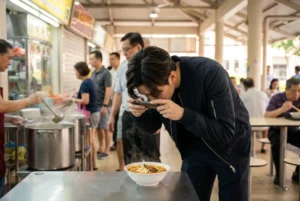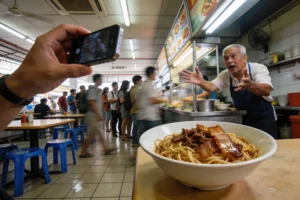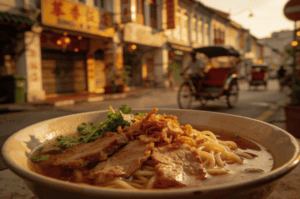
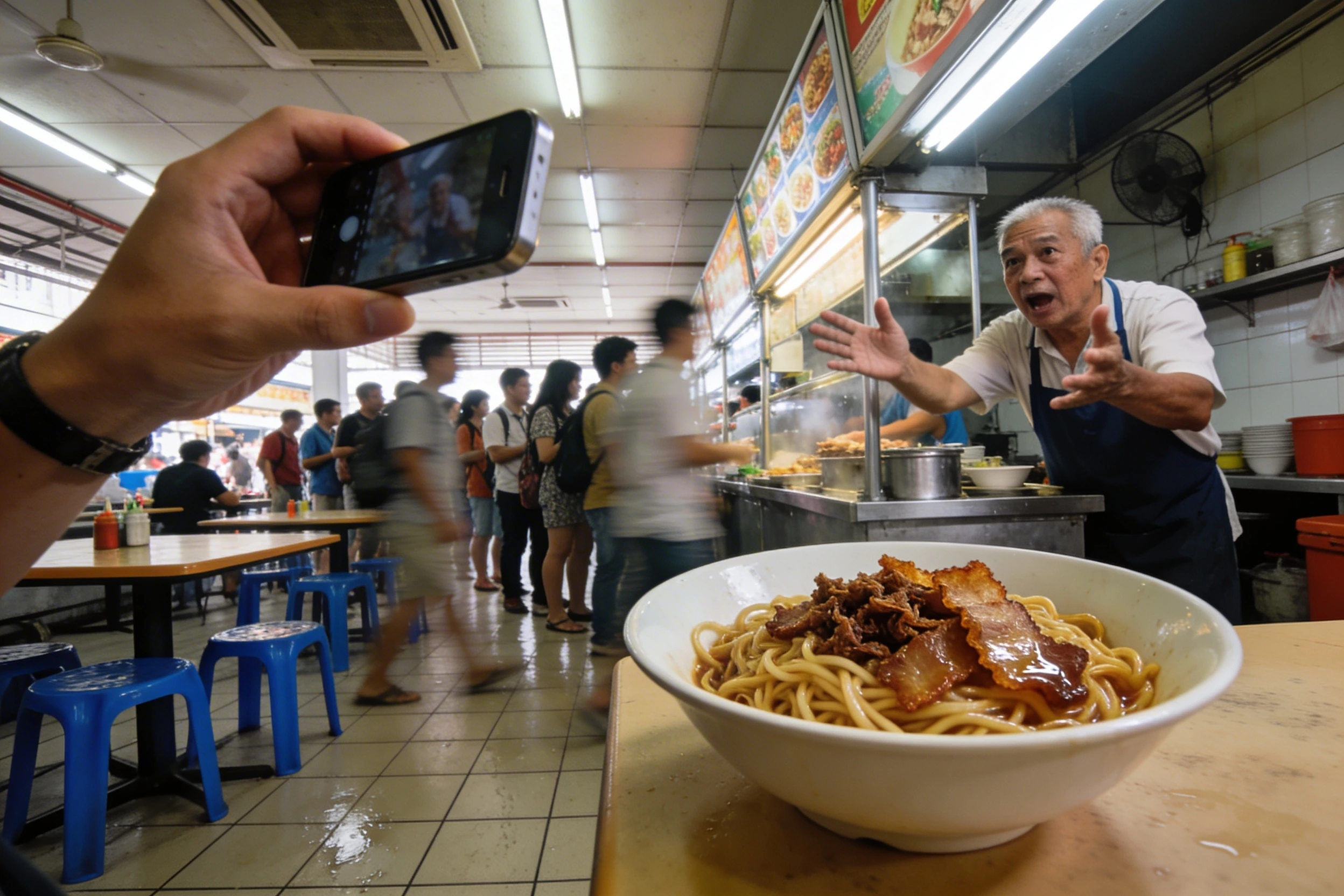
I’ll never forget the first time I tried to photograph a bowl of bak chor mee at a famous hawker stall during peak lunch hour. I was so wrapped up in capturing the perfect angle of those glistening noodles and crispy lard that I completely missed the queue snaking behind me and the uncle’s increasingly urgent gestures. He didn’t say a word, but his body language shouted, "Hurry up!" I snapped a clumsy, rushed food photo and slinked away to my table, feeling flustered and a bit rude.
That moment was a wake-up call about food photography in Singapore’s hawker centres: it’s not about fancy styling or technical perfection. It’s about reading the room and respecting Singapore's hawker history. Singapore foodies don’t loudly ask for permission or linger for a perfect shot. Instead, they tune into a set of unspoken visual cues to know when, how, and even if snapping a photo is the right move.
This guide is my way of decoding those signals for you. I’ll share the lessons I’ve learned, cough mostly the hard way, so you can shoot confidently, respect the hawkers’ workflow, and capture images that feel genuine, not awkward.
How To Read a Hawker Stall Before Taking a Food Photo
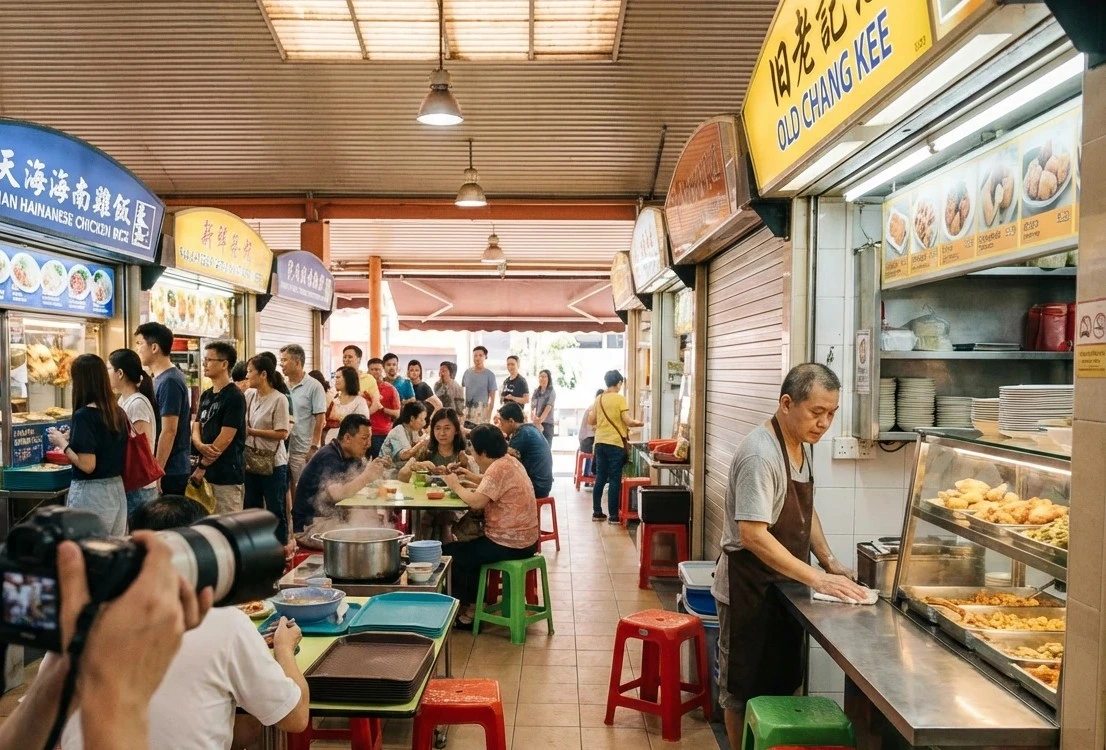
The crucial skill in photographing most stalls at hawker centers isn’t about your gear. It’s your ability to size up the situation in seconds. Before I even raise my camera, I run through a quick mental checklist based on visual cues in the bustling hawker centers of this vibrant city. I personally believe that this is something all photographers should know when deciphering what their subjects will be.
Here’s my step-by-step visual assessment every time:
- Check the Queue and Lines: A long, fast-moving queue means the stall is slammed. That’s a strict "no photography" zone for me. A short, relaxed queue, or none at all, means there might be a window to snap a quick photo.
- Observe the Stallholder’s Movements: Are they chopping chicken or stirring laksa soup at lightning speed without pause? That’s high-pressure service. If you spot them taking breaks between orders, wiping counters, or chatting with regulars, the vibe is more laid-back and photo-friendly.
- Scan the Counter and Surroundings: A clean, open counter with dishes on display usually means the street food vendor takes pride in presentation. Perfect for photos. But a cluttered, cramped counter packed with tools and ingredients? That space is all business, best to keep your camera down and open your mouth to simply eat.
- Watch Other Photographers and Singaporeans: Take a moment to see if locals are snapping photos. If yes, notice how quickly they do it, and if it's usually a quick snap at the table, then phone away. If no one’s photographing, there’s often a reason. Maybe the stall has a no-nonsense attitude.
- Check Seating and Rest Areas: Plenty of empty tables nearby? You can relax and shoot from your seat without rushing. If the hawker centre is packed and people are hovering, your photography time is limited to seconds.
Insider Tip: Time is more precious than money at a hawker stall. The cost of your photo isn’t the dish price; it’s the disruption to the workflow. Expect to wrap all your shots within 30–60 seconds of food arriving.
Food Photography Timing in Hawker Centres: When to Visit and Capture
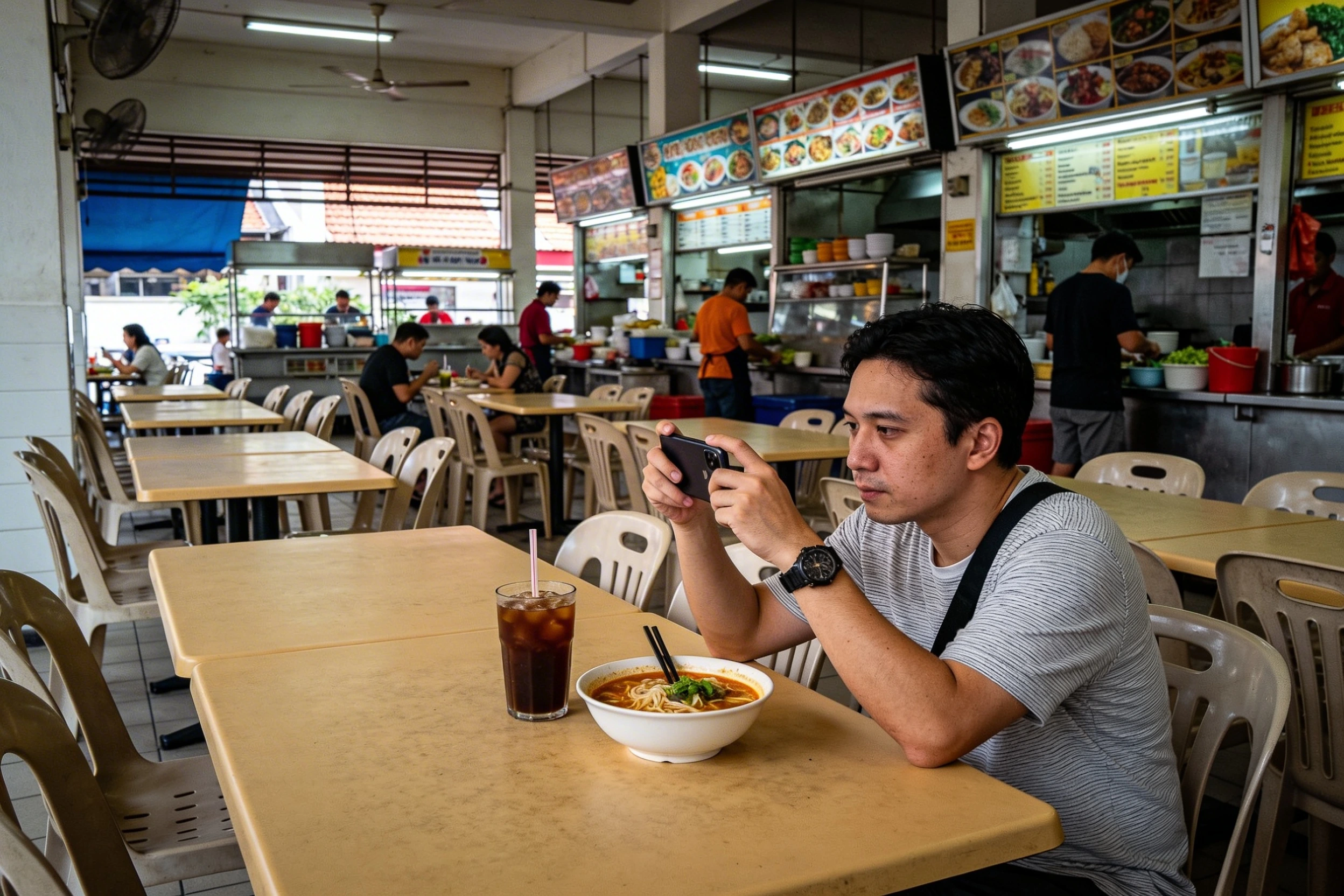
Experienced local foodies know timing is key to capturing great food photos without stress. You want to visit hawker centres when the stalls are running smoothly but not overwhelmed by crowds. Avoid the expensive rush hours when stalls are busiest, and instead aim for times when the queue is short and the stallholders are more relaxed.
Best Times for Food Photography in Hawker Centers:
- 7:30–9:00 a.m.: Breakfast rush is over, stalls are in a comfortable rhythm. They're just in the middle of resetting for the lunch apocalypse. I'd definitely prefer this, though sadly, you will be letting out a yawn or two.
- 2:00–4:00 p.m.: The golden hour for hawker photography. Lunch crowd is gone, stallholders prepping or enjoying a lull. Some of my best relaxed shots happened here.
- Right After Opening: If a stall opens at 10 a.m., arriving at 10:15 a.m. is perfect. You’re among the first customers, and pressure hasn’t built up.
Planning your visit during these quieter periods not only helps you save time but also lets you enjoy the authentic atmosphere and vibrant nature of the hawker centre.
Times to Avoid (Especially If You’re New):
- 12:00–1:30 p.m.: Peak lunch chaos. Just skip it.
- 7:00–9:00 p.m.: Dinner rush is equally intense.
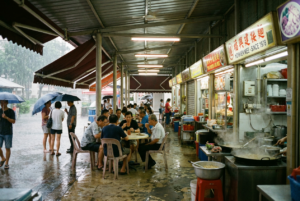
- Rainy Days: Seems like a quiet time, but rain drives crowds to sheltered hawker centres, making them unexpectedly packed and stressful.
Little India and Other Vibrant Hawker Centers: Exploring Singapore’s Local Foods and Culture
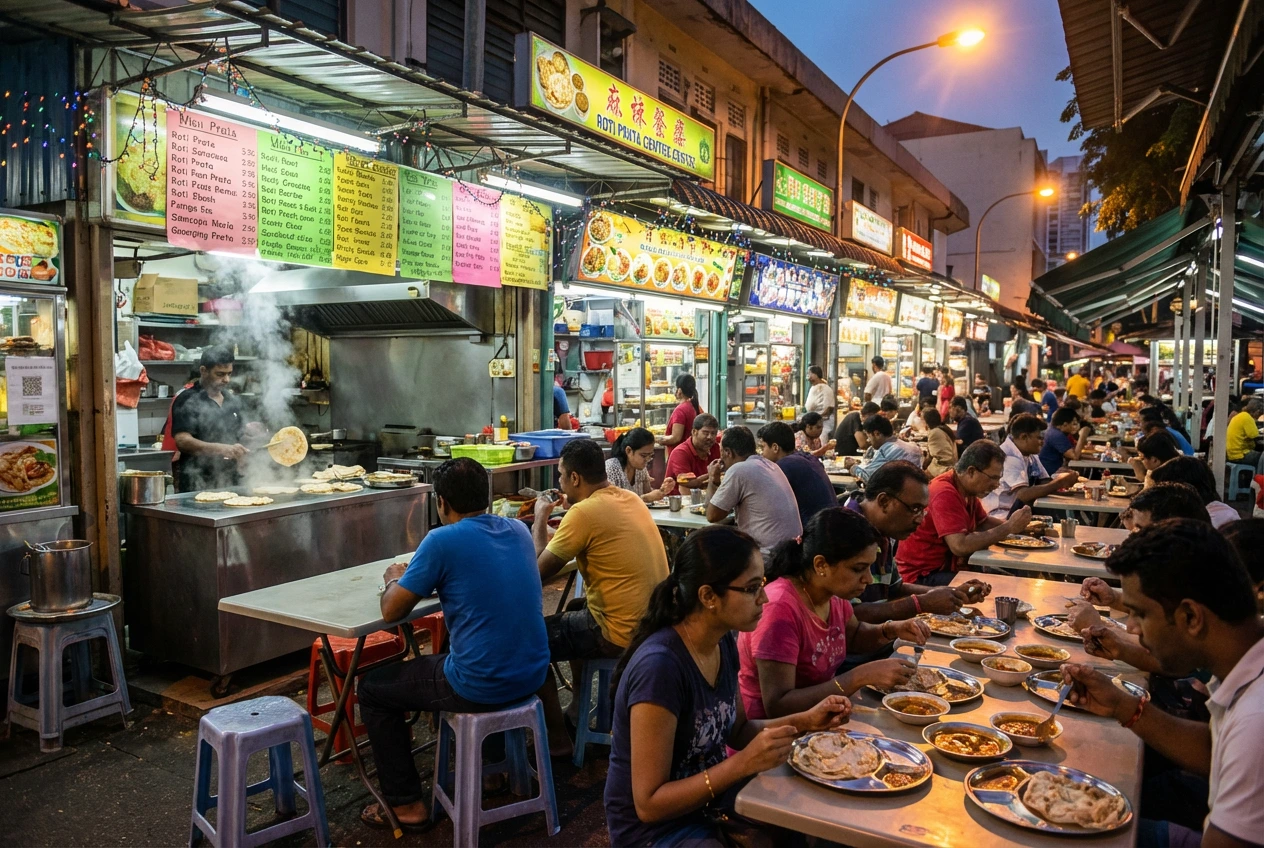
Singapore’s hawker centres are located all over the island, with notable clusters in vibrant neighborhoods like Little India, Chinatown, and the CBD. Each location offers its own unique taste and atmosphere that food crawlers love to explore and capture.
Little India: Buzzing with Indian spices and colorful stalls, their hawker centres offer a feast for the senses. From roti prata to flavorful curries, the food photography opportunities in this location are rich with vibrant colors and textures.
Chinatown: Known for its mix of Chinese and Peranakan dishes, Chinatown’s hawker centres are a hotspot where iconic local foods, like Hainanese chicken rice and laksa soup, are located. The bustling atmosphere and historic backdrop create excellent contexts for food photos.
CBD: The Central Business District’s hawker centres are popular among office workers and offer a variety of quick meals. While often busy, the mix of locals and tourists provides a lively setting to capture hawker culture in action.
How to Create Authentic Food Photos That Tell the Story of Singapore’s Hawker Culture
Unlike polished restaurant shots, hawker food photography thrives on authenticity. Food enthusiasts appreciate images that capture the real texture of noodles, the juicy crab drenched in chili sauce, and the steam rising naturally from a bowl of laksa.
Here are some examples of what to imagine and create:
- Accidental Steam: Capture the natural steam rising from a hot bowl of soup or noodles without staging it, that's the real bonus of capturing that piping broth.
- Real Texture: Show the glossy sauce under fluorescent light, the charred edges of satay, or the uneven handmade noodles.
- Contextual Details: Include elements like plastic tables, numbered trays, tiled floors, and the bustling crowd to tell an honest story. You'd be surprised by how even the least decorated of the locations could be a nice hidden gem.
- Human Element: A hand reaching for a crab claw or a hawker uncle expertly chopping ingredients adds life to your photo. It adds a fun little element of community into the photos.
Pro Tip: Phones are discreet and perfect for hawker food photography. Keep them silent and below eye level to avoid stealing the spotlight or disrupting the hawkers.
Final Thoughts: Enjoy Your Trip and Respect Singapore’s Culture While Shooting
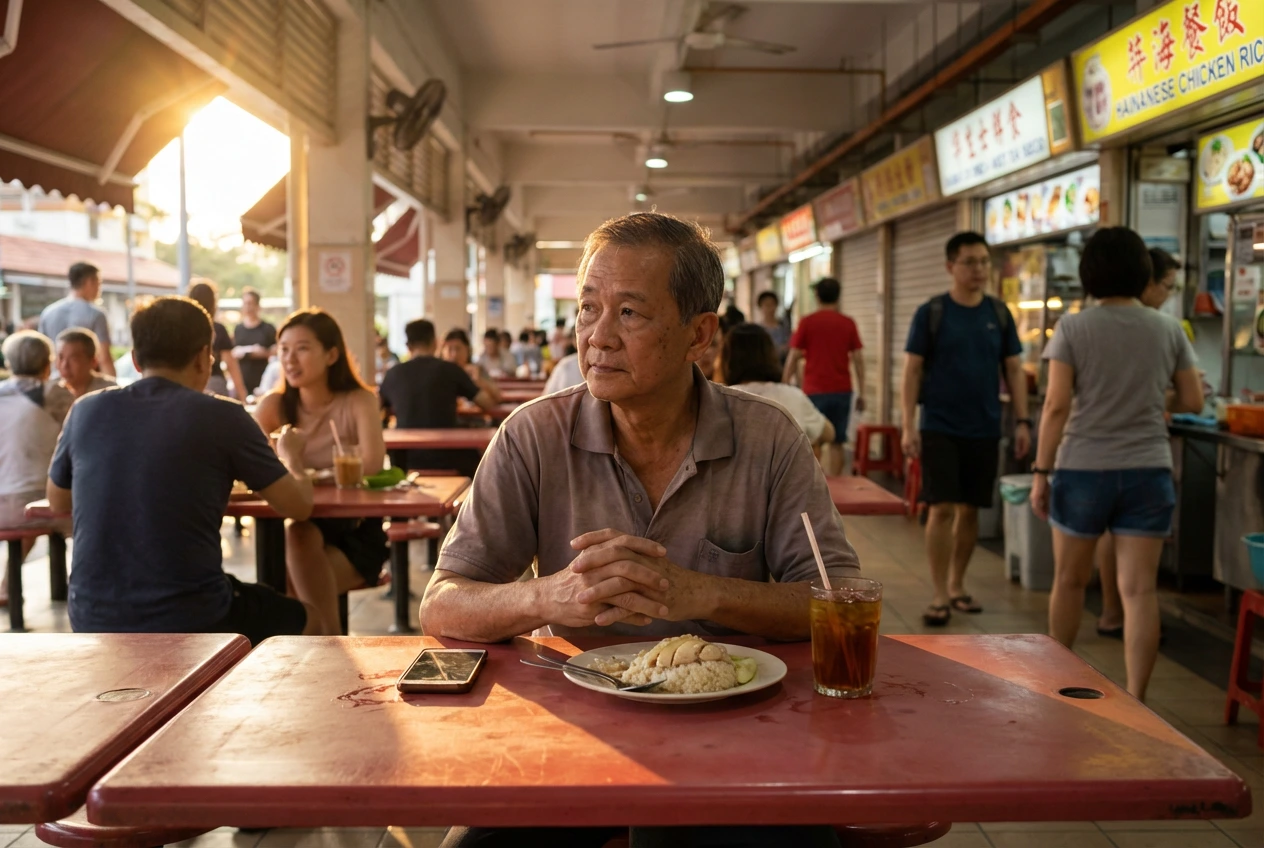
Photographing hawker centres in Singapore is a privilege that offers an intimate glimpse into a culture of hard work, tradition, and incredible flavors. The camera should never take center stage, your respect for the hawkers and the local foods comes first.
Master the cues, the queues, pauses, body language, and flow, and you’ll rarely wonder if it’s okay to snap a photo. You’ll already know. You’ll learn when to be bold, when to be discreet, and when to put the camera away and simply savor your meal. That respect? That’s what makes your photos truly Singaporean. Food photography is insincere without creating a bridge between the community.
Whether you’re sitting at a table in Little India, exploring the hawker centres in Chinatown, or enjoying a quiet afternoon meal in the CBD, remember that this city cherishes authenticity, respect, and the joy of sharing local foods through food photography.
May you have a happy shooting and even happier eating. Along the way, you may find a dish that feels like it loves you back, both in its beauty and taste.

A First-Timer’s Guide to Food Photography in Singapore for Singapore Foodies
March 23, 2026
What I Wish Someone Told Me Before I Took My Phone Out When I first found myself holding a phone above steaming laksa at a hawker centre, I thought the challenge would be capturing light…

Look Here But Also There: The Singapore Foodies’ Guide to Capturing Hawker Stalls Through Visual Cues
March 20, 2026
I’ll never forget the first time I tried to photograph a bowl of bak chor mee at a famous hawker stall during peak lunch hour. I was so wrapped up in capturing the perfect angle…
-
The First Hawker Stall That Changed Everything
March 18, 2026
It was a rainy Tuesday afternoon about seven years ago, and I was just a guy with a camera looking for shelter. I ducked into an old, dimly lit hawker center in Toa Payoh to…

The Best Singapore Breakfast Spots: Lighting, Angles & Visual Stories for Singapore Foodies
March 16, 2026
After years of chasing the perfect breakfast shot all over Singapore, I’ve noticed some venues aren’t just great for eating. They’re inspiring playgrounds for food photography, beloved by both locals and Singapore foodies alike. Whether…
-
From Empire to Plate: Process-Focused Colonial Photography SG Series
March 13, 2026
The story of Singapore cuisine is impossible to tell without acknowledging its colonial past. As a strategic port for the British Empire, Singapore became a magnet for a diverse range of people and products. From…
-
Translating Taste into Frames: Why I Capture Food
March 11, 2026
I fell in love with street food photography in Singapore, somewhere between the steam of a hawker stall and the click of my shutter. It wasn’t planned. I was hungry, wandering, half-lost, when a bowl of laksa stopped me cold. The broth glowed…
-
Maximizing Colonial Heritage: Efficient SG Photography Routes
March 9, 2026
The morning light hits the peeling plaster of a shophouse five-foot way differently than it hits a glass skyscraper. It is softer, more textured, and it seems to carry the weight of history. For a…
-
Period Restaurant Lighting in Photo Shoot in Singapore Locations
March 6, 2026
The air in a heritage Hainanese coffeeshop is thick with more than just the aroma of kaya toast and freshly brewed kopi. It is thick with a particular quality of light. A mix of harsh,…
-
Imperial Diversity Through Photo Shoot Singapore Projects
March 2, 2026
When I set up my tripod in a bustling kopitiam or a quiet heritage restaurant, I am constantly reminded that I am not just photographing a meal. I am photographing a map. Every photo shoot…
-
Historic Flavors Shoot Singapore: Post-Processing for Period Authenticity
February 27, 2026
When I look through the viewfinder at a plate of heritage kueh or a steaming bowl of rickshaw noodles, I am not just capturing food; I am framing a memory. The challenge for any documentary…