Imagine a culinary journey tailored just for you, a path that winds through the heart of a city's most celebrated flavors, with every stop a new delight for both your palate and your camera lens. This isn't a fantasy. It's a bespoke tasting tour through the world of Michelin-starred street food found in Singapore. For the food photographer, this landscape offers a unique challenge and a profound reward. It's a chance to document culinary genius in its most honest form.
I still remember my first encounter with Singapore’s Michelin street food scene vividly. It was a humid afternoon at Newton Hawker Centre when I ordered the legendary chilli crab. As I lifted my camera to capture the glossy, spicy sauce glistening under the natural light, a friendly local shared tips on the best stalls, adding a layer of warmth to the experience.
This guide will help you craft your own personalized tour, blending the thrill of a food adventure with the art of food photography, creating a sensory journey you can taste, capture, and remember forever.
Understanding Singapore's Michelin Guide Street Food Scene
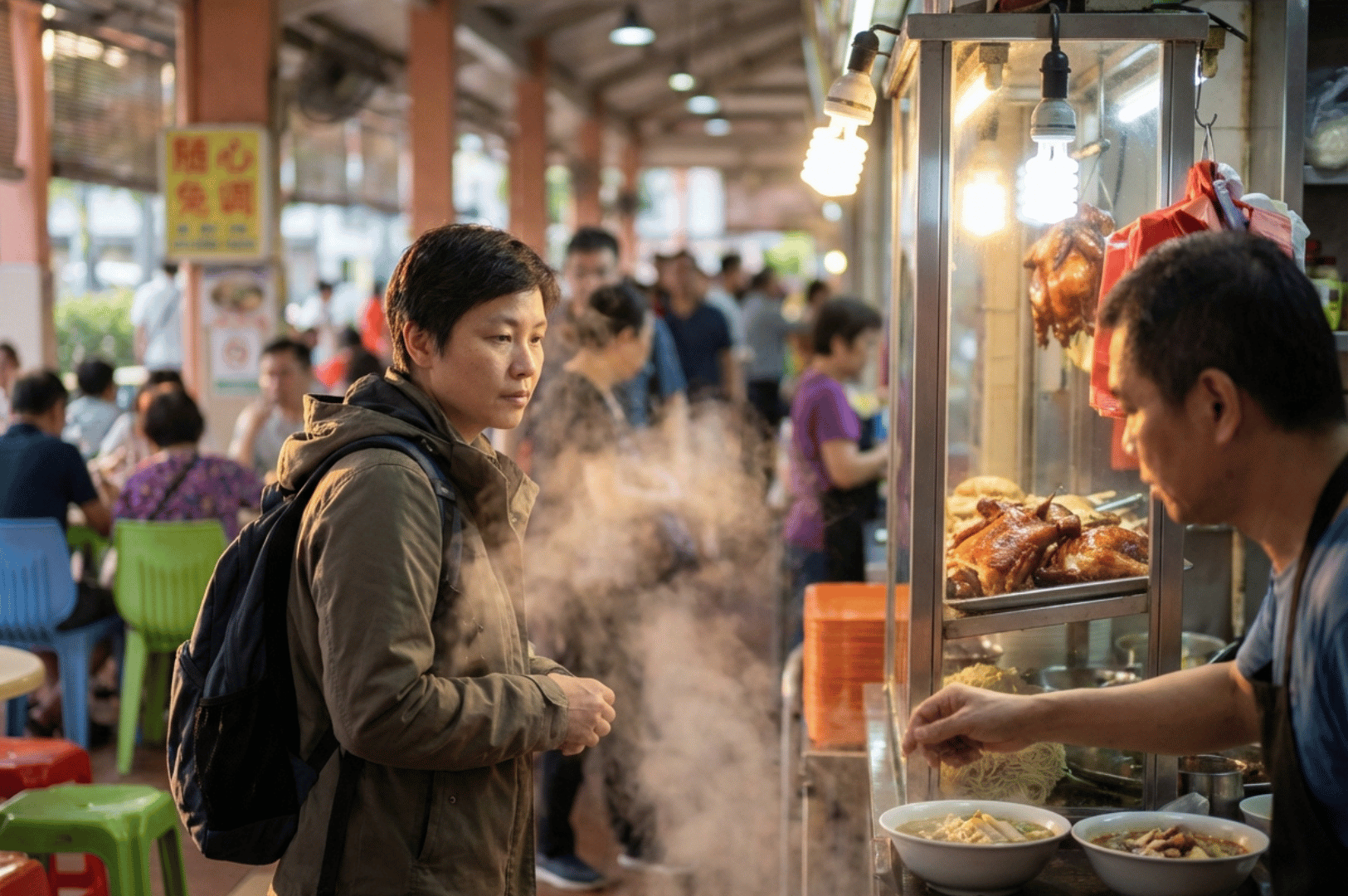
What makes a simple hawker stall worthy of a coveted Michelin star? For me, it’s a blend of heritage, dedication, and an unwavering passion for flavor that truly sets these stalls apart. When the Michelin Guide made its debut in Singapore in 2016, it shook up the culinary world by awarding stars to two humble hawker stalls; a moment that felt like a celebration of the city’s rich street food culture. It was proof that exceptional food isn’t confined to fancy restaurants; it thrives in the lively, bustling hawker centres that are the heart of Singapore’s food scene.
These open-air food courts are the backbone of Singapore's social and culinary life. They are melting pots of culture, where you can find Chinese, Malay, Indian, and Peranakan dishes served side by side. A single hawker centre can be a complete Singapore street and food experience under one roof. These are artisans who have often spent decades perfecting a single dish, passing down recipes through generations. Stalls like Hill Street Tai Hwa Pork Noodle and the original Liao Fan Hong Kong Soya Sauce Chicken Rice & Noodle became overnight global sensations, proving that mastery and passion are the true ingredients of world-class cuisine.
Among the popular dishes in Singapore are rich biryani, fragrant fresh seafood, and the famous chilli crab with its signature chilli sauce. At Newton Hawker Centre, I savored juicy chicken wings glazed in savory sauce, surrounded by locals and tourists alike. Breakfast often means coconut jam toast with tea or kopi sweetened with condensed milk, served alongside hard boiled eggs. Food photography here captures mouth watering food images, from spicy char kway teow to peanut sauce-coated satay. Every dish reflects Singapore’s diverse cultures, offering delicious meals that tell a story, perfect for both tasting and photographing.
Planning Your Bespoke Tasting Tour
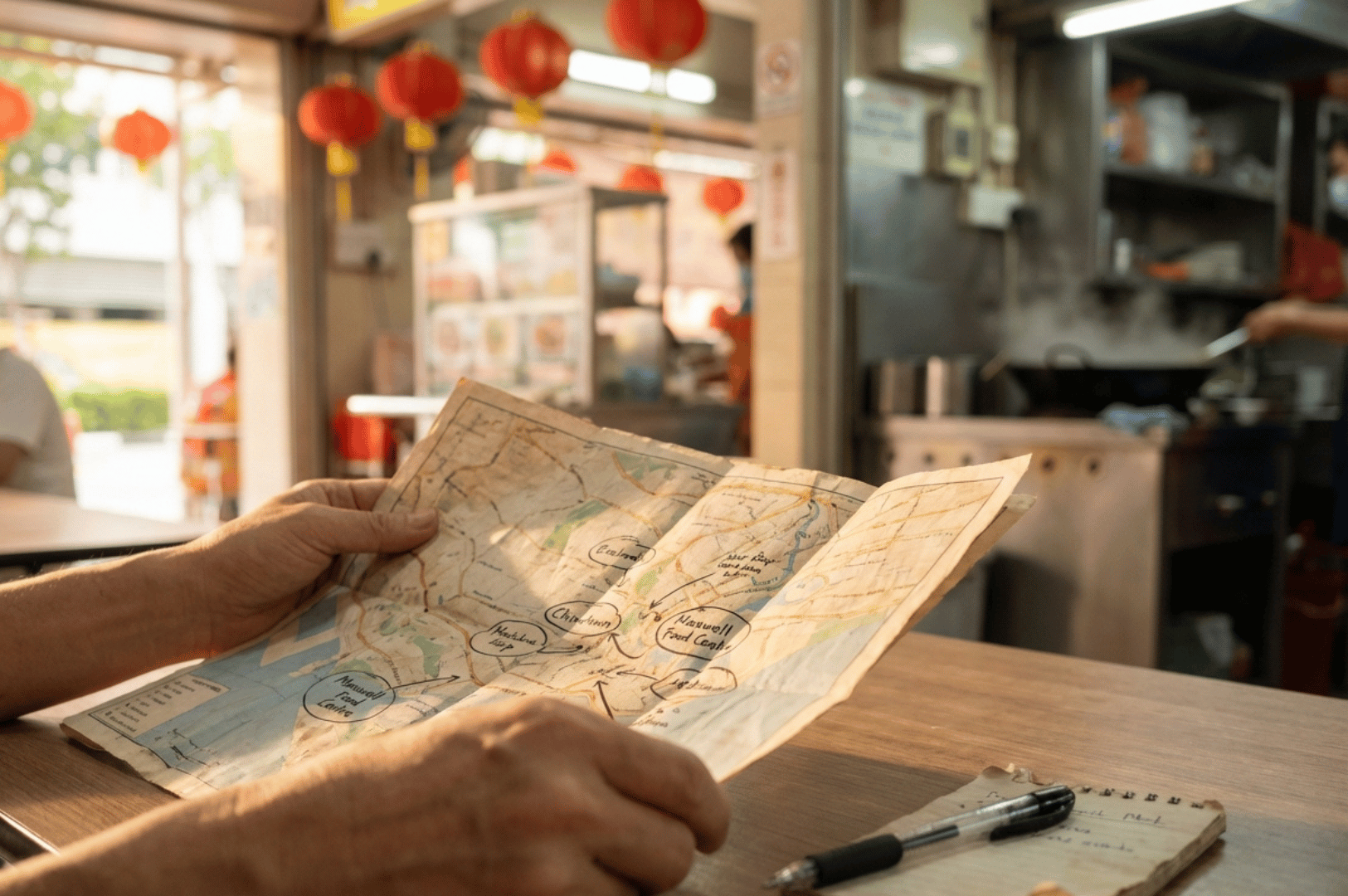
Creating your own Michelin street food tour is all about crafting a journey that speaks to your own tastes and passions. For me, it’s about following the flavors that make my mouth water, exploring lively neighborhoods like Little India that buzz with life, and embracing the challenge of capturing those fleeting moments when the food, the light, and the atmosphere come together perfectly. It’s not just a tour. It’s a personal adventure where every bite and every picture becomes part of your own story.
Customizing Your Itinerary
First, decide on your focus. Do you want to try every Michelin-starred chicken rice or sample popular dishes like chilli crab, laksa, or char kway teow? Research the locations of your chosen stalls and group them by proximity to create a logical route. Don't overschedule. Three to four stops are plenty for a half-day tour, allowing you to savor each meal without feeling rushed.
Timing and Pacing
Timing is everything, especially for food photography. I found that the best times to visit hawker centres are during off-peak hours, typically between 10 AM and 12 PM or from 2 PM to 5 PM. During one morning visit, I enjoyed the calm atmosphere and had plenty of space to set up my shots without the usual lunch rush. I remember savoring each bite while carefully framing my shots, making sure to pace myself. Ordering small portions at each stop allowed me to taste a variety of dishes, from fragrant rice cooked in chicken fat to spicy curry, without getting full too soon.
Essential Photography Gear
Travel light but smart. A versatile mirrorless camera or DSLR with a prime lens, like a 35mm or 50mm, is ideal. These lenses perform well in low light and create a beautiful shallow depth of field, making your dish pop against the background. A small, portable LED light can be a lifesaver for filling in shadows in dimly lit hawker centres. Don't forget extra batteries and memory cards to keep shooting throughout your tour. Capture the vibrant colors of chili crab, the glossy sheen of egg noodles, and the fresh herbs and chopped nuts that garnish many Singaporean street food dishes.
Must-Visit Michelin Street Food Stops
Your tour is your own, but here are a few iconic stops to consider for your itinerary, each offering a unique taste and a distinct photographic opportunity.
1. Hill Street Tai Hwa Pork Noodle
The Dish: Bak Chor Mee. A legendary bowl of egg noodles with minced pork, pork ribs, liver, and fried sole fish, tossed in a potent mixture of black vinegar, chilli sauce, and pork lard. It's a complex explosion of savory, sour, and spicy flavors, with a rich broth that warms the mouth. Food Photography Tip: This dish is all about texture. Get close and use a slightly high angle to capture all the different ingredients in the bowl. The glossy sauce clinging to the noodles is your hero. Look for a perfect spot with good side lighting to highlight the textures of the meat and crispy sole fish.
2. Liao Fan Hong Kong Soya Sauce Chicken Rice & Noodle
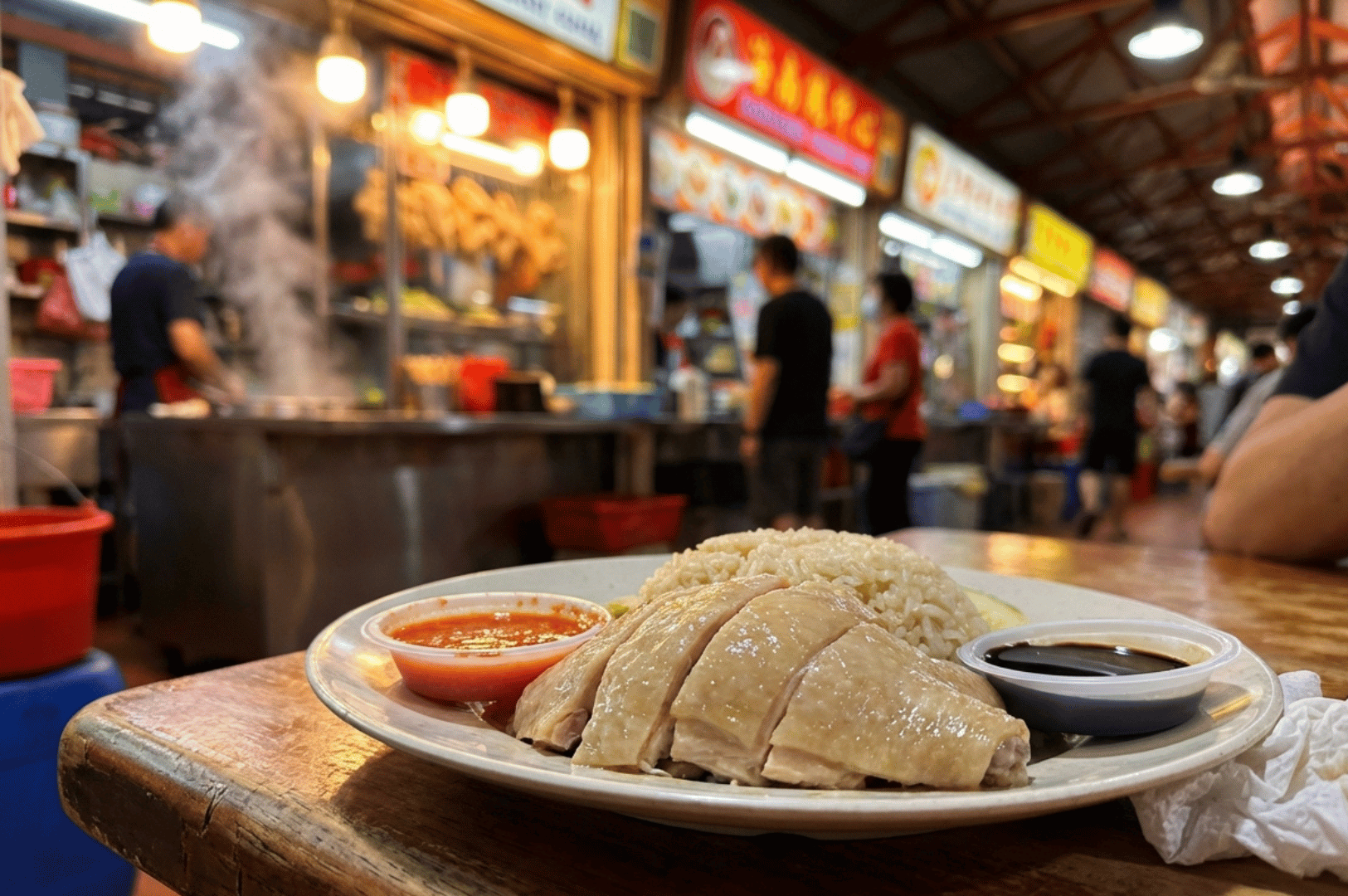
The Dish: Soya Sauce Chicken Rice. The original Michelin-starred hawker stall offers chicken that is unbelievably tender with a flavorful, soy-braised skin. Served with fragrant rice cooked in chicken fat or springy egg noodles, it's a masterclass in simplicity and perfection. Food Photography Tip: The beauty here is in the glistening skin of the chicken. Focus your shot on the chicken, using a shallow depth of field to blur the background. A side angle can capture the steam rising from the plate, adding a sense of freshness and warmth to your image.
3. Tian Tian Hainanese Chicken Rice
The Dish: Hainanese Chicken Rice. A Bib Gourmand recipient and a national icon. The chicken is perfectly poached and silky smooth, served with warm rice cooked in chicken fat, ginger, and pandan leaves, accompanied by chilli sauce and hard boiled eggs on the side. Food Photography Tip: The challenge is making a seemingly simple, pale dish look appetizing. Composition is key.
4. A Noodle Story
The Dish: Singapore-style Ramen. Another Bib Gourmand awardee, this stall offers a unique fusion dish. It combines ramen noodles with Singaporean flavors, featuring char siu, a sous-vide egg, a potato-wrapped prawn, and wontons, all seasoned with fragrant spices. Food Photography Tip: This is a visually stunning bowl. A top-down or "flat lay" shot is perfect for capturing the artful arrangement of all the different components.
Food Photography Techniques for Street Food and Hawker Centers
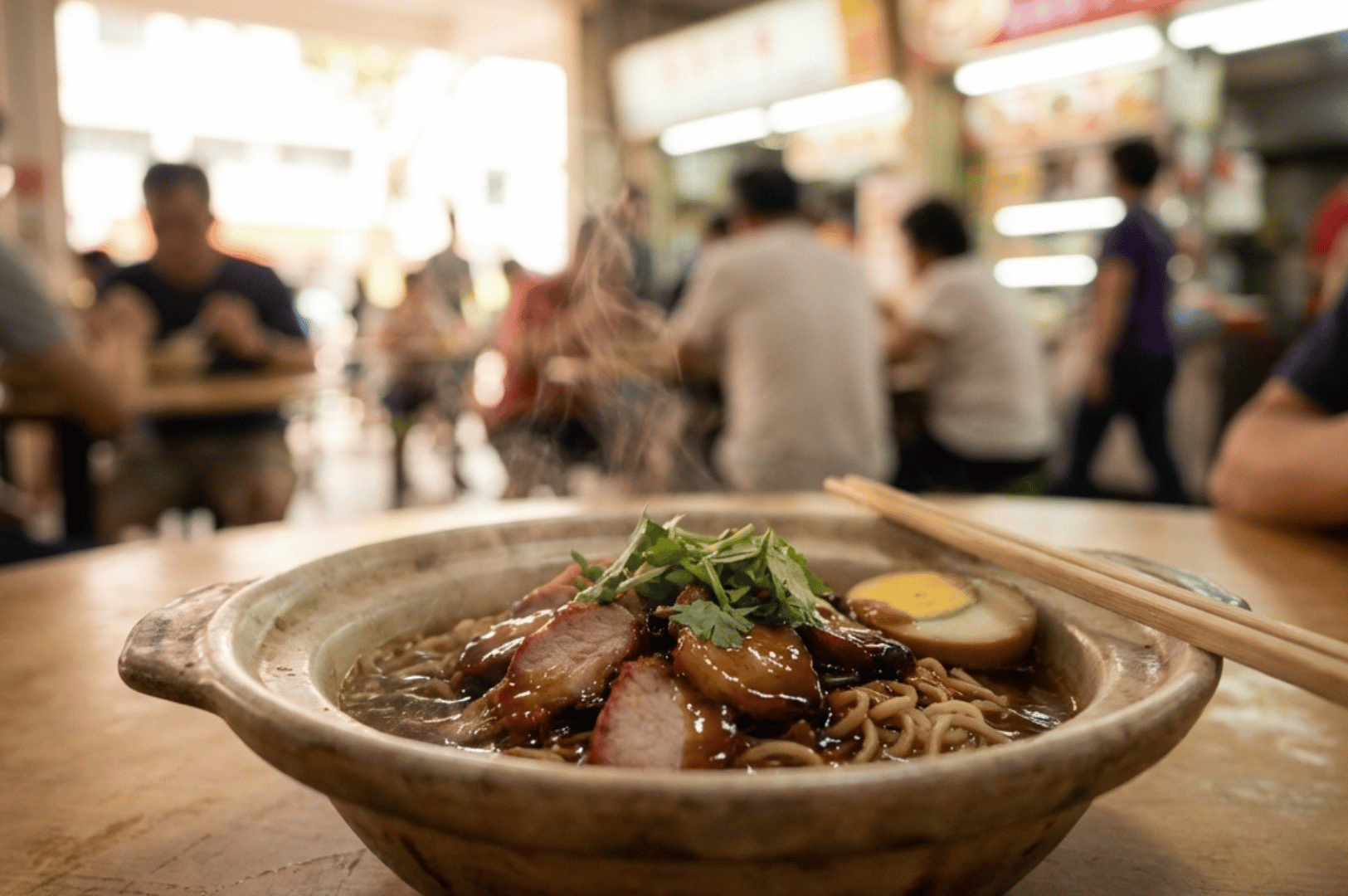
Photographing in a busy hawker centre presents its own set of challenges, but with the right techniques, you can capture stunning images of both the delicious dishes and the vibrant street food in Singapore scene.
Mastering the Light
Lighting in hawker centres is often mixed and unpredictable. Avoid using your camera's pop-up flash, as it creates harsh, unflattering light. Instead, find a seat near a table by an opening where natural light streams in. If the light is too harsh, use a napkin or your hand to diffuse it carefully. In darker corners, use your portable LED light to create soft, directional lighting that mimics natural light, enhancing the colors and textures of the food.
Composition and Storytelling
Good food photography tells a story beyond just the dish. Don't just photograph the food in isolation; include elements that show the experience of eating street food. Capture a pair of chopsticks, a cup of kopi with condensed milk, or a slice of kaya coconut jam toast on the side. Experiment with different angles: a 45-degree angle is classic and shows depth, a flat lay emphasizes patterns and composition, and a straight-on shot can highlight layers in a dish or drink.
Capturing the Atmosphere and Diners
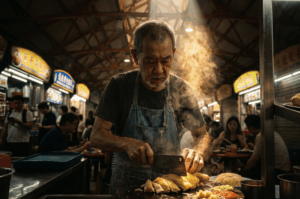
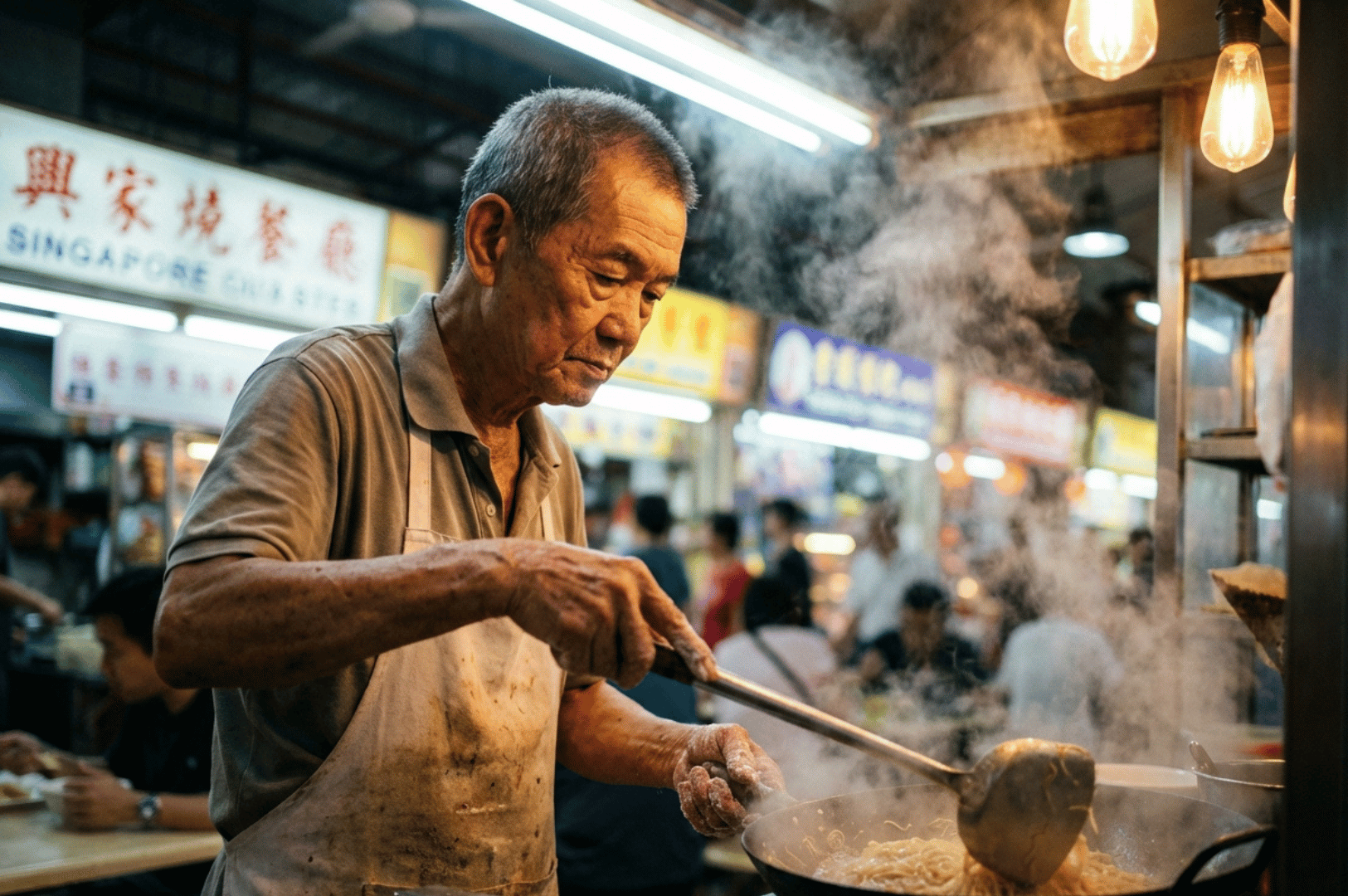
The soul of street food lies with its locals and the diners sitting together to enjoy their meal. Turn your lens away from the plate and capture the hawker in action, the focused expression as they prepare a dish, or the joy on a customer's face. A fast shutter speed can freeze the action of a wok being tossed, while a slower speed can create a sense of motion and energy. Be careful to respect diners' privacy while photographing.
Additional Tips for Breakfast and Rest Moments
Breakfast at hawker centres is one of my favorite times to soak in the local vibe and capture the lively energy of Singapore mornings. Watching locals savor kaya toast with kopi or enjoy a comforting bowl of fragrant soup is a genuine glimpse into daily life here. I love finding those moments when diners pause between bites or share a laugh at the table. These candid scenes bring my photos to life and tell the true story of street food culture in Singapore.
Conclusion
A bespoke Michelin street food tour is an unforgettable way to experience the heart of Singapore's culinary culture. It’s a journey that satisfies not just your appetite but also your creative spirit. The dual pleasure of tasting world-class food and capturing its beauty is a uniquely rewarding experience.
By planning your own route, you can create a personal adventure that connects you directly with the heritage, passion, and artistry behind each incredible dish. So grab your camera, map out your stops, and get ready to taste and photograph your way through the very best street food throughout Singapore. This journey isn’t just about food; it’s about the stories, the people, and the moments that make each bite unforgettable. Your own delicious story is waiting to be told, and I can’t wait for you to experience it firsthand.

Savoring Orchard Yong Tau Fu: Cheap and Cheerful in Cuppage Plaza
June 18, 2026
I’d walked past this stall maybe a dozen times before I finally stopped. Cuppage Plaza isn’t the kind of place you go to be impressed, and that’s exactly why I keep coming back to it…
-
A Letter to the Faces Behind the Counter
June 16, 2026
You are turning over chicken wings when I first notice you. It is just past seven at Old Airport Road Food Centre, and the ceiling fans are pushing warm air down onto the tables. The…
-
How to Photograph Cuppage Plaza Food Without Disturbing the Room
June 15, 2026
The camera flash went off by mistake. It was a small, clumsy decision, but in the narrow, slightly smoky space of Kazu Sumiyaki, it felt much larger than it was. A few heads turned. The…
-
To the Stirring of the Wok in the Early Hours
June 12, 2026
The first sound is not the flame. It is the metal ladle touching the side of the wok, a small, hollow note that carries across the half-awake floor of Hong Lim Market & Food Centre….
-
Cuppage Plaza Food Guide: Japanese Restaurants and Hidden Gems in Singapore’s Little Tokyo
June 11, 2026
I started coming to Cuppage Plaza for the light. The building is old, a little worn at the edges, with narrow staircases and corridors that smell faintly of charcoal and sake by early evening. But…
-
A Note to the Knife That Cuts, But Never Hurries
June 9, 2026
The knife lands softly before it cuts. I hear it before I lift the camera. A low wooden sound, not sharp, not rushed. At Maxwell Food Centre, the lunch crowd is already pressing into the…
-
Wang BBQ Chicken Wing & Satay: Photographing Smoke, Wings, and Skewers at Chomp Chomp Food Centre
June 8, 2026
I reached Chomp Chomp Food Centre at 20 Kensington Park Road, Serangoon Gardens, Singapore on a Tuesday evening around 7pm, just as the place was beginning to thicken with supper energy. The tables were filling…
-
To the Fragrance That Lingers Long After the Meal
June 5, 2026
The evening air at Old Airport Road Food Centre is thick and warm. It wraps around me the moment I step away from the open street. I walk past the bright neon signboards, letting the…
-
Lau Pa Sat Satay Street: Photographing After-Work Satay in Singapore’s CBD.
June 4, 2026
I visited Lau Pa Sat Satay Street on a Tuesday around 7pm, just as Boon Tat Street was changing its identity from a busy traffic route in Singapore’s CBD to a lively alfresco dining venue….
-
A Letter to the Hidden Moments Between the Shots
June 2, 2026
The afternoon heat settles heavily over Tiong Bahru Market. The frantic noise of the lunch hour is completely gone. I sit at a corner table near the open balcony. The green tiles reflect the warm,…