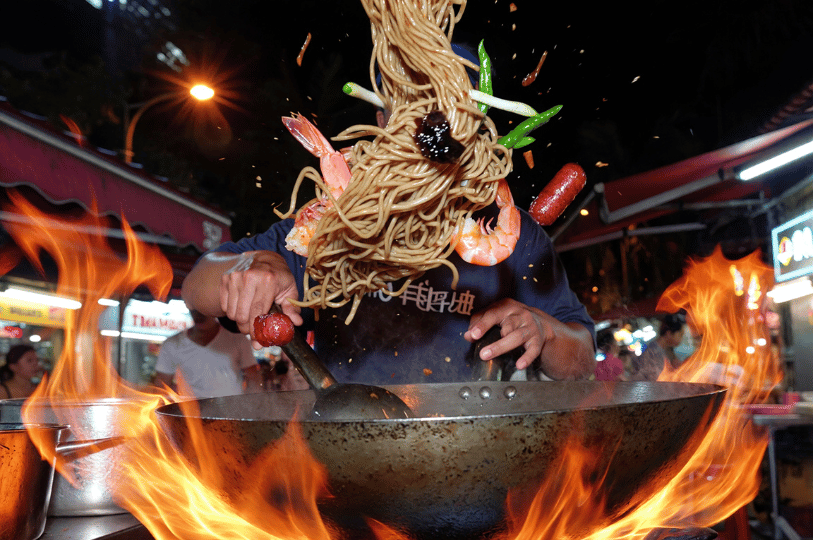
Food is rarely static. It drips, sizzles, steams, and crumbles. It is poured, flipped, chopped, and shared. Yet, so often, we see food in photography presented as a perfectly still, lifeless object on a plate. While a beautifully composed still life has its place, capturing motion can elevate an image from a simple document into a dynamic story. It injects life, energy, and a sense of immediacy that invites the viewer to experience the dish, not just observe it. The tease of motion is a powerful tool that can transform a good food photograph into an unforgettable one, making the viewer feel the heat, taste the flavor, and hear the sizzle.
This guide explores the art of capturing movement in culinary photography for a food photographer. We will delve into specific techniques, camera settings, and creative approaches to help you bring a sense of life and energy to your images. For anyone passionate about the intersection of food and photography, learning to master motion is a game-changing skill.
Techniques for Capturing Culinary Motion for Food Photographers
Introducing movement into your food photography can be done in countless ways. It is about identifying the inherent action in a dish or creating it yourself to tell a more compelling story and add visual appeal.
The Allure of Steam and Smoke
Steam is one of the most evocative forms of motion in food photos. It instantly signals freshness and warmth, creating a powerful sensory cue.
- How to Capture It: Backlighting is your best friend. Position your light source behind your subject, so the light passes through the steam, making it glow. A dark background will help the steam stand out and create interesting textures. Use a continuous shooting mode to capture multiple frames, as the shape and density of steam change in milliseconds.
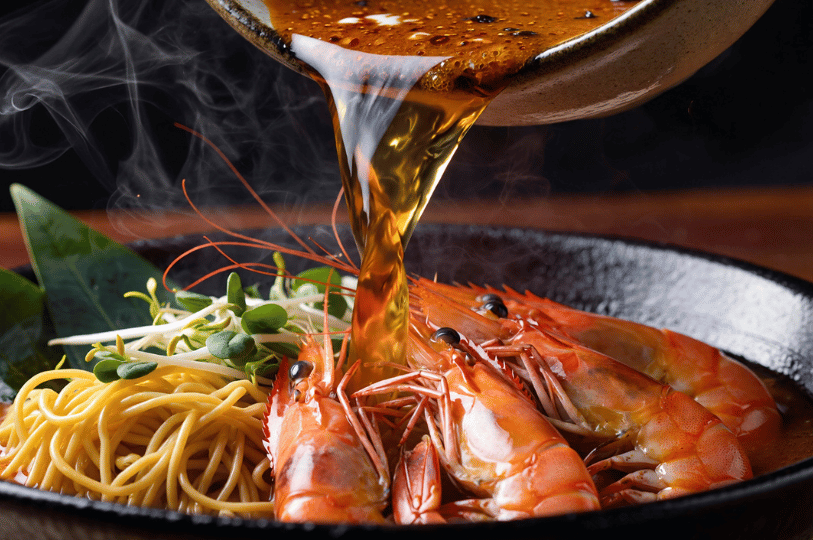
The Dynamic Pour
A pouring shot adds a sense of action and transformation. Think of maple syrup cascading onto pancakes, a rich sauce being drizzled over a perfectly plated dish, or tea being poured into a cup.
- How to Capture It: This requires a fast shutter speed (typically 1/250s or faster) to freeze the liquid in mid-air. You will likely need a tripod to prevent camera shake while you (or an assistant) perform the pour. Focus on the point where the liquid will make contact to ensure your shot is sharp and visually appealing.
The Dramatic Splash
Splash photography is energetic and eye-catching. A strawberry dropping into a glass of milk or a lime wedge splashing into a cocktail creates a moment of high drama.
- How to Capture It: This technique demands an even faster shutter speed (1/1000s or faster) and often requires off-camera flash or studio lights to freeze the action completely. It takes a lot of trial and error, so be prepared to take many shots to get the perfect shot for your food blog or portfolio.
The Human Element in Action
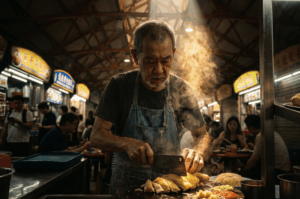
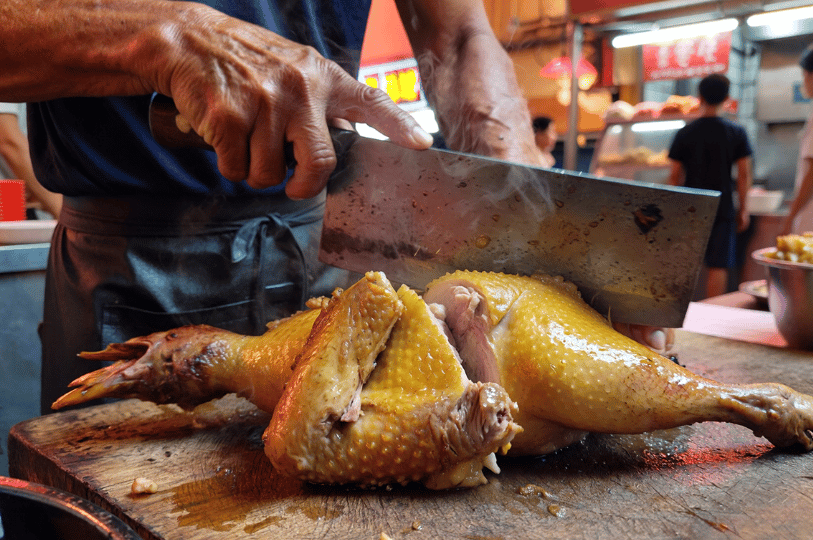
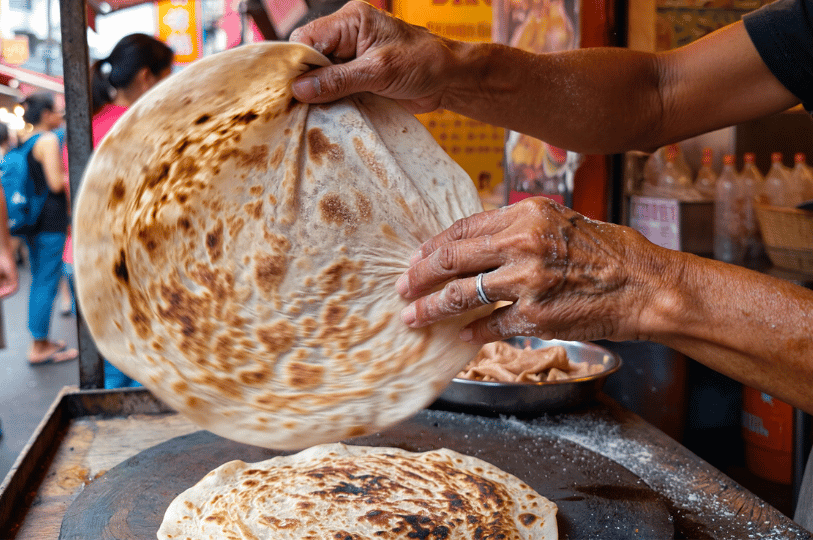
The most authentic motion often comes from people interacting with food. The hands of a chef dusting flour (sometimes soaked in cold water to keep fresh), a vendor flipping a prata, or someone taking the first bite of a dish all add a powerful storytelling element.
- How to Capture It: This is where actual photography meets photojournalism. Anticipate the action. Watch the cook’s movements and be ready to capture the peak moment. A slightly slower shutter speed (like 1/60s or 1/125s) can create a subtle motion blur in the hands while keeping the food itself sharp, adding a dynamic feel without losing the main focus.
Using your camera's manual mode and shooting in raw format will give you greater control over white balance and exposure, essential for capturing stunning images with enough light, especially in low light situations or indoor lighting.
In post production, using photo editing software can help your images pop by adjusting contrast, highlights, shadows, and background blur, enhancing the overall food photography skills and making your photos stand out as professional photographers do.
Mastering these techniques will make a huge difference in the quality of your food photos and help you develop your own style that is both visually appealing and technically sound.
Equipment and Camera Settings for Motion in Food Photography
Capturing motion effectively relies on the right technical settings. Mastering the exposure triangle is key to achieving good food photography with stunning images.
Shutter Speed is King
Shutter speed is the most critical setting for controlling motion and ensuring your food photos pop.
- To Freeze Motion: Use a fast shutter speed. For a pour, start with 1/250s. For a splash or fast-moving action, increase up to 1/2000s. This helps capture the main subject sharply and creates great photos with eye-catching detail.
- To Create Motion Blur: Use a slow shutter speed. To capture the blur of a chef’s hands while keeping other elements sharp, try 1/30s or slower. This requires a tripod or steady hand to avoid camera shake and maintain visual appeal.
Aperture, Camera Angle, and Depth of Field
Your aperture (f-stop) affects how much of your image is in focus and contributes to the depth of field. A wide aperture (like f/2.8) creates a more shallow depth and isolates the moving subject from busy backgrounds, enhancing the unique style of your shots. A narrower aperture (like f/8) increases focus area but requires more light or a higher ISO. Choosing the same angle consistently can help develop a signature look.
Artificial Lighting and Light Source for Motion
Fast shutter speeds require more light to maintain exposure.
- Natural Light: On a sunny day, position your setup near a large window with a white sheet to diffuse light evenly. Natural light is the best friend for beautiful images, especially when shooting shiny surfaces like sauces or glistening salad bowls. Increasing ISO may be necessary to compensate for fast shutter speeds.
- Artificial Light (Flash/Strobes): For freezing very fast motion like splashes, flash or studio lights are essential. The short duration of the flash burst freezes action better than shutter speed alone, helping you achieve great photos even in dark areas or low light situations.
By combining these techniques with proper camera settings and an understanding of negative space and composition, you can elevate your food photography skills and create visually appealing images that stand out in your food blog or portfolio.
Practical Tips for Food Shoots and Street Food Environments
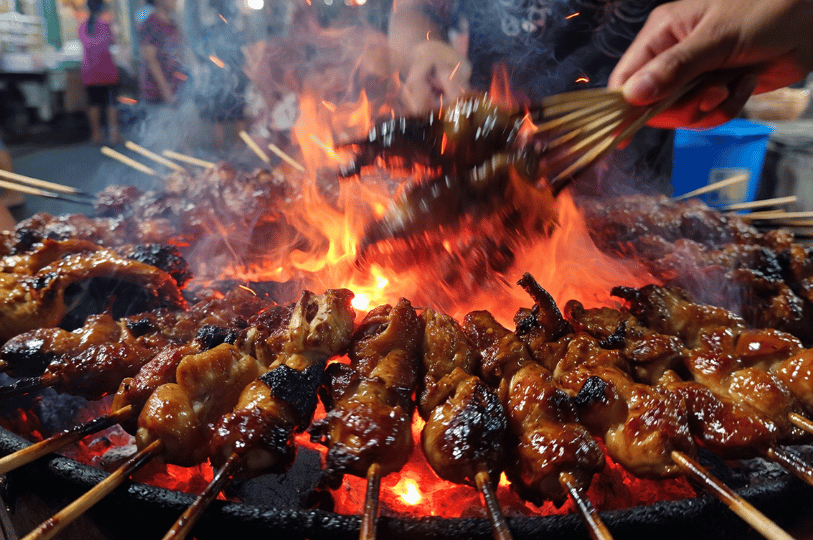
Capturing motion in a controlled studio is one thing; doing it in a bustling street food stall is another.
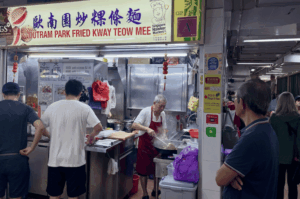
- Observe First, Shoot Later: Spend time watching the vendor. Learn their rhythm and recurring movements. This will help you anticipate the perfect moment to shoot and capture stunning images that tell a compelling story in your food blog.
- Build a Rapport: A friendly smile and a brief chat can be a saving grace. Ask for permission to shoot. Many vendors are proud of their craft and will be happy to let you photograph them. You might even be able to ask them to repeat an action for your shot, helping you find the perfect angle.
- Be Quick and Unobtrusive: Street food stalls are busy workplaces. Use a small camera setup if possible. Be aware of your surroundings and make sure you are not in the way of the vendor or their customers. This approach helps reduce camera shake and ensures you get great photos without disruption.
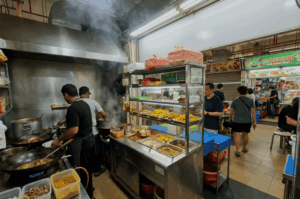
- Embrace the Environment: The beauty of street food in photography is the context. Include the chaotic background, the steam-filled air, and the character of the stall in your images to add more depth and visual appeal. Using natural light and incorporating negative space can further enhance your shots.
By mastering these techniques in challenging environments, you will improve your food photography skills and develop a unique style that stands out in the food photography community.
To Move or Not to Move: Choosing Your Approach in Food Styling
Motion is a powerful tool in food in photography, but it is not always the right choice. A key skill for any great photographer is knowing when to introduce movement and when to let stillness speak for itself.
- Use Motion to Convey: Energy, freshness, action, and the process of creation. It works especially well for dishes that are served hot, made fresh to order, or involve a dynamic element like a sauce or drink. Incorporating motion in your food photos adds visual appeal and tells a compelling story.
- Use Stillness to Convey: Elegance, balance, intricate detail, and calm. A beautifully plated dish or a perfectly plated dessert with complex components may be better served by a still, carefully composed shot. Vertical shots or an overhead shot can emphasize the precise arrangement and the main focus of such dishes.
Ultimately, the choice depends on the story you want to tell in your food shoot. What is the most important quality of the dish? Is it the chef’s dynamic skill, or is it the quiet beauty of the finished product? Understanding this important aspect will help you decide the best camera angle, depth of field, and shutter speed to use for stunning images that make your food photos stand out.
Food Photography Tips: Overcoming Common Challenges
Shooting motion in food photography can be challenging. Here are common issues and solutions to improve your food photos.
- Blurry Photos: Often caused by slow shutter speed. Increase shutter speed or add more light. Use a tripod to reduce camera shake in low light, or practice steady hand-holding.
- Missed Moments: Use burst mode to capture rapid sequences, increasing chances of catching peak action for stunning food blog or portfolio images.
- Poor Lighting: Street food stalls and indoor lighting may be uneven. Raise ISO despite some noise, as a sharp photo is better than a blurry one. Portable LED or artificial lighting helps fill shadows and allows faster shutter speeds.
Mastering these challenges boosts your food photography skills. Use manual mode and burst shooting, which are extremely user friendly. Incorporate negative space and shallow depth of field to isolate your main subject and add depth, making your food photos pop with unique style.
Conclusion: Start the Action
Learning to capture motion is a transformative step in your journey with food in photography. It pushes you to be a more observant, technically skilled, and creative storyteller. It encourages you to see food not as a static object, but as the centerpiece of a living, breathing moment.
The best way to learn is by doing. Go to your local market or a favorite street food vendor. Start by just observing. See the steam rising from a bowl of noodles, the flick of a wrist as a vendor adds spices, the drizzle of sauce on a finished dish. Then, pick up your camera and try to capture it. Do not be afraid to experiment, to fail, and to try again. The tease of motion is waiting to be caught, ready to bring your street food photographer self to life.

A Letter to the Faces Behind the Counter
June 16, 2026
You are turning over chicken wings when I first notice you. It is just past seven at Old Airport Road Food Centre, and the ceiling fans are pushing warm air down onto the tables. The…
-
How to Photograph Cuppage Plaza Food Without Disturbing the Room
June 15, 2026
The camera flash went off by mistake. It was a small, clumsy decision, but in the narrow, slightly smoky space of Kazu Sumiyaki, it felt much larger than it was. A few heads turned. The…
-
To the Stirring of the Wok in the Early Hours
June 12, 2026
The first sound is not the flame. It is the metal ladle touching the side of the wok, a small, hollow note that carries across the half-awake floor of Hong Lim Market & Food Centre….
-
Cuppage Plaza Food Guide: Japanese Restaurants and Hidden Gems in Singapore’s Little Tokyo
June 11, 2026
I started coming to Cuppage Plaza for the light. The building is old, a little worn at the edges, with narrow staircases and corridors that smell faintly of charcoal and sake by early evening. But…
-
A Note to the Knife That Cuts, But Never Hurries
June 9, 2026
The knife lands softly before it cuts. I hear it before I lift the camera. A low wooden sound, not sharp, not rushed. At Maxwell Food Centre, the lunch crowd is already pressing into the…
-
Wang BBQ Chicken Wing & Satay: Photographing Smoke, Wings, and Skewers at Chomp Chomp Food Centre
June 8, 2026
I reached Chomp Chomp Food Centre at 20 Kensington Park Road, Serangoon Gardens, Singapore on a Tuesday evening around 7pm, just as the place was beginning to thicken with supper energy. The tables were filling…
-
To the Fragrance That Lingers Long After the Meal
June 5, 2026
The evening air at Old Airport Road Food Centre is thick and warm. It wraps around me the moment I step away from the open street. I walk past the bright neon signboards, letting the…
-
Lau Pa Sat Satay Street: Photographing After-Work Satay in Singapore’s CBD.
June 4, 2026
I visited Lau Pa Sat Satay Street on a Tuesday around 7pm, just as Boon Tat Street was changing its identity from a busy traffic route in Singapore’s CBD to a lively alfresco dining venue….
-
A Letter to the Hidden Moments Between the Shots
June 2, 2026
The afternoon heat settles heavily over Tiong Bahru Market. The frantic noise of the lunch hour is completely gone. I sit at a corner table near the open balcony. The green tiles reflect the warm,…
-
Izakaya Singapore: More Than Just After-Work Spots
June 1, 2026
When we talk about izakayas in Singapore, we often reduce them to simple after work drinks spots. We picture loud rooms where tired professionals go to drink cold beer and eat cheap bar snacks. But…