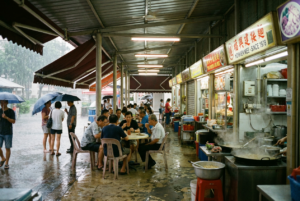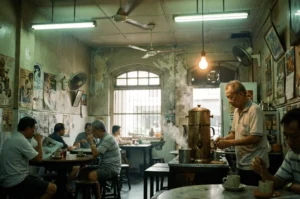
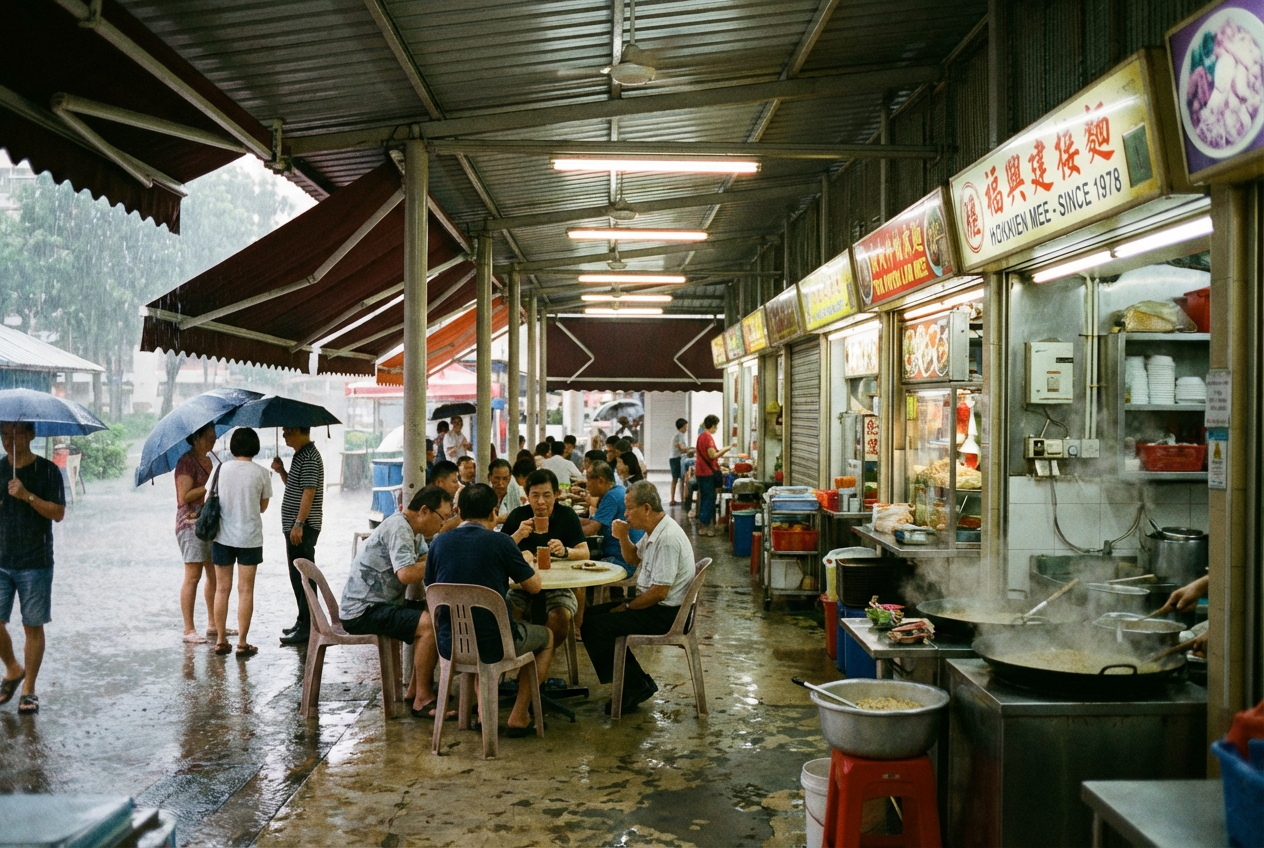
It was a rainy Tuesday afternoon about seven years ago, and I was just a guy with a camera looking for shelter. I ducked into an old, dimly lit hawker center in Toa Payoh to escape the sudden downpour. The air was thick with humidity and the sharp, metallic scent of wet asphalt. But underneath that, there was a deep, intoxicating aroma of dark soy sauce, star anise, and roasted garlic.
I followed my nose to a corner stall with a faded yellow signboard. An elderly uncle was standing behind the glass, his white singlet clinging to his back from the intense heat. I noticed his hands right away. They were scarred and stained, the hands of someone who had spent a lifetime perfecting a single craft.
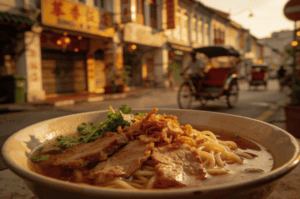
I ordered the Braised Duck Rice. The rhythmic thwack of his heavy steel cleaver against the deeply grooved wooden chopping block echoed through the quiet afternoon. When he handed me the plate, the warmth radiated through the thin plastic. The overhead fan was barely working. I wiped sweat from my forehead as I ate, but I didn't care.
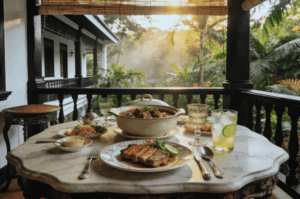
The meat was glistening under the harsh fluorescent lights, bathed in a thick, dark gravy. The first bite was an absolute revelation. The duck was incredibly tender, yielding instantly, while the herbal, savory notes of the braising liquid coated my mouth with rich umami. It tasted like pure history.
I realized right then that I wasn't just eating a cheap lunch. I was consuming decades of unwavering dedication. That was the exact moment the Street Food Photographer project went from a vague idea to a lifelong mission. I felt a sudden, urgent need to capture the story of this uncle and his braised duck.
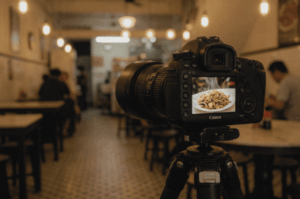
I asked if I could take his portrait. He gave a shy, hesitant nod, wiping his hands on a towel. When I looked through my viewfinder, I saw the quiet dignity of Singapore’s culinary heritage staring back at me. I knew I had to tell his story.
Our hawker stalls are far more than just convenient places to grab a quick, affordable meal. They are living, breathing archives of our culture. But as I look around today, I see empty stalls and aging masters with no one to pass the torch to. The physical spaces are being renovated and modernized, but the human soul of these places is slowly slipping away.
If you’re visiting a traditional hawker center, try to grab a table right next to the stalls. It’s definitely hotter and noisier, but it’s where you truly feel the pulse of the place. You'll hear the sizzle of the woks and see the quiet focus of the artisans.
We need to do more than just eat our favorite dishes. We need to truly see the people behind the plates. We must document their stories, honor their craft, and preserve this beautiful, gritty heritage before the lights go out on these generational stalls for good.

The First Hawker Stall That Changed Everything
March 18, 2026
It was a rainy Tuesday afternoon about seven years ago, and I was just a guy with a camera looking for shelter. I ducked into an old, dimly lit hawker center in Toa Payoh to…

The Best Singapore Breakfast Spots: Lighting, Angles & Visual Stories for Singapore Foodies
March 16, 2026
After years of chasing the perfect breakfast shot all over Singapore, I’ve noticed some venues aren’t just great for eating. They’re inspiring playgrounds for food photography, beloved by both locals and Singapore foodies alike. Whether…
-
From Empire to Plate: Process-Focused Colonial Photography SG Series
March 13, 2026
The story of Singapore cuisine is impossible to tell without acknowledging its colonial past. As a strategic port for the British Empire, Singapore became a magnet for a diverse range of people and products. From…
-
Translating Taste into Frames: Why I Capture Food
March 11, 2026
I fell in love with street food photography in Singapore, somewhere between the steam of a hawker stall and the click of my shutter. It wasn’t planned. I was hungry, wandering, half-lost, when a bowl of laksa stopped me cold. The broth glowed…
-
Maximizing Colonial Heritage: Efficient SG Photography Routes
March 9, 2026
The morning light hits the peeling plaster of a shophouse five-foot way differently than it hits a glass skyscraper. It is softer, more textured, and it seems to carry the weight of history. For a…
-
Period Restaurant Lighting in Photo Shoot in Singapore Locations
March 6, 2026
The air in a heritage Hainanese coffeeshop is thick with more than just the aroma of kaya toast and freshly brewed kopi. It is thick with a particular quality of light. A mix of harsh,…
-
Imperial Diversity Through Photo Shoot Singapore Projects
March 2, 2026
When I set up my tripod in a bustling kopitiam or a quiet heritage restaurant, I am constantly reminded that I am not just photographing a meal. I am photographing a map. Every photo shoot…
-
Historic Flavors Shoot Singapore: Post-Processing for Period Authenticity
February 27, 2026
When I look through the viewfinder at a plate of heritage kueh or a steaming bowl of rickshaw noodles, I am not just capturing food; I am framing a memory. The challenge for any documentary…
-
Colonial Cuisine Photoshoot: Styling Singapore’s Historic Flavors
February 23, 2026
When I first embarked on a photoshoot focusing on Singapore’s colonial cuisine, I didn’t realize how deeply food could connect us to history. It wasn’t just about snapping pictures of dishes; it was about capturing…
-
Coal, Fire, and Memory: A Singapore Food Blogger Revisits Tanjong Pagar’s Industrial Kitchens
February 20, 2026
It had been a while since I set a day to wander through the back lanes of Tanjong Pagar. When I decided to come back to the place left me star-struck, not by the polished…