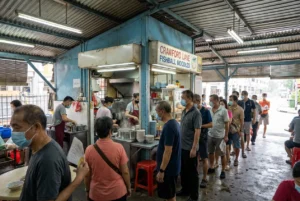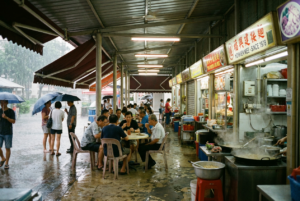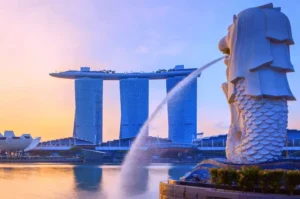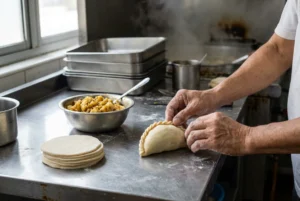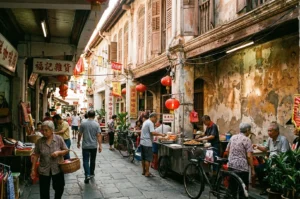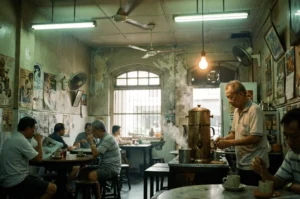
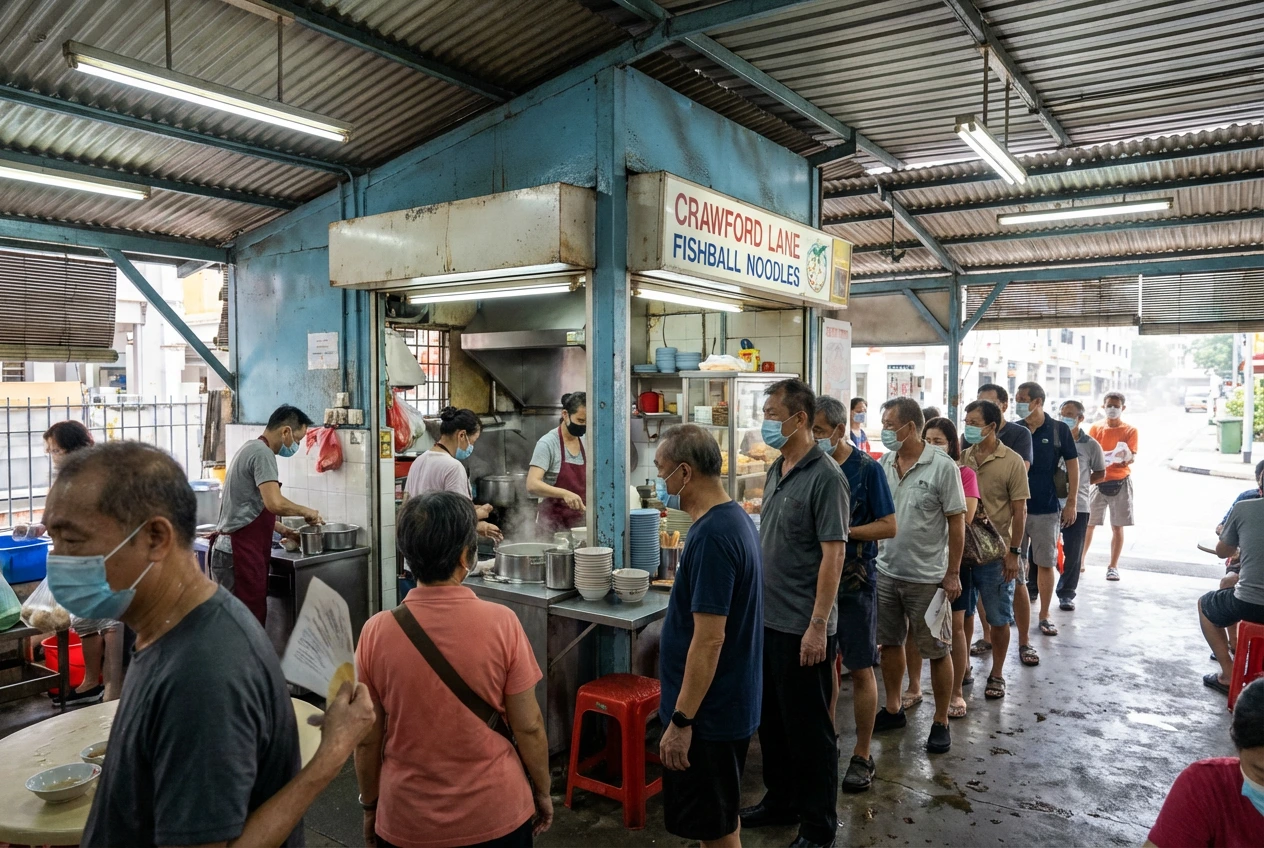
It was a Tuesday afternoon, just before 3 PM, when the heat in the Crawford Lane food centre felt thick enough to touch. The usual lunch crowd had thinned, but a resolute queue still snaked from a stall front painted in humble blue and white. This was the line for Hill Street Tai Hwa Pork Noodle, a pilgrimage I’d made many times, not just as a diner, but as a photographer trying to understand the soul of Singapore’s culinary heritage.
The air hummed with a quiet reverence. There was no loud chatter, only the rhythmic clang of a metal ladle against a porcelain bowl, the hiss of rice noodles being plunged into boiling water, and the sharp, vinegary aroma of black vinegar hitting hot lard. This wasn't just a queue for food; it was a waiting room for a piece of history, a masterclass in motion performed by true street food artisans.
Bak Chor Mee: The Beloved Minced Pork Noodles
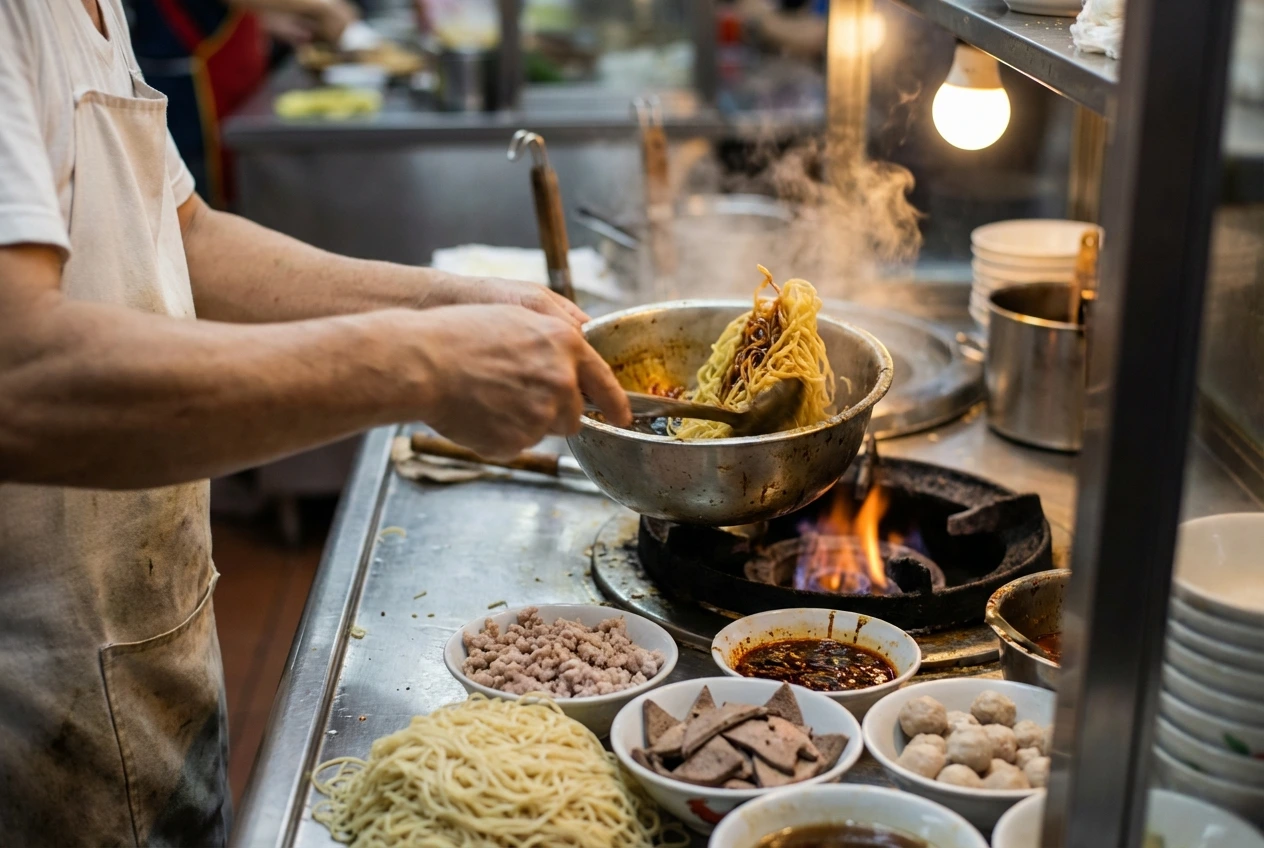
Bak chor mee, or minced pork noodles, is a quintessential Singapore dish, and Hill Street Tai Hwa Pork Noodle remains an iconic stall serving this beloved meal. The dish features springy noodles tossed in a tangy sauce of vinegar and chilli, topped with minced pork, pork slices, liver, fish, and meatballs. It’s often enjoyed dry but can also be served with a bowl of savory soup on the side, making it a versatile favorite among locals and visitors.
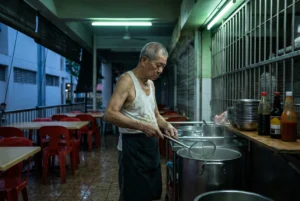
I finally reached the front, placing my order for the classic Bak Chor Mee (Dry), which starts at $6. Watching the second-generation owner, Mr. Tang Chay Seng, at work is mesmerizing. His hands move with a fluid economy born from decades of repetition. It’s a dance of precision: a splash of vinegar, a spoonful of chili paste, a swirl of lard, all portioned by feel, not by measurement.
Each component is treated with purpose. He separates the noodles, ensuring they don’t clump. He blanches the pork slices, liver, and meatballs just until they are perfectly tender, a matter of seconds. Then comes the final assembly, a beautiful, controlled chaos of ingredients brought together in a bowl that has nourished generations of Singapore foodies.
For those eager to capture the vibrant flavors and stories behind every dish, check out A First-Timer's Guide to Food Photography in Singapore, your perfect companion to turning every bite into a picture-perfect memory.
The First Bite of Mr Tang's Legacy
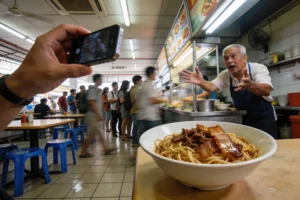
When my bowl arrived, it felt heavier than its physical weight. It carried the legacy of a family that has been perfecting this single dish since the 1930s. The visual appeal is immediate: springy noodles glistening with a dark, savory sauce, topped with tender pork slices, crisp fried sole fish, minced pork, delicate wontons, and a scattering of preserved vegetables. The colors are earthy and honest.
The first bite is an explosion of flavor and texture. The acidity of the black vinegar cuts through the richness of the lard, while the chili adds a slow, building heat. The noodles have a perfect, al dente bite. The pork liver, which can so easily become tough, was creamy and tender. It’s a masterfully balanced dish where every single element plays a crucial role. This is the power of traditional techniques.
Char Kway Teow and Fried Mee: A Foodies’ Favorite Flat Rice Noodles and More
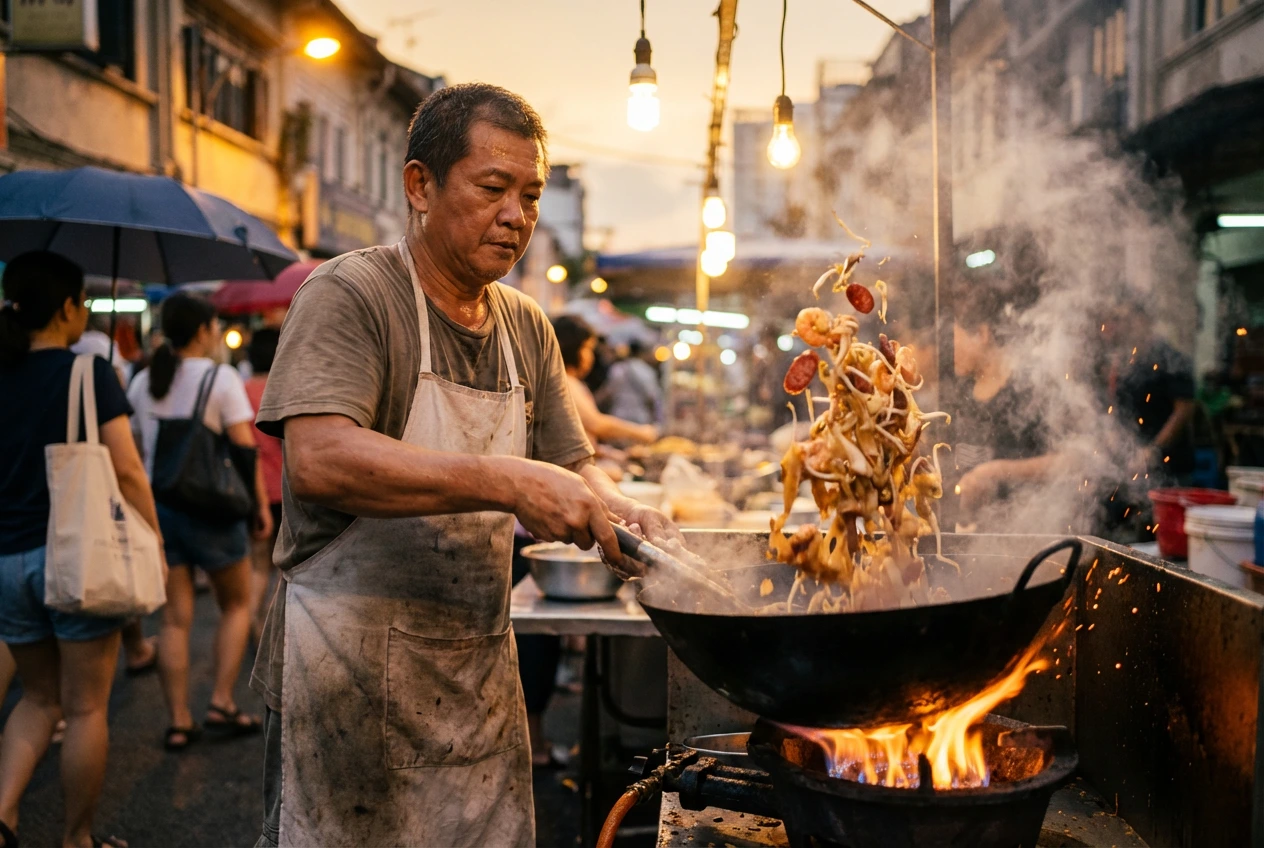
Singapore treasure dishes like char kway teow and fried mee, both beloved for their savory flavors and satisfying textures. Char kway teow, made from flat rice noodles stir-fried with prawns, eggs, Chinese sausage, and bean sprouts, is a staple at many hawker stalls. Similarly, fried mee, often referring to fried yellow noodles or hokkien mee, combines noodles with prawns, squid, and a flavorful broth or sauce. These dishes represent the vibrant street food culture that defines Singapore’s culinary scene.
The story of Tai Hwa begins with Mr. Tang’s father, who started selling these minced pork noodles from a pushcart along Hill Street. This dish, bak chor mee, is a cornerstone of Teochew cuisine and a fundamental part of Singapore food culture. It’s a dish born from frugality and ingenuity, using simple ingredients to create something profoundly complex and satisfying.
The Fruit of Perfecting Food for The Masses
When Tai Hwa was awarded a Michelin star in 2016, it was a monumental moment. It validated what locals had known for decades: that food served in a humble hawker centre could stand shoulder-to-shoulder with the finest restaurants in the world. But the star didn’t change the process. The queue got longer, but the dedication to craftsmanship remained unwavering.
I visited again on a Friday morning around 10 AM, hoping to beat the lunch rush. The wait was still over an hour. The line was a cross-section of Singapore: office workers in crisp shirts, uncles in singlets, tourists clutching guidebooks, and young students. We were all united by a shared patience, a collective understanding that what we were waiting for was worth it.
Whether it’s a Saturday or a quiet Sunday, the queues at popular stalls like Hill Street Tai Hwa Pork Noodle in Crawford Lane reflect the enduring craving for authentic, high-quality street food in Singapore.
Photographing Claypot Rice, Jian Bo Shui Kheh, and Other Icons in The Right (Yet Respectful Manner)
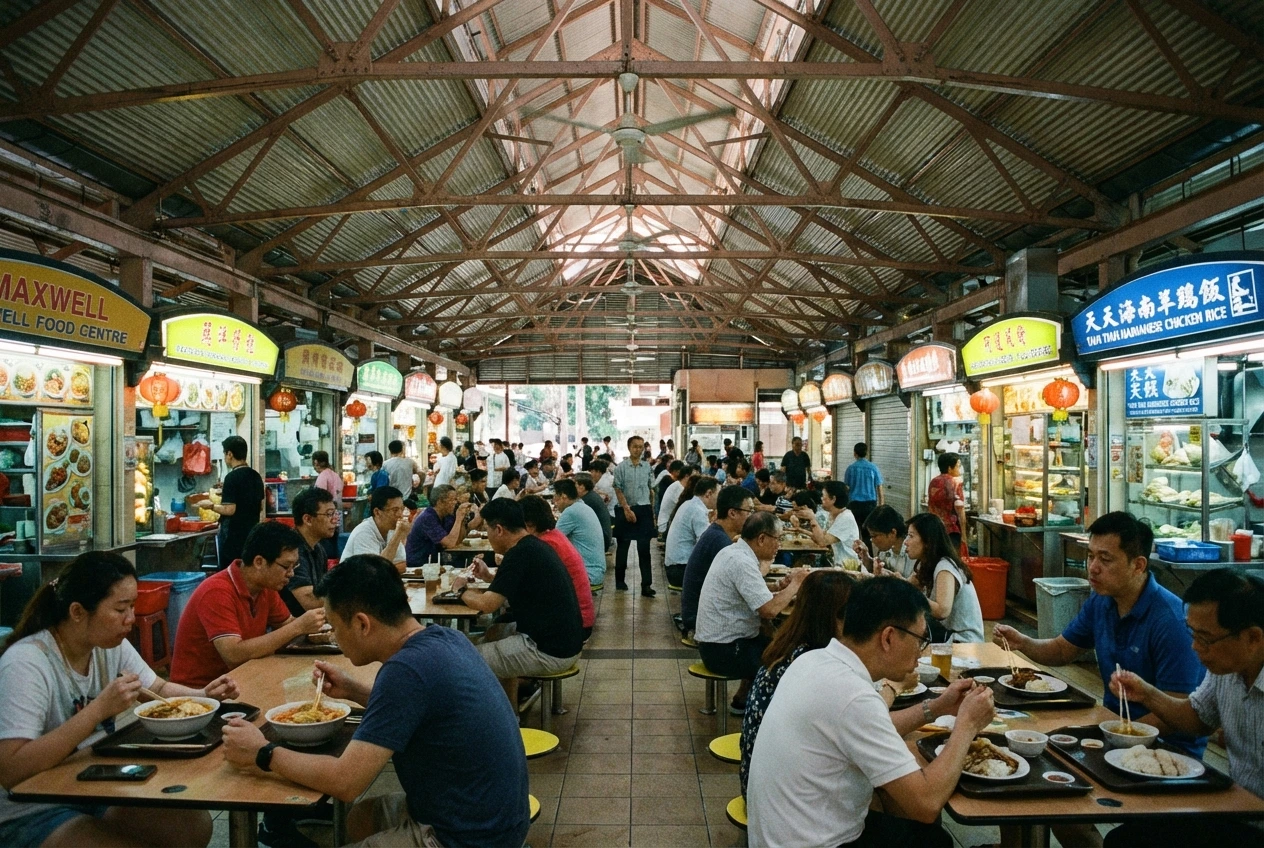
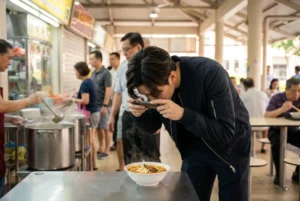
Photographing at Tai Hwa requires a different mindset. It’s not about finding the perfect flat lay. It’s about capturing the human element. It’s in the focused expression on Mr. Tang’s face, the steam rising from the blanching station, the worn texture of the wooden chopsticks, and the look of pure satisfaction on a diner’s face as they take their first bite.
My practical tip for anyone wanting to shoot here is to be patient and respectful. Find a table with a good vantage point, order your food, and observe. Use a longer lens if you have one to capture details without being intrusive. The best shots happen in the moments between, the brief pause as a bowl is handed over, the swirl of sauce in the ladle.
Food Centre Culture: The Likes of Airport Road Food Centre as The Heartbeat of Singapore
Food centres across Singapore, such as the famous Maxwell Food Centreand Chinatown Complex, serve as hubs where locals and tourists alike gather to enjoy authentic hawker fare. These bustling venues offer a wide variety of dishes, from steamed chicken rice to laksa, and are essential to the city’s food heritage. The atmosphere is lively, with the aroma of chilli, vinegar, and spices filling the air, and the chatter of customers eagerly anticipating their meals.
This shared experience is part of what makes hawker culture so special. You’re not just a customer; you’re part of a community. You see regulars greet Mr. Tang with a familiar nod. You hear snippets of conversation about the weather, politics, and family. The coffee shop itself, with its mismatched chairs and whirring fans, is the stage for these daily rituals.
With every perfectly cooked bowl, he ensures that this piece of our culinary heritage doesn’t just survive, but thrives. In a rapidly changing city, that dedication is more than just admirable. It’s essential.
The Strive for More Heritage Food: Hokkien Mee, Jian Bo Shui Khueh, Braised Duck Rice, and Other Beloved Dishes
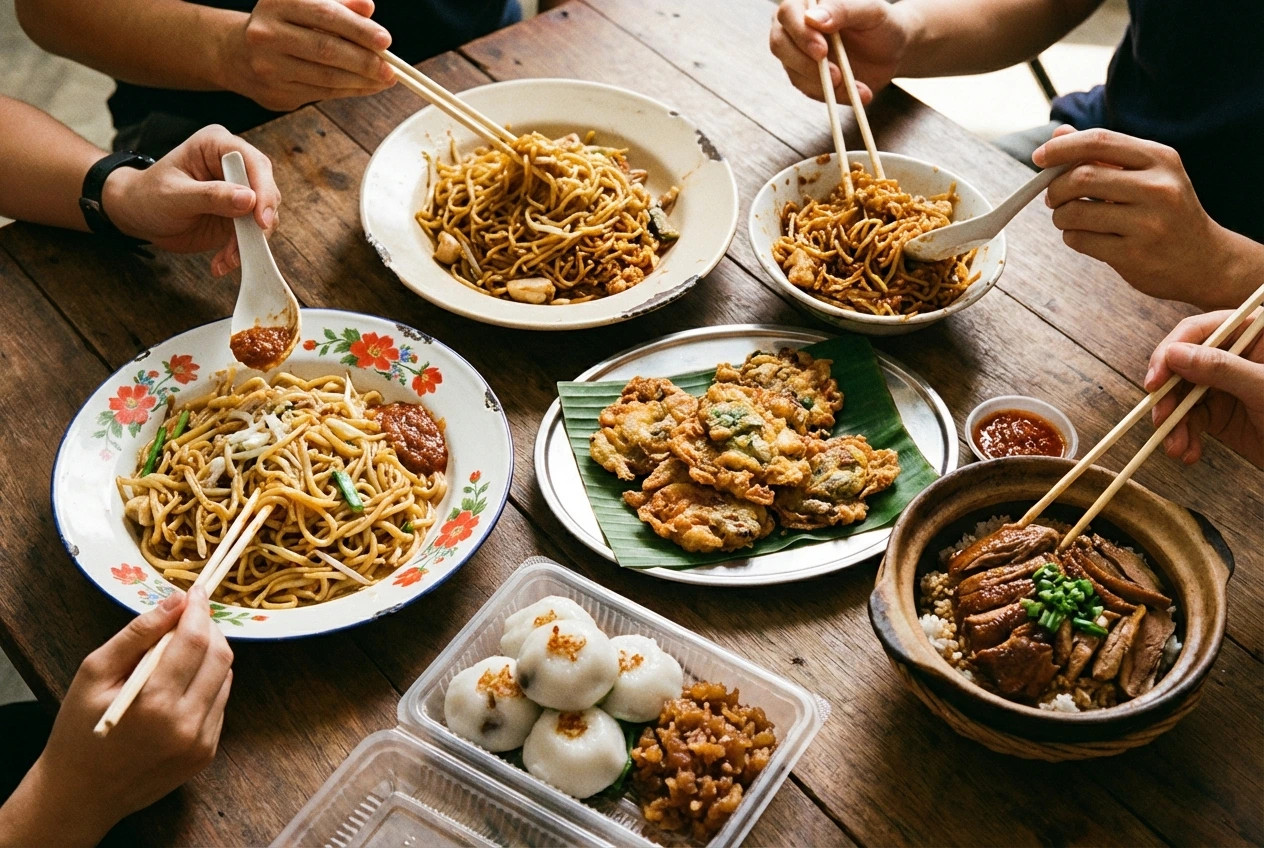
No exploration of Singapore’s hawker stalls is complete without mentioning other famous dishes like bak chor mee, hokkien mee, char kway teow, and fried mee, all staples at food centres such as the Airport Road Food Centre and Tiong Bahru Market.
Fried mee and hokkien mee are two classic noodle dishes that capture the essence of Singapore’s hawker food. Hokkien mee, a stir-fried mix of egg noodles and rice noodles with prawns, squid, and pork, is typically served with sambal chilli and lime. Fried mee, which can refer to various stir-fried noodle dishes, often features a combination of meats, eggs, and vegetables, delivering a hearty and flavorful experience.
At these bustling venues, you can also find delights like Maxwell Fuzhou Oyster Cake, known for its crispy exterior and juicy oysters inside, as well as Jian Bo Shui Kueh, topped with savory preserved radish. These dishes represent the rich tapestry of flavors, from the tangy vinegar in minced pork noodles to the spicy chili that defines many noodle dishes.
The Cultural Significance and Culinary Legacy: Fatty OX HK Kitchen, He Ben Ji, and More To Uncover
Singapore’s hawker culture is more than just food; it’s a social fabric woven with stories of uncles and aunties who prepare these dishes every day with dedication and care. The Michelin star awarded to stalls like Hill Street Tai Hwa Pork Noodle and the recognition of Fatty Ox HK Kitchen highlight the city’s commitment to preserving this heritage while maintaining exceptional quality.
As a photographer dedicated to preserving Singapore’s street food heritage, places like Hill Street Tai Hwa Pork Noodle are sacred. They are living museums, repositories of flavors and techniques passed down through generations. Mr. Tang isn’t just cooking noodles; he is the custodian of his family’s legacy and a vital link to our city’s past.
My final thought as I finished my noodles was one of deep gratitude. Gratitude for the skill, the history, and the simple, profound joy of a meal made with passion and purpose. This is a story that every Singaporean should know, taste, and, if you can, capture.

Singapore Foodies’ Peek Behind the Plate: A Quiet Profile of a Multi-Generation Hawker Stall
March 30, 2026
The Heart of Hawker Culture: A Normal Day for Uncle Lim It was 5:30 AM, an hour when Singapore is painted in shades of deep blue and soft grey. The air in the multi-story carpark…
-
Hill Street Tai Hwa Pork Noodle: A Michelin-Starred Stall Singapore Foodies Must Shoot
March 27, 2026
It was a Tuesday afternoon, just before 3 PM, when the heat in the Crawford Lane food centre felt thick enough to touch. The usual lunch crowd had thinned, but a resolute queue still snaked…
-
A First-Timer’s Guide to Food Photography in Singapore for Singapore Foodies
March 23, 2026
What I Wish Someone Told Me Before I Took My Phone Out When I first found myself holding a phone above steaming laksa at a hawker centre, I thought the challenge would be capturing light…

Look Here But Also There: The Singapore Foodies’ Guide to Capturing Hawker Stalls Through Visual Cues
March 20, 2026
I’ll never forget the first time I tried to photograph a bowl of bak chor mee at a famous hawker stall during peak lunch hour. I was so wrapped up in capturing the perfect angle…
-
The First Hawker Stall That Changed Everything
March 18, 2026
It was a rainy Tuesday afternoon about seven years ago, and I was just a guy with a camera looking for shelter. I ducked into an old, dimly lit hawker center in Toa Payoh to…

The Best Singapore Breakfast Spots: Lighting, Angles & Visual Stories for Singapore Foodies
March 16, 2026
After years of chasing the perfect breakfast shot all over Singapore, I’ve noticed some venues aren’t just great for eating. They’re inspiring playgrounds for food photography, beloved by both locals and Singapore foodies alike. Whether…
-
From Empire to Plate: Process-Focused Colonial Photography SG Series
March 13, 2026
The story of Singapore cuisine is impossible to tell without acknowledging its colonial past. As a strategic port for the British Empire, Singapore became a magnet for a diverse range of people and products. From…
-
Translating Taste into Frames: Why I Capture Food
March 11, 2026
I fell in love with street food photography in Singapore, somewhere between the steam of a hawker stall and the click of my shutter. It wasn’t planned. I was hungry, wandering, half-lost, when a bowl of laksa stopped me cold. The broth glowed…
-
Maximizing Colonial Heritage: Efficient SG Photography Routes
March 9, 2026
The morning light hits the peeling plaster of a shophouse five-foot way differently than it hits a glass skyscraper. It is softer, more textured, and it seems to carry the weight of history. For a…
-
Period Restaurant Lighting in Photo Shoot in Singapore Locations
March 6, 2026
The air in a heritage Hainanese coffeeshop is thick with more than just the aroma of kaya toast and freshly brewed kopi. It is thick with a particular quality of light. A mix of harsh,…