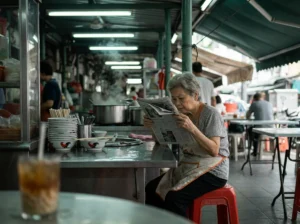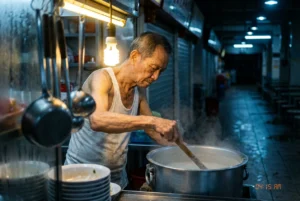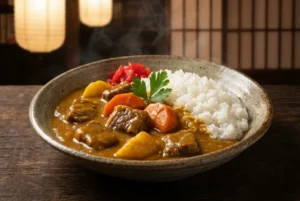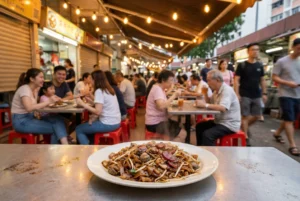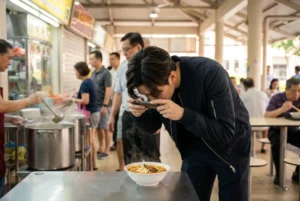
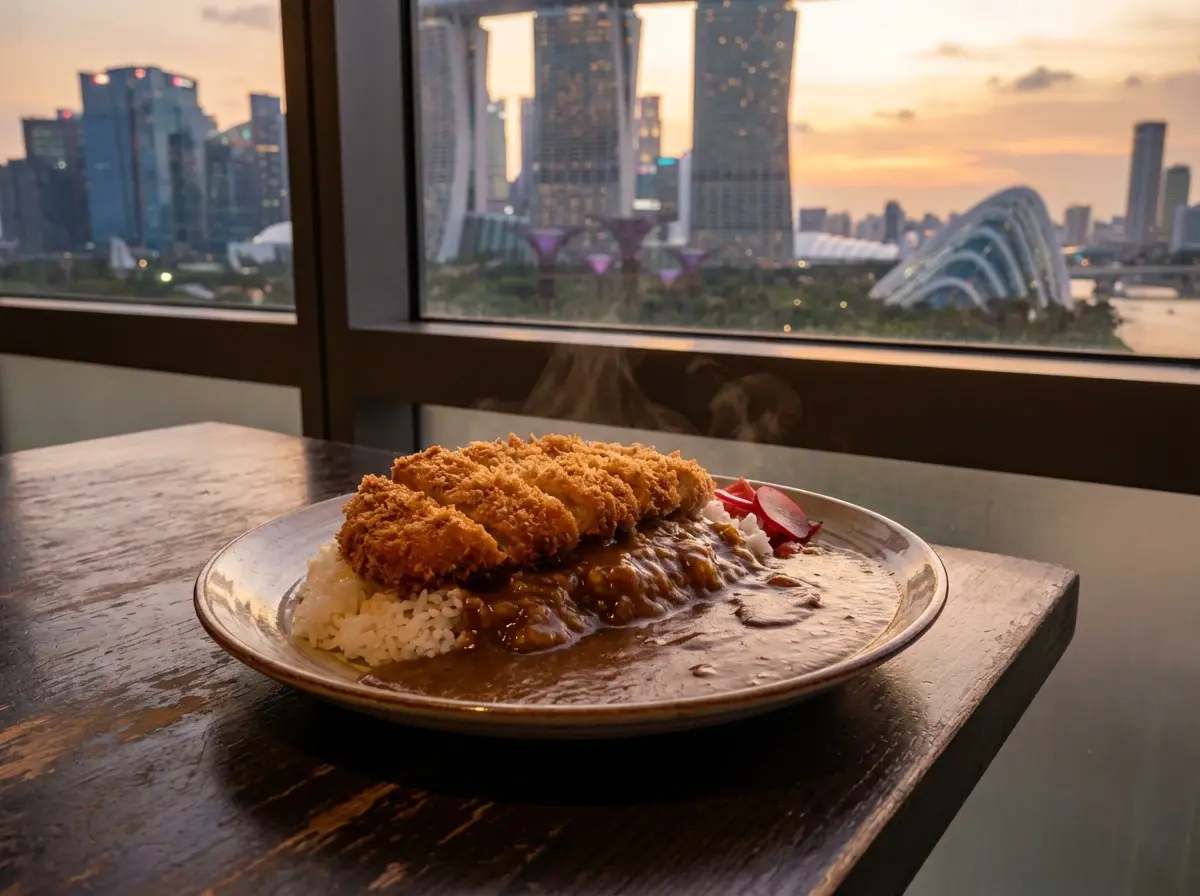
It is slightly past one in the afternoon at a crowded food court in Tanjong Pagar. The air is thick with the smell of roasted coffee beans, frying oil, and the sharp, fermented tang of local shrimp paste. I am sitting at a small, slightly sticky table, watching an office worker in a crisp white shirt eat a plate of Japanese curry rice.
This is where the journey begins: in Singapore, Japanese curry is shaped by where it lives. In each neighborhood, the dish transforms, bending to fit the needs and rhythms of those who pass through.
We have the fierce, aromatic heat of Indian curries like fish head curry, the rich coconut depth of Malay variations, and the complex, rempah-heavy gravies ofPeranakan kitchens. In this landscape of loud, unapologetic spices, Japanese curry enters as something entirely different and molds itself to each environment.
How Japanese Curry Places Itself Into The City’s Neighborhoods
1. Utility and Routine: Great Value Meal in the Central Business District
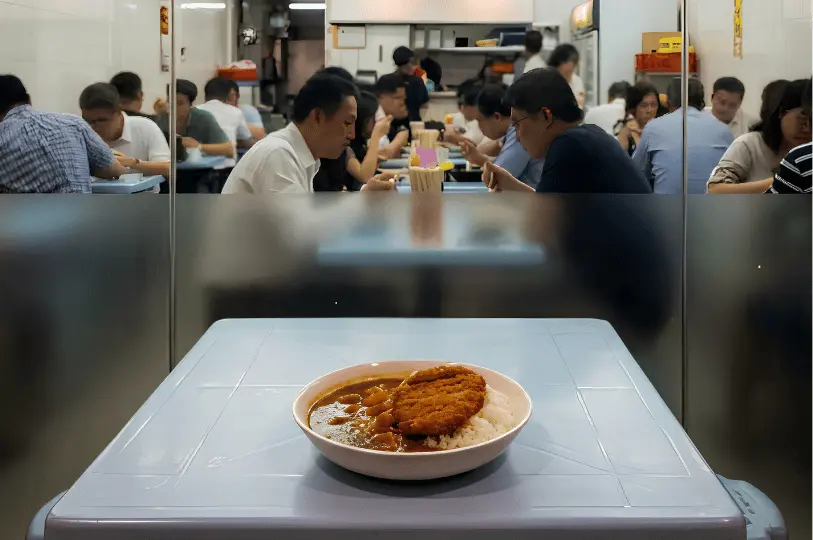
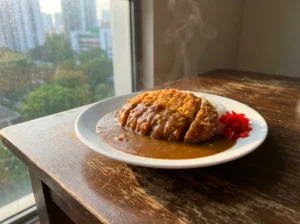
In the central business district, Japanese curry rice is about function and routine. Walking past glass-walled kopitiams and fluorescent-lit basements in Raffles Place or Tanjong Pagar, you’ll find katsu curry served in shallow bowls and neat takeaway boxes. Here, for the busy office worker, it’s utilitarian food: a predictable, comforting pause between spreadsheets, devoured alone, without ceremony.
It stands quietly alongside chicken rice or economic rice, distinct in its mild, structured Japanese curry sauce, less an event than a brief interlude before work resumes. Its muted warmth is its advantage, never so fierce as to interrupt the flow of a business day. This style of Japanese curry Singapore perfectly suits Japanese tastes for a hearty meal that fuels productivity without distraction.
Japanese cuisine offers more comfort beyond the midday reset of Japanese curry for lunch. Take a bite of skewers and a sip of highballs from my picks of the best izakayas in Singapore on Street Food Photographer.
2. Everyday Comfort and Adaptation: Localizing Curry Rice in Heartlands
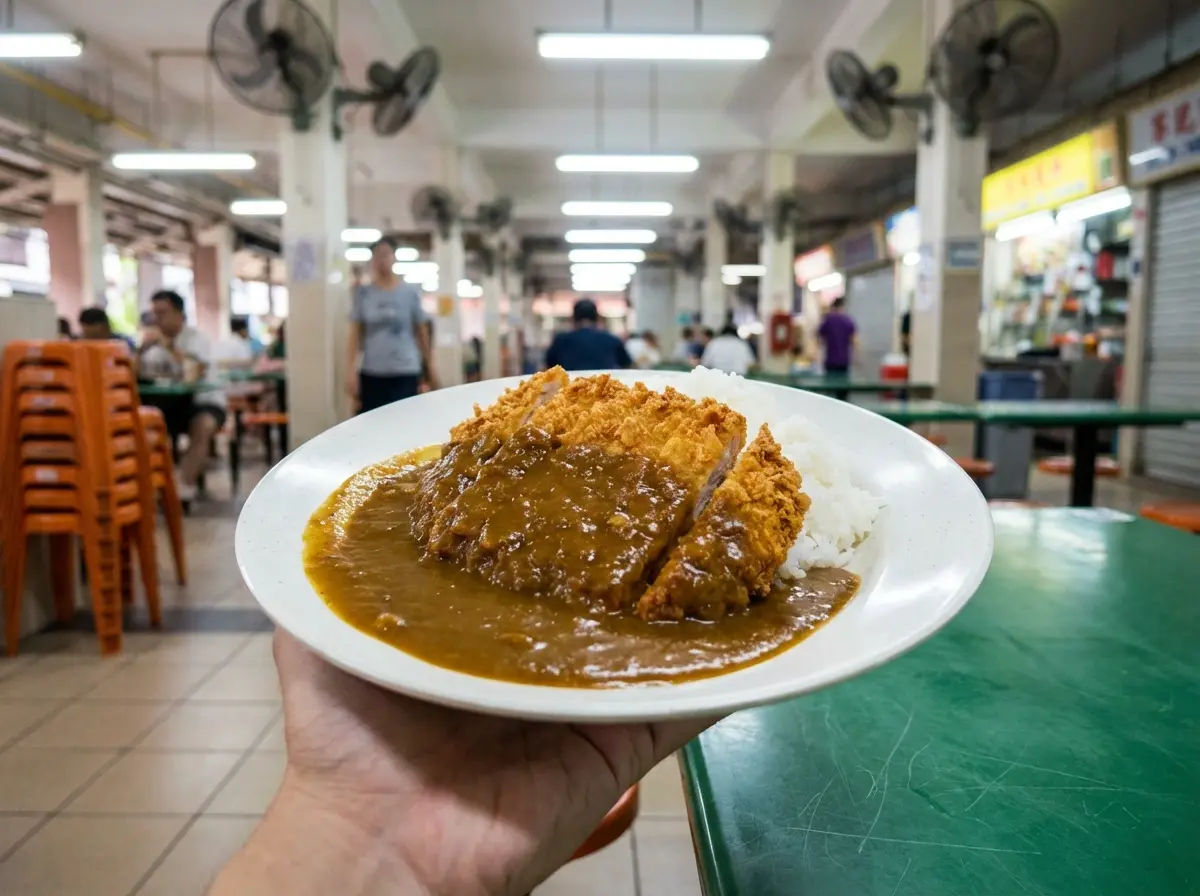
The scene softens as you ride the train into Singapore’s heartlands. In sprawling hawker centres, under slow-moving fans in Bedok or Ang Mo Kio, Japanese curry loses its sense of foreignness and simply becomes another kind of rice to order. I watch a student waiting for chicken katsu curry rice, the plate assembled with fast, practiced hands. Here, the sauce runs a little sweeter, pooling generously over long-grain rice.
It feels less like a specialty and more like part of the everyday fabric of local food: comforting, affordable, and seamlessly integrated. The curry’s identity in the heartlands is modest, stripped of ceremony, perfectly at home among Western food stalls and Taiwanese braised pork rice.
3. Indulgence and Customization: Mall Chains Adapting to Japanese Curry Rice
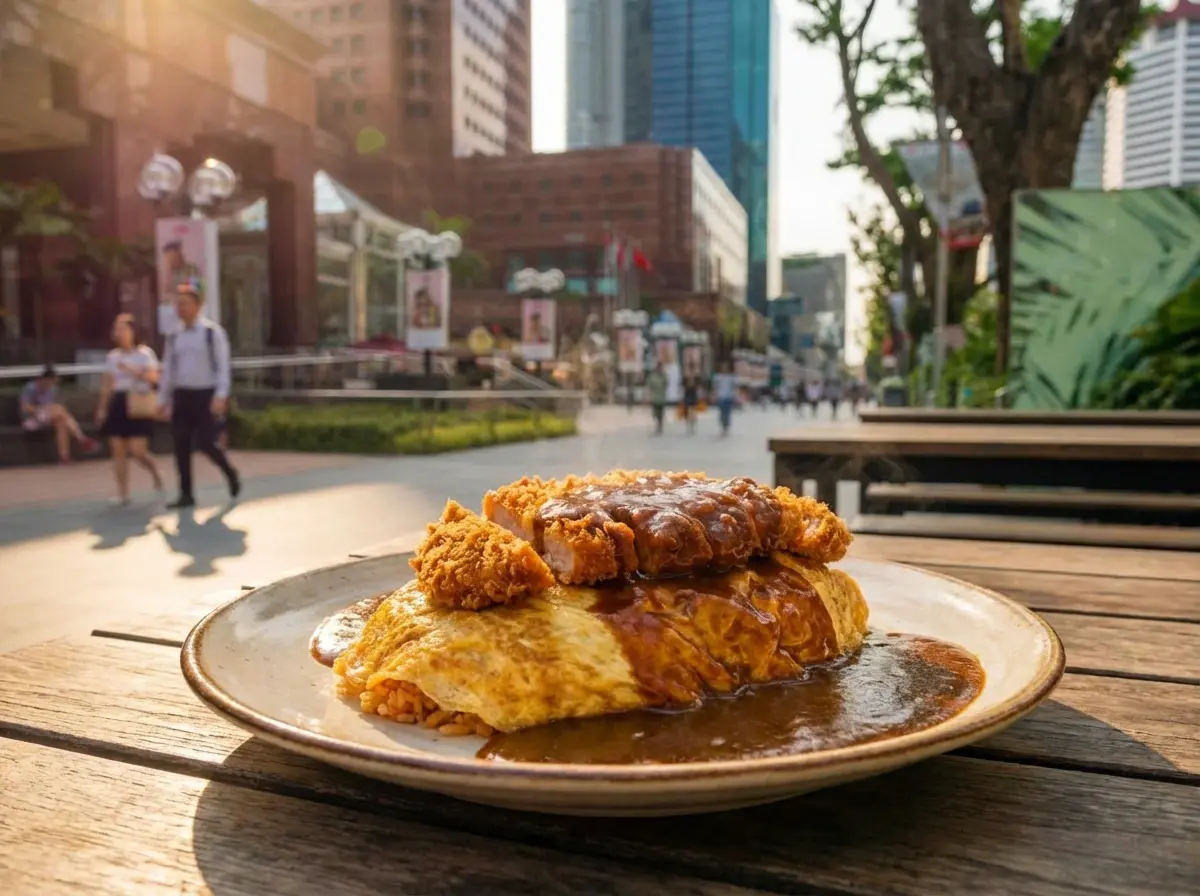
Further uptown, in the air-conditioned depths of Singapore’s malls, the curry takes another turn. Along busy stretches like Orchard Road or inside the labyrinth of Nex, Japanese curry becomes a canvas for indulgence and customization. I slip into a booth and watch friends digging into mountains of pork cutlet omelette curry and spoonfuls of molten cheese, eggs, and vegetables. The meal is a performance, shared and debated over, with curry sauce serving as a mild, agreeable base for layers of toppings. The queues are long, the atmosphere bright. Here, the dish is about abundance and play, less about the fundamentals of the curry powder and more about the spectacle of what can be heaped upon it.
There’s something in the mall environment, a sense of escape, of eating for pleasure rather than necessity. Curry adapts again, becoming indulgent and communal. The base flavor is steady, the portions large, and the experience deliberately social.
4. Enclaves: Best Japanese Curry Rice From Coco Ichibanya and More
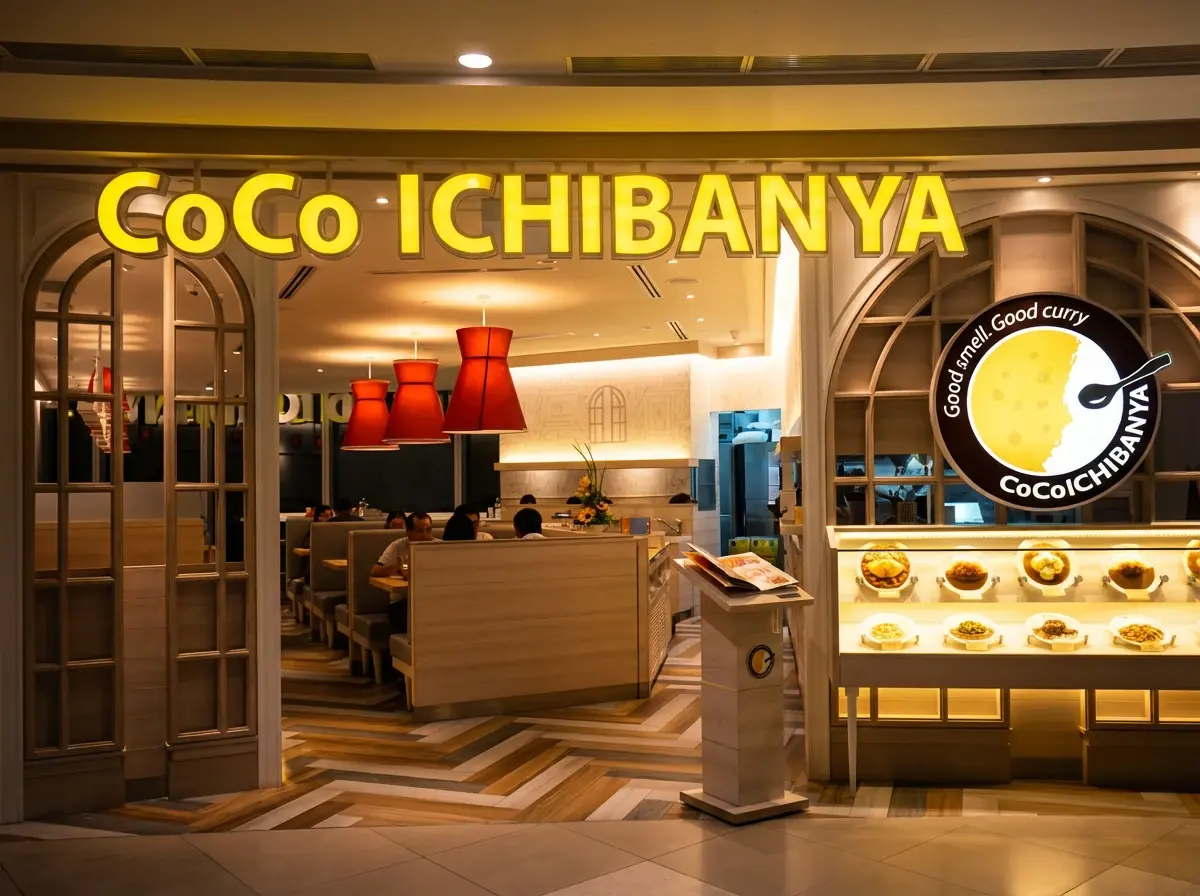
The popularity of Japanese curry in Singapore is significantly influenced by renowned chains such as Coco Ichibanya, Maji Curry, and Monster Curry, and Gochi So Shokudo.
- Coco Ichibanya: This leading Japanese curry rice chain from Japan, offers a wide range of customizable curry rice dishes including pork katsu curry, seafood curry, vegetable curry, and the beloved pork cutlet omelette curry.
- Maji Curry: An award-winning restaurant famous for its rich and flavorful curry slow-cooked with a blend of 10 spices over 100 hours, brings authentic Japanese curry flavors to Singapore at Novena Square 2.
- Monster Curry: This chain is known for its signature demi glaze curry sauce served in generous portions, perfect for sharing, and offers unique menu items such as the Overloaded Curry Burger, combining Japanese classic curry with juicy meats and fluffy bread dough buns.
- Gochi So Shokudo: Their outlets elevate the dining experience by using premium ingredients, including bellota loin katsu curry and pork fillet katsu curry, skillfully combining traditional Japanese curry techniques with innovative recipes.
These establishments balance the comforting familiarity of traditional Japanese curry with the vibrant, diverse food culture of Singapore, offering dishes that highlight the rich curry sauce, tender deep fried pork cutlets, and carefully cooked rice. This fusion of home cooking convenience and restaurant quality reflects the widespread appeal and adaptability of Japanese style curry in Singapore’s culinary scene.
Want to see more reliable Japanese curry restaurants? Read more from my guide here.
The Intention of a Chicken Cutlet in Chicken Katsu Curry Rice
But in the hidden pockets of Japanese dining enclaves, the curry returns to itself. Late one Thursday, I find myself at a narrow wooden counter, the lighting soft and yellow. The menu is short. A solo diner two seats down is immersed in his plate, paying attention to every subtle detail. Here, the curry moves with intention. The Japanese curry sauce is ladled with precision, just enough to cling not drown the rice. The short-grain rice is cooked with care; the chicken cutlet, still crisp, is there to support, not steal the spotlight. The entire dish hums with restraint. Each element is in dialogue, forming a quiet balance.
In these enclaves, the curry is less a quick lunch or a vehicle for excess, and more the result of small choices and respect for craft. Time slows down; flavors speak softly but linger.
Chicken Katsu and Curry Udon: Diverse Japanese Curry Dishes in Singapore
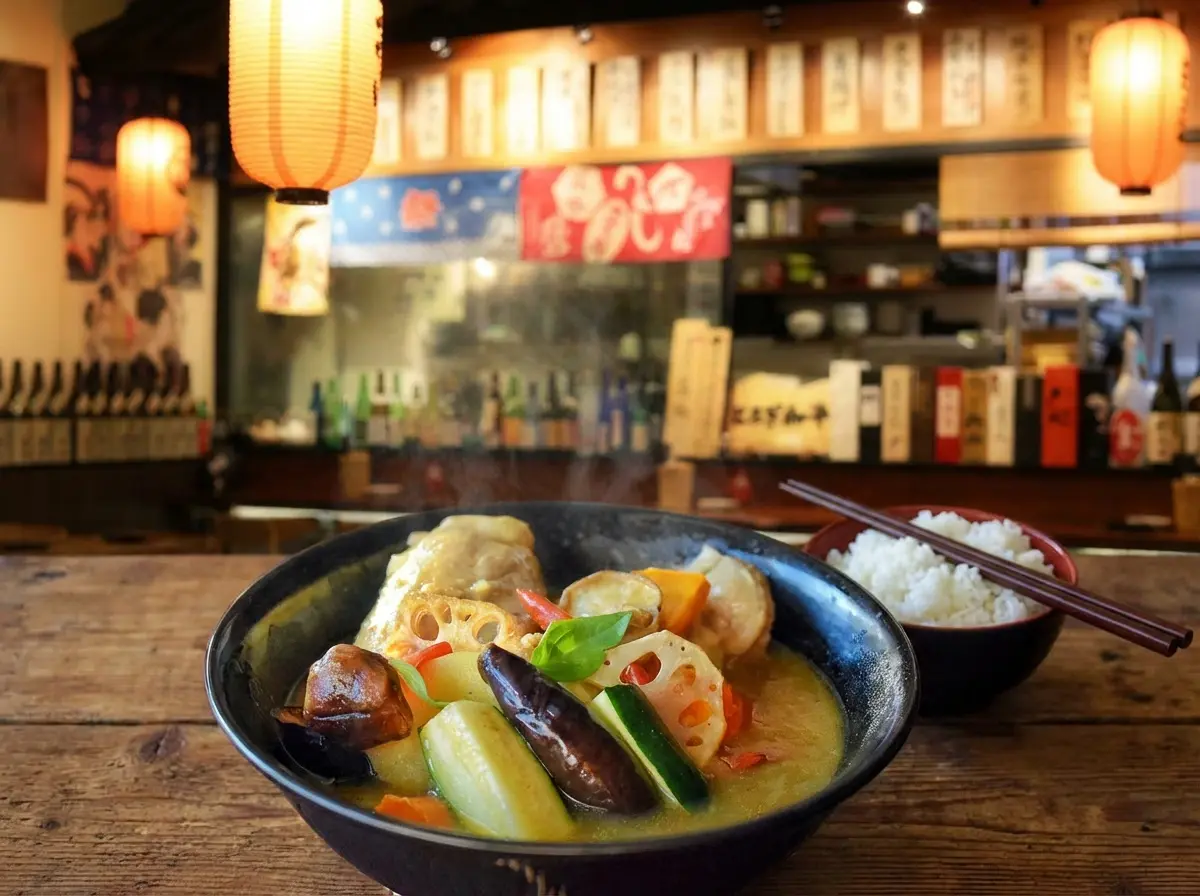
Japanese curry dishes in Singapore also include comforting varieties such as curry udon and curry soba, where thick wheat noodles or buckwheat noodles are served in a rich, flavorful Japanese curry broth. These dishes provide a warming alternative to curry rice and showcase the versatility of Japanese cuisine. The chewy noodles absorb the thick Japanese curry sauce, blending traditional Japanese tastes with hearty meals enjoyed across the city.
Another popular variation is Hokkaido soup curry, a lighter, spiced broth featuring tender chicken leg and a medley of vegetables, offering a unique twist on classic Japanese curry. These diverse Japanese curry dishes reflect the evolving Japanese food culture in Singapore, appealing to a wide range of curry lovers seeking different spice levels and textures.
Japanese Curry’s Quiet Revolution in the Heart of Singapore
This journey through neighborhoods isn’t about discovering the “best” plate of Japanese curry, but noticing how it changes, how a single dish can reflect the movement and character of an entire city. In Singapore, Japanese curry is no longer something imported or explained. It is now something lived and experienced, its identity found moment by moment, neighbor by neighbor.
It asks for nothing, but quietly adapts to everything.

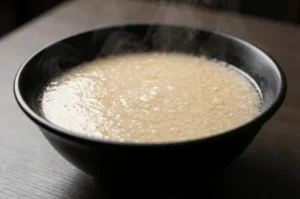
The Weight of a Broth: Following Tonkotsu Through Japanese Food, from Long Simmer to Late-Night Bowls
April 17, 2026
I still remember the first time I sat down for a proper bowl of tonkotsu ramen. It was just past 9 PM in Tanjong Pagar. I was exhausted after a long day of shooting on…

A Note Left Between Bowls and Steam
April 14, 2026
It is 3:15 PM. The ceiling fans push thick, warm air across the empty tables. The lunch rush faded hours ago, and the evening crowd has yet to arrive. I am sitting two rows away…
-
Japanese Curry Singapore: How Did Curry Roux Blend Into The City’s Districts?
April 13, 2026
It is slightly past one in the afternoon at a crowded food court in Tanjong Pagar. The air is thick with the smell of roasted coffee beans, frying oil, and the sharp, fermented tang of…
-
The Evolution of Japanese Food in Singapore: From Luxury Dining to Everyday Comfort
April 10, 2026
I was standing outside Ramen Keisuke on a humid Tuesday evening, camera resting against my hip. The queue stretched past three adjacent storefronts, a quiet line of office workers, students, and couples waiting patiently for…

To The Stall That Opens Before Sunrise
April 7, 2026
It is 4:15 AM. The estate is completely still, save for the low hum of the expressway in the distance. I walk through the darkened aisles of the hawker centre, my footsteps echoing against the…
-
Best Japanese Curry Singapore: Cozy Spots for Curry Rice and Street-Style Photos
April 6, 2026
Walking through the vibrant alleys of Bugis with a camera slung over my shoulder, the mingling scents of roasted spices and deep-fried meats tell a story of culinary convergence. Over the years, Japanese curry has…
-
Why Singapore Foodies Keep Coming Back to Char Kway Teow
April 3, 2026
The Irresistible Aroma at the Hawker Centre The air in the hawker centre is thick with a hundred different smells, but one always cuts through the noise: a smoky, sweet, and deeply savory aroma that…
-
Singapore Foodies’ Peek Behind the Plate: A Quiet Profile of a Multi-Generation Hawker Stall
March 30, 2026
The Heart of Hawker Culture: A Normal Day for Uncle Lim It was 5:30 AM, an hour when Singapore is painted in shades of deep blue and soft grey. The air in the multi-story carpark…
-
Hill Street Tai Hwa Pork Noodle: A Michelin-Starred Stall Singapore Foodies Must Shoot
March 27, 2026
It was a Tuesday afternoon, just before 3 PM, when the heat in the Crawford Lane food centre felt thick enough to touch. The usual lunch crowd had thinned, but a resolute queue still snaked…
-
A First-Timer’s Guide to Food Photography in Singapore for Singapore Foodies
March 23, 2026
What I Wish Someone Told Me Before I Took My Phone Out When I first found myself holding a phone above steaming laksa at a hawker centre, I thought the challenge would be capturing light…