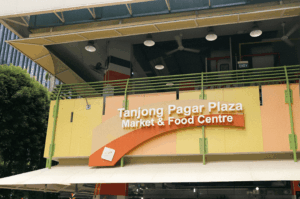
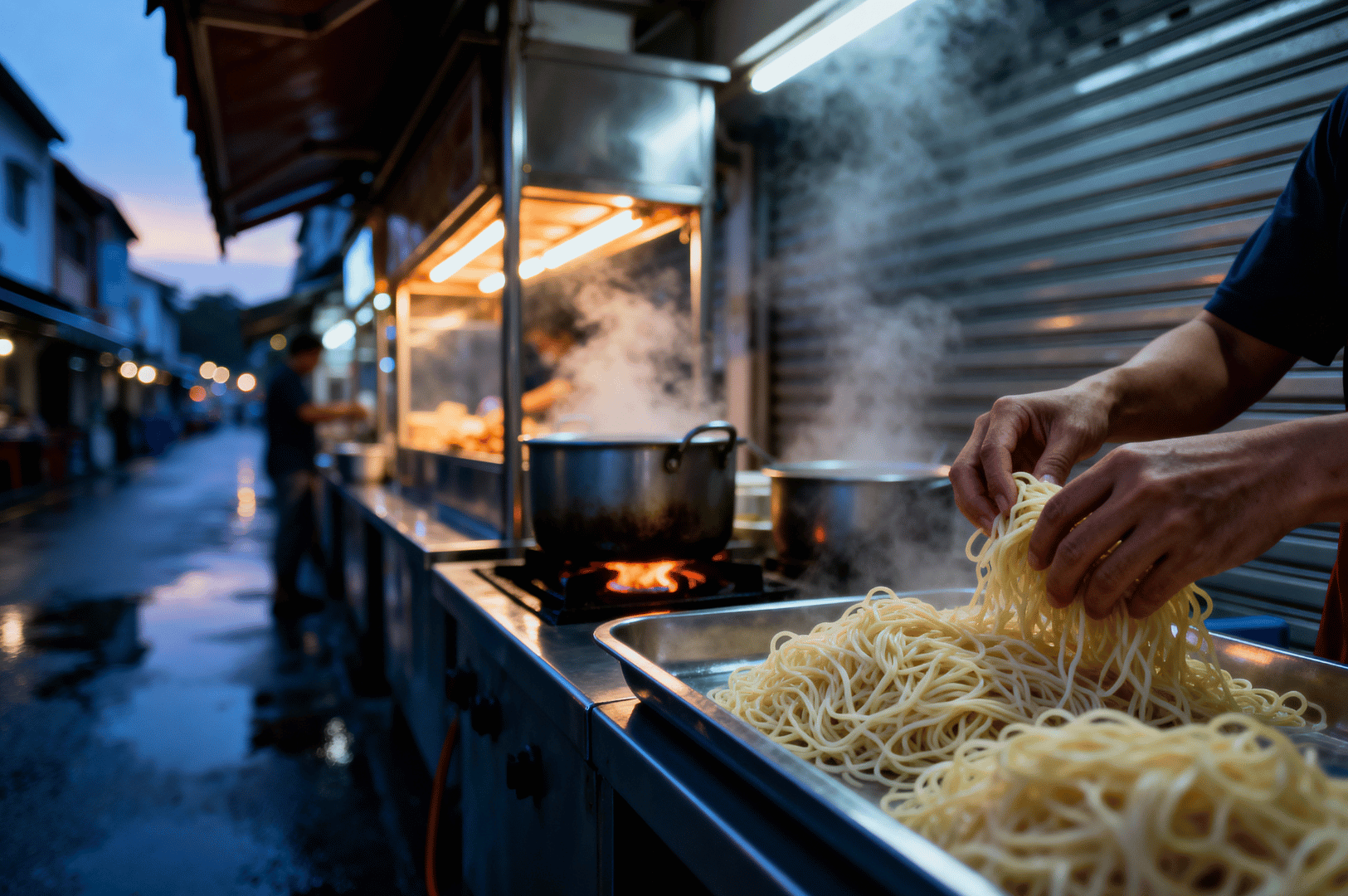
The world is still cloaked in a deep, inky blue, but Singapore is far from asleep. A quiet energy hums beneath the surface, a city stirring not with the roar of traffic, but with the gentle clatter of metal shutters and the first hiss of gas stoves. It is in these pre-dawn moments that the island’s true heart begins to beat, a rhythm set by the hands that prepare its daily bread. This is the sacred time for a photographer, a time to witness the awakening of a culture where life revolves around street and food. This daily symphony of sights, sounds, and smells is more than just a routine. It is a series of cherished morning food rituals, a sensory journey that defines the soul of Singapore’s street food culture. Each morning offers a new story, a fresh palette of colors and emotions waiting to be captured, telling the tale of a city that wakes up hungry for connection, tradition, and delicious food served by dedicated street food vendors.
The origins of these street food traditions can be discovered in the early hours, reflecting a practice that has evolved over generations.
The Dawn Awakening: A City Stirred by Steam and Steel
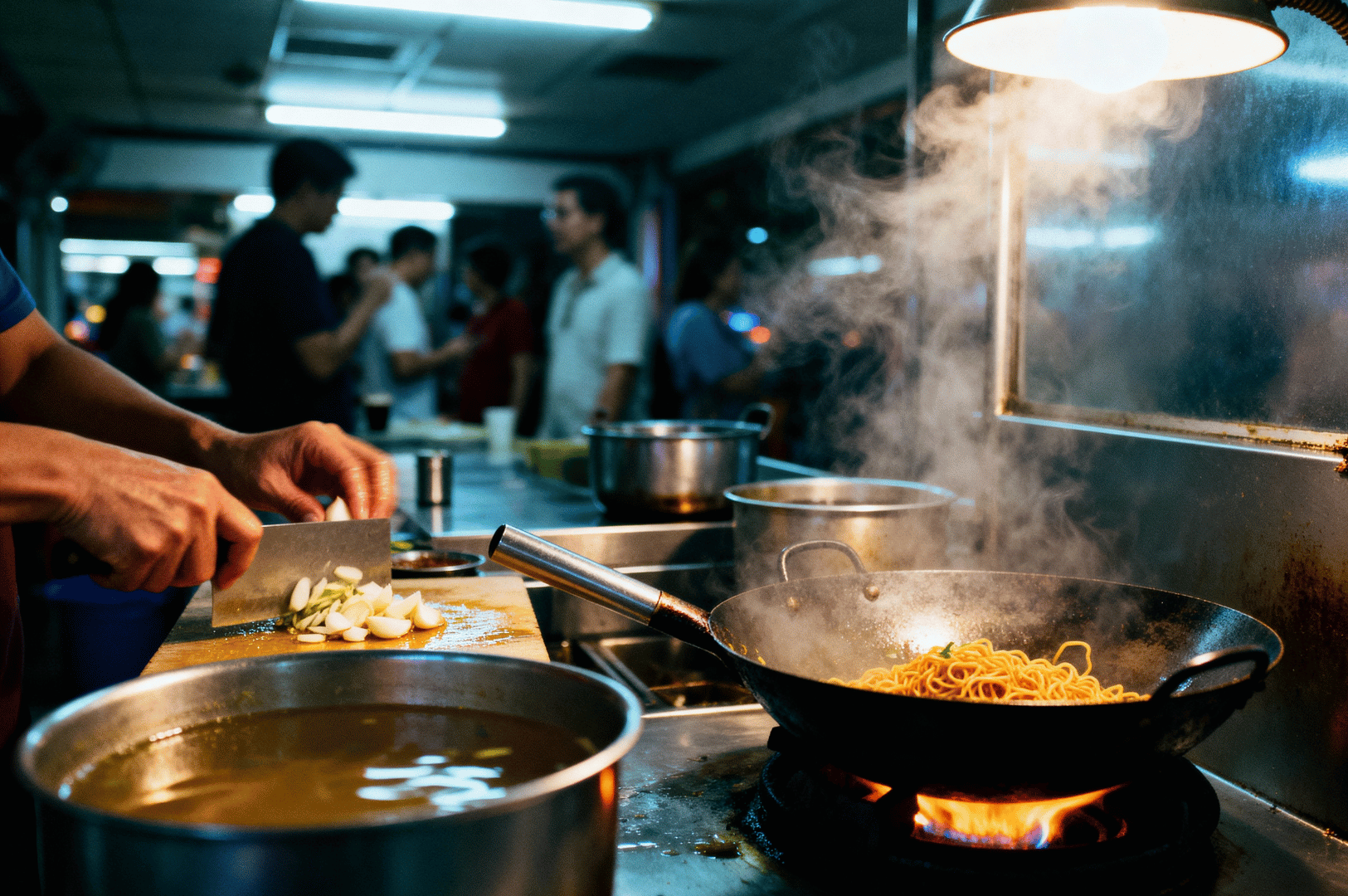
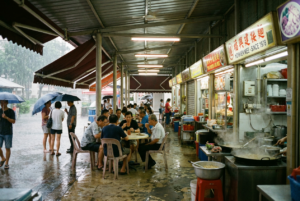
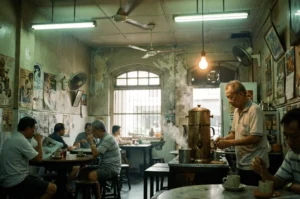
Long before the sun graces the skyline, the hawker centers are already hives of activity, bustling with street vendors who have honed their craft over decades. The operating hours of these centers often start before dawn, allowing vendors to begin their preparations early. The air, cool and still, begins to fill with a complex orchestra of aromas: the sharp scent of chopped garlic, the earthy notes of brewing kopi, and the sweet perfume of pandan leaves. These are the first signs that Singapore’s culinary masters are at their posts, preparing the diverse mix of delicious dishes that define the city’s vibrant street food culture. You might be aware of street food dishes and hawker food like chicken rice, roast duck, chili crab, spit roasted Chinese meat, and others that represents even street food from Bangkok Thailand, India, and the likes. And you're probably aware of them during your visit and cravings for dinner after a long day of walking around.
I watch as these vendors move with a practiced, almost balletic grace. They are silent artisans, their faces illuminated by the singular glow of a stove or a string of fluorescent lights. Locals gather here for their morning meals, drawn by the promise of authentic flavors and a communal act of eating together.
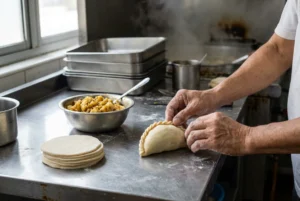
The sounds are just as vital to this culinary journey. The rhythmic thud of a cleaver against a wooden block, the clang of a ladle against a seasoned wok, the soft bubbling of a broth simmering with prawn heads, spices, and salt for hours. These are the sounds of dedication behind the effortless magic of Singapore’s hawker food. Each vendor is a keeper of a flame, a guardian of recipes passed down through generations, preserving the rich history of street food traditions. The colonial period introduced new ingredients and culinary practices that further shaped Singapore's street food. Their commitment is palpable—they are not just cooking; they are performing a sacred duty, preparing the fuel that will power the city through another day. Many dishes are carefully cooked to perfection, using a variety of meats in traditional recipes.
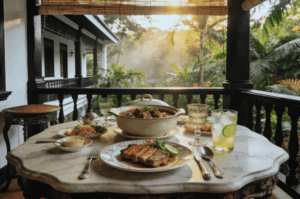
The importance of serving dishes in a way that enhances the dining experience is evident in a culinary journey, as vendors serve their specialties to eager customers. For a street food photographer, this is a treasure trove of authenticity, a world of raw, unscripted moments that speak volumes about craft, community, and culinary heritage.
Iconic Morning Street Food Dishes: The Taste of a Singaporean Sunrise
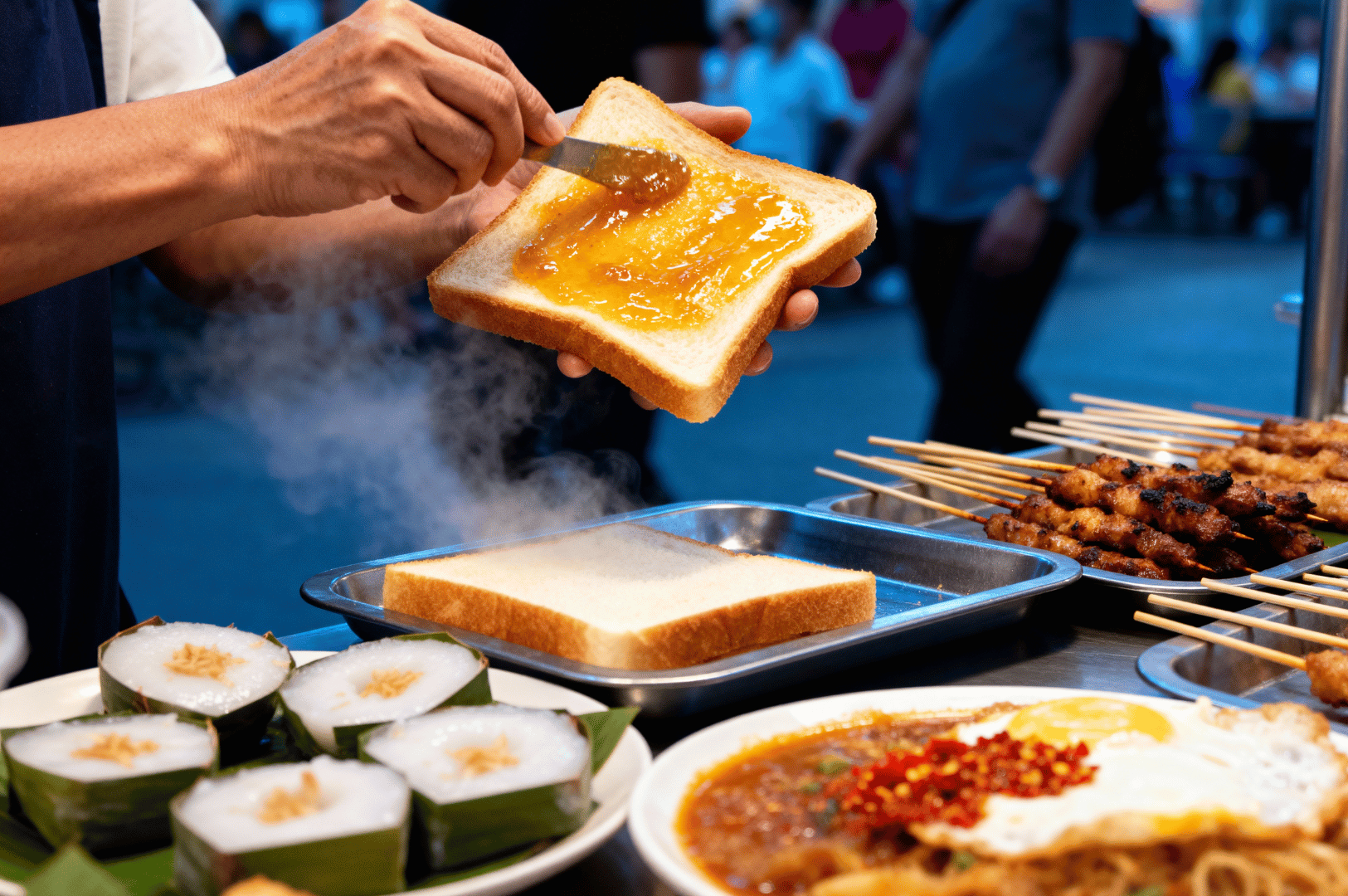
The breakfast traditions in Singapore are a testament to its multicultural fabric. The morning menu is a vibrant tapestry of delicious dishes, each street food dish telling a story of heritage and adaptation. A variety of snacks and sweets are also popular in the morning, offering quick and portable options for those on the go. This is where the intersection of street and food becomes a tangible experience, showcasing the diverse mix of flavors that Singapore offers.
Sandwiches are a recommended choice for those seeking a satisfying meal, and satay is another popular morning street food option. Along bustling streets, you can find favorite restaurants and restaurants serving traditional breakfast dishes, from kaya toast to chwee kueh, where rice cakes are a staple component. Some creative breakfast dishes feature beef, mutton, and cheese as key ingredients. Many dishes are known for their spicy kick, often enhanced with chili.
Singapore stands alongside other cities renowned for their street food culture, earning its place as one of the world's top destinations for breakfast and culinary experiences.
Kaya Toast and Kopi: The Quintessential Start to Hawker Foods
No exploration of Singaporean breakfast is complete without paying homage to kaya toast and kopi. It is a simple trio: toast, often grilled over charcoal for a smoky finish, a generous spread of coconut and pandan jam, and a slice of cold butter that melts into a perfect pool. Paired with a cup of robust, sock-brewed coffee, it is the nation’s unofficial breakfast of champions.
The texture of the crispy toast, the glossy sheen of the kaya, the dark, rich color of the kopi swirled with condensed milk. At a place like Ya Kun Kaya Toast or a local neighborhood coffee shop, the magic is in the process.
Lor Mee: A Bowl of Comfort and Complexity
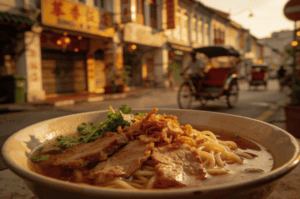
For those seeking something heartier, lor mee is a beloved choice. This dish is a study in contrasts. A thick, dark, starchy gravy, rich with a five-spice blend and herbs, is ladled over a bed of yellow noodles. It is then adorned with a variety of toppings: braised pork belly, crispy fried fish flakes, hard-boiled egg, and a drizzle of black vinegar and minced garlic. Each spoonful is a complex journey of taste and texture.
Photographing lor mee is about capturing its depth. The thick, viscous gravy clinging to the noodles, the various textures of the toppings, the vibrant green of fresh vegetables and cilantro sprinkled on top. Stalls like the one at Amoy Street Food Centre are famous for their long queues, offering a chance to document not just the food, but the anticipation of the people waiting for their comforting bowl.
Congee: The Humble, Heart-Warming Porridge
Congee, or rice porridge, is the ultimate comfort food. It is humble, yet it can be a canvas for a wide array of flavors. A basic bowl is creamy and subtle, but it is the additions that make it special. Sliced fish, century egg, minced pork, roast duck, and crispy youtiao (fried dough sticks) are popular choices. It’s a dish that warms you from the inside out, a gentle start to the day.
The visual appeal of congee lies in its simplicity and the artful arrangement of its toppings. The swirl of soy sauce, the bright yellow of an egg yolk, the scattering of spring onions. These details elevate the dish from simple sustenance to a culinary work of art.
The Community Ritual: Where Neighbors Become Family
Hawker centers are more than just places to eat; they are the living rooms of the community and an integral part of Singapore’s intangible cultural heritage. In the morning, these spaces are filled with a cast of regular characters. You see locals—elderly uncles and aunties—gathered at their usual tables, catching up over kopi and newspapers. You see office workers grabbing a quick, satisfying breakfast of chicken rice or chwee kueh, a savory rice cake dish, before heading to work. Satay is often enjoyed by groups, adding to the communal spirit. You see families sharing a meal before the school run, eating together and strengthening bonds.
I once spent an hour observing a table of four elderly men at Tiong Bahru Market, a humble hawker stall renowned for its delicious food. They didn’t speak much, but their camaraderie was evident in their shared routine. One would go to buy the kopi, another would get the chwee kueh, a savory rice cake dish. They sat in comfortable silence, a ritual forged over years of friendship. Mrs Mohgan and Tin Yeang Restaurant are also notable local food spots where such scenes unfold daily. Especially as Tin Yeang Restaurant is most known for being a household name.
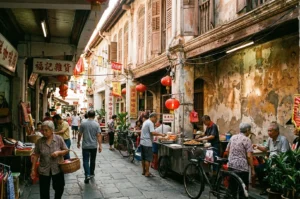
Vendors serve and are serving their specialties to regulars, and each stall serves up its own unique flavors. Walking through the market, you’ll notice a variety of snacks and sweets being shared among friends, making the act of eating a truly communal experience. These are the human connections that are the bedrock of hawker culture and the vibrant street food scene shaped by vendors selling traditional dishes.
The Photographer's Perspective: Capturing Fleeting Moments
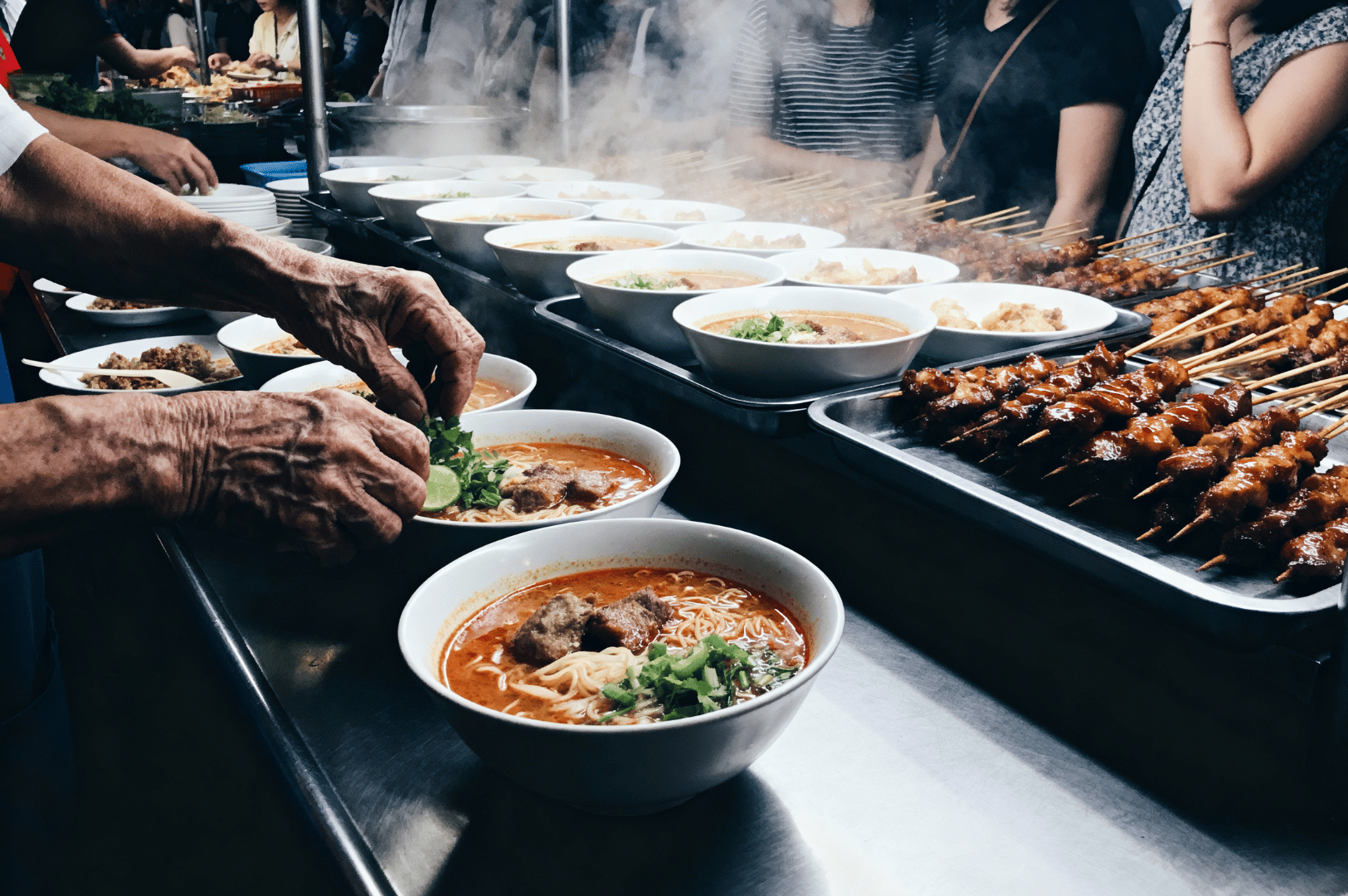
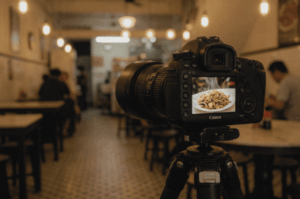
From a photographer’s standpoint, the morning street and food scene in Singapore is a visual paradise. The lighting is often spectacular. The soft, diffused light of the early dawn creates long shadows and a gentle glow, ideal for capturing atmospheric shots. As the sun rises, the light becomes more direct, creating beautiful highlights on steaming bowls and glistening sauces.
Unique moments are often discovered through the photographer's lens, especially while walking through bustling markets. Walking among the stalls provides endless opportunities for candid shots—each step reveals new angles and interactions. Observing people who have eaten or are eating their meals can lead to powerful images that convey satisfaction and connection.
Composition is about finding order in the chaos. Look for leading lines in the queues of people, frames within the structure of a hawker stall, and repeating patterns in stacks of bowls or trays of ingredients. The most powerful images, however, are often the candid ones. A vendor’s hand, gnarled from years of work, carefully arranging a dish. A customer’s face lighting up with the first bite of their favorite food. I still remember a memorable laksa I ate at a small stall in Tiong Bahru Market—capturing the steam rising from the bowl as I took my first spoonful was unforgettable. The shared glance between a hawker and a regular patron. These fleeting moments are what give street and food photography its soul. They capture the essence of a culture where food is a language of love, care, and community.
More than Michelin Star Restaurants: Preserving the Soul of the City
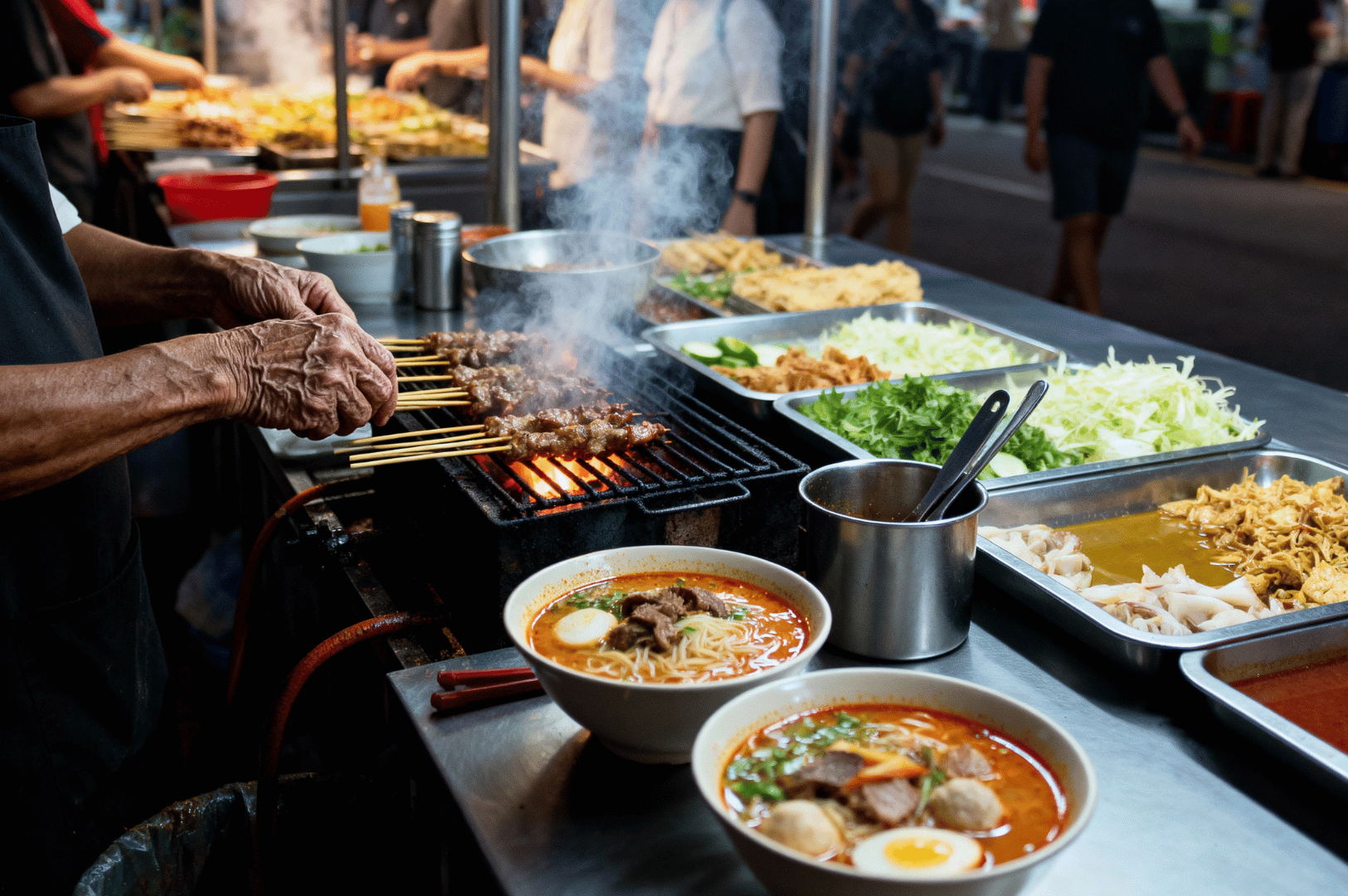
The morning rituals of Singapore are a precious part of its cultural identity. They are a daily reminder of the nation’s heritage, a living tradition that connects the past to the present. In a city that is constantly evolving, these simple, grounding routines are more important than ever. They represent the enduring spirit of the community, the resilience of small family businesses, and the incredible power of street and food to bring people together.
Preserving these moments, whether through photography, storytelling, or simply by participating in them, is a way of honoring the soul of Singapore’s vibrant street food culture. From the humble hawker stall to the bustling hawker centers, the scene is alive with delicious dishes that reflect Singapore’s diverse mix of influences and history, including Chinese and Thai street food, but more so flavors from Malaysia, India, and more from Thailand.
Here in Street Food Photographer, I invite you to step out into the early morning light. Find a local hawker center, order a kopi or a cup of rich coffee, and just watch. Listen to the sounds, breathe in the aromas of fresh vegetables, spices, and herbs, and observe the quiet rituals unfolding around you. You will discover a side of Singapore that is authentic, vibrant, and deeply moving. You will find the heart of the city in its street and food, and you will understand why these morning traditions are worth cherishing.

The First Hawker Stall That Changed Everything
March 18, 2026
It was a rainy Tuesday afternoon about seven years ago, and I was just a guy with a camera looking for shelter. I ducked into an old, dimly lit hawker center in Toa Payoh to…

The Best Singapore Breakfast Spots: Lighting, Angles & Visual Stories for Singapore Foodies
March 16, 2026
After years of chasing the perfect breakfast shot all over Singapore, I’ve noticed some venues aren’t just great for eating. They’re inspiring playgrounds for food photography, beloved by both locals and Singapore foodies alike. Whether…
-
From Empire to Plate: Process-Focused Colonial Photography SG Series
March 13, 2026
The story of Singapore cuisine is impossible to tell without acknowledging its colonial past. As a strategic port for the British Empire, Singapore became a magnet for a diverse range of people and products. From…
-
Translating Taste into Frames: Why I Capture Food
March 11, 2026
I fell in love with street food photography in Singapore, somewhere between the steam of a hawker stall and the click of my shutter. It wasn’t planned. I was hungry, wandering, half-lost, when a bowl of laksa stopped me cold. The broth glowed…
-
Maximizing Colonial Heritage: Efficient SG Photography Routes
March 9, 2026
The morning light hits the peeling plaster of a shophouse five-foot way differently than it hits a glass skyscraper. It is softer, more textured, and it seems to carry the weight of history. For a…
-
Period Restaurant Lighting in Photo Shoot in Singapore Locations
March 6, 2026
The air in a heritage Hainanese coffeeshop is thick with more than just the aroma of kaya toast and freshly brewed kopi. It is thick with a particular quality of light. A mix of harsh,…
-
Imperial Diversity Through Photo Shoot Singapore Projects
March 2, 2026
When I set up my tripod in a bustling kopitiam or a quiet heritage restaurant, I am constantly reminded that I am not just photographing a meal. I am photographing a map. Every photo shoot…
-
Historic Flavors Shoot Singapore: Post-Processing for Period Authenticity
February 27, 2026
When I look through the viewfinder at a plate of heritage kueh or a steaming bowl of rickshaw noodles, I am not just capturing food; I am framing a memory. The challenge for any documentary…
-
Colonial Cuisine Photoshoot: Styling Singapore’s Historic Flavors
February 23, 2026
When I first embarked on a photoshoot focusing on Singapore’s colonial cuisine, I didn’t realize how deeply food could connect us to history. It wasn’t just about snapping pictures of dishes; it was about capturing…
-
Coal, Fire, and Memory: A Singapore Food Blogger Revisits Tanjong Pagar’s Industrial Kitchens
February 20, 2026
It had been a while since I set a day to wander through the back lanes of Tanjong Pagar. When I decided to come back to the place left me star-struck, not by the polished…